
Introduction
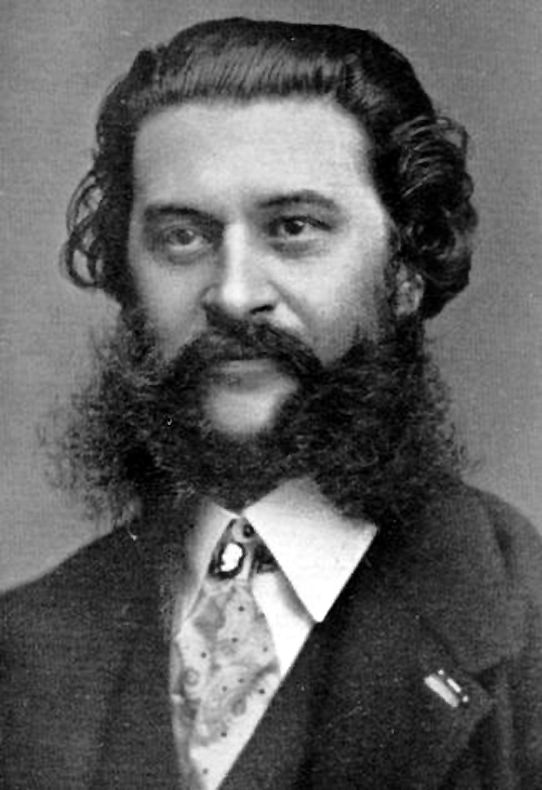
Johann Strauss II was one of the most celebrated composers of the nineteenth century and remains one of the most recognizable figures in classical music history. Often referred to as the “Waltz King,” Strauss transformed the Viennese waltz from a popular dance into a sophisticated musical form admired throughout Europe and beyond. His melodies captured the elegance, optimism, and charm of nineteenth-century Vienna, making him one of the most beloved composers of the Romantic era.
Throughout his career, Strauss composed hundreds of waltzes, polkas, marches, and operettas. His music became synonymous with the cultural life of Vienna and continues to be performed regularly in concert halls around the world. Works such as The Blue Danube, Tales from the Vienna Woods, and Die Fledermaus have secured his place among the most enduring composers in classical music.
Childhood
Johann Baptist Strauss was born on October 25, 1825, in Vienna, Austria. He was the eldest son of Johann Strauss I, a successful composer and conductor who had already established himself as a prominent figure in Viennese dance music. His mother, Anna Streim, came from a family of innkeepers and provided stability during a childhood that was often complicated by his father’s demanding career.
Growing up in Vienna, young Johann was surrounded by music from an early age. Despite his natural talent and interest in the art, his father strongly opposed the idea of his son becoming a musician. Johann Strauss I wanted his son to pursue a more secure profession, such as banking or business, believing that the life of a musician was uncertain and difficult.
Nevertheless, Johann secretly studied music. He received violin lessons and developed remarkable technical skills. His musical abilities became apparent at a young age, and he demonstrated a strong aptitude for composition and performance. The support of his mother was crucial during this period, as she encouraged his artistic ambitions despite his father’s objections.
Youth
As a teenager, Strauss continued his musical studies in secret. He learned harmony, counterpoint, and orchestration from respected teachers in Vienna. His determination to pursue music intensified after his parents separated in the early 1840s.
The separation allowed Johann greater freedom to develop his career. In 1844, at the age of eighteen, he formed his own orchestra and made his public debut as a conductor at Dommayer’s Casino in Vienna. The event attracted considerable attention because it placed him in direct competition with his father.
The rivalry between father and son became one of the most famous stories in Viennese musical history. Supporters often chose sides, attending performances by either Johann Strauss I or Johann Strauss II. Despite the competition, the younger Strauss quickly gained recognition for his talent, charisma, and innovative approach to dance music.
When Johann Strauss I died unexpectedly in 1849, Johann II inherited much of his father’s musical legacy. He merged his orchestra with that of his father and began expanding his influence throughout Austria and neighboring countries.
Adulthood
The years following his father’s death marked the beginning of Strauss’s rise to international fame. During the 1850s and 1860s, he toured extensively across Europe, conducting concerts and introducing audiences to his increasingly popular compositions.
Strauss’s reputation grew rapidly. His ability to craft memorable melodies and elegant dance rhythms distinguished him from his contemporaries. Audiences admired the sophistication and emotional depth he brought to forms traditionally associated with social dancing.
In 1862, Strauss married the singer Henrietta Treffz. She played a significant role in managing his career and encouraging his artistic development. Their marriage provided stability and support during some of the most productive years of his life.
The late nineteenth century represented the peak of Strauss’s success. He became a symbol of Vienna’s cultural identity and was celebrated throughout Europe. His music reflected the city’s festive atmosphere while also incorporating the refinement expected in concert settings.
Inspired by the popularity of French operetta, particularly the works of Jacques Offenbach, Strauss expanded beyond dance music and began composing operettas. These stage works combined lively music, humor, romance, and engaging plots. His operettas achieved remarkable success and introduced his music to even wider audiences.
Following Henrietta’s death in 1878, Strauss experienced personal difficulties. He married twice more, first to Angelika Dittrich and later to Adele Deutsch. His third marriage proved particularly happy and inspired renewed creativity during his later years.
Throughout his career, Strauss conducted countless performances and received honors from governments, cultural institutions, and music societies. By the end of the nineteenth century, he was widely regarded as one of Europe’s most celebrated composers.
Major Compositions
Johann Strauss II composed more than five hundred works, including waltzes, polkas, quadrilles, marches, and operettas. Several of these compositions have become permanent fixtures of the classical repertoire.
The Blue Danube (1867)
Perhaps Strauss’s most famous work, The Blue Danube is considered one of the greatest waltzes ever written. Its flowing melodies and graceful rhythms have made it a symbol of Vienna and Austrian musical culture. The piece achieved international popularity and remains one of the most frequently performed orchestral works in history.
Tales from the Vienna Woods (1868)
This celebrated waltz evokes the beauty and charm of the Viennese countryside. It features rich orchestration and memorable themes that showcase Strauss’s mastery of the waltz form.
Emperor Waltz (1889)
Composed to commemorate friendly relations between Austria and Germany, the Emperor Waltz is notable for its grandeur and elegance. It remains one of Strauss’s most admired orchestral works.
Vienna Blood (1873)
This waltz captures the spirit and vitality of Vienna. Its lyrical melodies and festive atmosphere have made it a favorite among audiences for generations.
Die Fledermaus (1874)
Widely regarded as Strauss’s masterpiece in operetta, Die Fledermaus combines sparkling music, sophisticated humor, and memorable characters. It remains one of the most frequently performed operettas in the world.
The Gypsy Baron (1885)
Another major operetta, The Gypsy Baron demonstrated Strauss’s ability to blend dramatic storytelling with colorful and expressive music.
Artist’s Life (1867)
This waltz celebrates creativity and artistic expression. Its emotional warmth and lyrical beauty make it one of Strauss’s finest concert works.
Tritsch-Tratsch Polka (1858)
One of his most popular polkas, this energetic composition showcases Strauss’s gift for lively rhythms and playful musical character.
Death
In the final years of his life, Strauss remained active as a composer and respected cultural figure. Although his health gradually declined, he continued to participate in musical activities and remained deeply connected to Vienna’s artistic community.
In 1899, Strauss contracted pneumonia. Despite medical treatment, his condition worsened rapidly. He died on June 3, 1899, at the age of seventy-three in Vienna.
His death was widely mourned throughout Europe. Thousands attended memorial events honoring the composer whose music had brought joy to audiences across generations. He was buried in Vienna’s Central Cemetery, alongside many of Austria’s most distinguished musicians and cultural figures.
Conclusion
Johann Strauss II transformed dance music into an art form of international significance. Through his extraordinary talent for melody, orchestration, and musical expression, he elevated the Viennese waltz to unprecedented heights. His compositions captured the elegance, optimism, and spirit of nineteenth-century Vienna while appealing to audiences far beyond Austria’s borders.
More than a century after his death, Strauss’s music continues to enchant listeners worldwide. His waltzes remain central to New Year’s celebrations, concert programs, and cultural events across the globe. As the “Waltz King,” Johann Strauss II left a legacy that endures as one of the brightest achievements in the history of classical music.
Comments are closed