Introduction
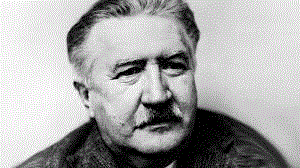
Josef Suk was one of the most important Czech composers of the late Romantic and early modern eras. A gifted violinist, respected chamber musician, and innovative composer, Suk served as a crucial bridge between the nationalist traditions established by Antonín Dvořák and the more complex musical language that emerged in the twentieth century. Although he began his career under the strong influence of his famous teacher and father-in-law, he gradually developed a highly personal style characterized by rich harmonies, emotional depth, and philosophical reflection. His works, particularly the Asrael Symphony, remain among the greatest achievements of Czech orchestral music.
Childhood
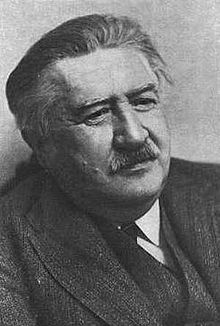
Josef Suk was born on January 4, 1874, in the small village of Křečovice in Bohemia, then part of the Austro-Hungarian Empire and now located in the Czech Republic. He was born into a deeply musical family. His father, also named Josef Suk, was a schoolteacher, church organist, and choir director who recognized his son’s musical talents at an early age.
Under his father’s guidance, young Josef learned to play the violin, piano, and organ. Music formed a central part of daily life in the Suk household, and the boy demonstrated remarkable aptitude from an early age. Growing up in a rural environment rich in Czech folk traditions, he absorbed many of the musical influences that would later shape his compositions.
His exceptional abilities soon became evident beyond his hometown. Determined to provide him with the best possible education, his family supported his admission to the prestigious Prague Conservatory when he was only eleven years old.
Youth
In 1885, Suk entered the Prague Conservatory, where he received rigorous training in violin performance, music theory, and composition. His teachers included some of the leading musicians of the Czech musical renaissance, among them Antonín Bennewitz, Josef Bohuslav Foerster, Karel Knittl, and Hanuš Wihan.
The defining event of his student years occurred when the conservatory appointed Antonín Dvořák as a composition professor. Suk quickly became one of Dvořák’s most talented and favored pupils. The relationship evolved beyond that of teacher and student, developing into a close friendship and artistic partnership.
During these years, Suk also began composing seriously. His early chamber works revealed both technical mastery and a strong melodic gift. His Piano Quartet in A minor, written as a student work, attracted considerable attention and demonstrated his promise as a composer.
In 1892, while still a young musician, Suk became a founding member of the Bohemian String Quartet, later known as the Czech Quartet. The ensemble would become one of Europe’s most celebrated chamber groups and remain a central part of his professional life for more than four decades.
Adulthood
Suk’s adult life was marked by both extraordinary artistic success and profound personal tragedy.
In 1898, he married Dvořák’s daughter, Otilie Dvořáková. The marriage was a happy one, and the couple soon welcomed a son, also named Josef. During this period, Suk enjoyed increasing recognition as both a composer and performer. His works began to be performed throughout Europe, and the Czech Quartet earned an international reputation for excellence.
Early compositions such as the Serenade for Strings and the incidental music for Radúz and Mahulena established him as one of the leading young composers of Central Europe. Although these works reflected Dvořák’s influence, they already displayed Suk’s individual voice.
The turning point in his life came in 1904 with the death of Dvořák. Only a year later, Suk’s wife Otilie died unexpectedly at the age of twenty-seven. These devastating losses transformed both his personal life and his artistic outlook.
In response to his grief, Suk composed the monumental Asrael Symphony, named after the angel of death. Initially conceived as a tribute to Dvořák, the work expanded after Otilie’s death into a deeply personal meditation on loss, mortality, and spiritual struggle. The symphony marked a dramatic stylistic shift, introducing richer harmonies, greater emotional intensity, and a more modern musical language.
Throughout the following decades, Suk continued to develop his distinctive style. His later works explored philosophical and spiritual themes, often reflecting on humanity’s place in the universe. He became one of the leading figures in Czech music and was widely respected throughout Europe.
Despite his success, Suk remained devoted to his homeland and continued performing with the Czech Quartet until his retirement. By the end of his career, he was regarded as one of the most significant Czech composers after Dvořák.
Major Compositions
Josef Suk’s catalog encompasses orchestral, chamber, piano, and choral works. Several compositions stand out as milestones in both his career and Czech musical history.
Serenade for Strings, Op. 6 (1892)
One of Suk’s earliest masterpieces, this work remains his most frequently performed composition. Written when he was only eighteen years old, it displays lyrical beauty, elegant craftsmanship, and youthful optimism.
Symphony in E Major, Op. 14 (1897–1899)
This ambitious symphony demonstrated Suk’s growing confidence as a large-scale composer and helped establish his reputation beyond chamber music.
Radúz and Mahulena, Op. 13 (1897–1898)
Originally written as incidental music for a fairy-tale drama, this score contains some of Suk’s most beloved melodies and showcases his gift for orchestral color.
Asrael Symphony, Op. 27 (1905–1906)
Widely regarded as his masterpiece, this five-movement symphony stands among the greatest works of the Czech symphonic tradition. It is a powerful expression of grief, remembrance, and spiritual transcendence.
A Summer Tale, Op. 29 (1907–1909)
A vast symphonic poem depicting nature, human emotion, and renewal. It reveals Suk’s mature style and mastery of orchestral writing.
Ripening, Op. 34 (1912–1917)
This philosophical symphonic poem explores themes of personal growth, struggle, and fulfillment. It is considered one of the most sophisticated works of his later period.
Meditation on the Old Czech Chorale “St. Wenceslas,” Op. 35a (1914)
Written during the First World War, this deeply patriotic work became a symbol of Czech national identity and resilience.
Epilogue, Op. 37 (1920–1929)
One of Suk’s final large-scale compositions, Epilogue reflects his lifelong search for spiritual meaning and artistic truth.
Death
By the early 1930s, Suk had become a revered figure in Czech cultural life. After decades of performing and composing, he retired from active concert work in 1933. Even in retirement, he remained an influential public figure and a respected elder statesman of Czech music.
Josef Suk died on May 29, 1935, in Benešov, Czechoslovakia, at the age of sixty-one. He was buried in his beloved hometown of Křečovice, where he had spent much of his life and where many of his greatest works had been composed.
His death marked the end of a remarkable career that had spanned the transition from nineteenth-century Romanticism to modern musical expression.
Conclusion
Josef Suk occupies a unique place in music history. While he inherited the traditions of Czech nationalism from Antonín Dvořák, he transformed those influences into a highly personal artistic language marked by emotional honesty, harmonic innovation, and philosophical depth. His career reflected both extraordinary artistic achievement and profound personal suffering, experiences that became inseparable from his music.
Today, Suk is remembered not merely as Dvořák’s student and son-in-law, but as an important composer in his own right. Works such as the Serenade for Strings, Asrael Symphony, A Summer Tale, and Ripening continue to be admired for their beauty, emotional power, and originality. Through these compositions, Josef Suk secured his place among the greatest figures of Czech classical music and one of the most significant composers of the early twentieth century.
Comments are closed