Introduction
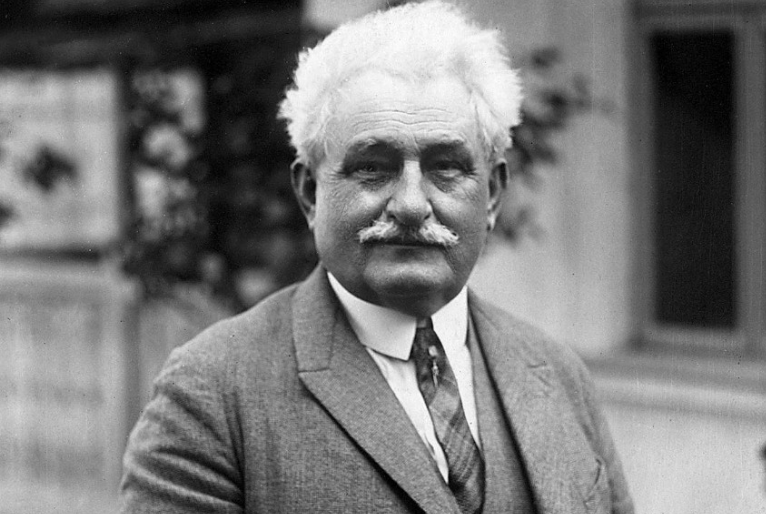
Leoš Janáček stands among the most original and influential composers of the twentieth century. Born in Moravia, a region rich in folk traditions and cultural heritage, he developed a musical language unlike that of any of his contemporaries. While many composers of his era drew inspiration from the dominant German and Austrian traditions, Janáček turned to the rhythms of everyday speech, the melodies of folk songs, and the emotional realities of ordinary people.
Although international recognition came relatively late in his life, Janáček eventually became one of the most respected figures in modern classical music. His operas, orchestral works, chamber music, and choral compositions continue to be performed throughout the world, admired for their emotional intensity, originality, and unmistakable national character.

Childhood
Leoš Eugen Janáček was born on July 3, 1854, in the village of Hukvaldy, located in Moravia, then part of the Austrian Empire and today within the Czech Republic. He was born into a poor but highly musical family. His father, Jiří Janáček, was a schoolteacher, organist, and choirmaster, while several generations of his family had also been involved in music education.
Janáček was one of many children in the household, and the family often struggled financially. Despite these hardships, music occupied a central place in his upbringing. He was exposed to church music, folk songs, and local traditions from an early age.
At the age of eleven, his musical talent earned him admission to the Augustinian monastery school in Brno. There he studied under the respected composer and choirmaster Pavel Křížkovský. The disciplined environment provided him with rigorous musical training, including singing, organ playing, and music theory. These years shaped his understanding of both sacred music and the folk traditions that would later become fundamental to his compositions.
The young Janáček proved hardworking and intelligent. Although poverty remained a constant challenge, education offered him opportunities unavailable to many children of his social background.
Youth
In 1869, Janáček enrolled at the Czech Teachers’ Institute in Brno. His studies included music, history, geography, and pedagogy. He excelled academically and graduated with distinction.
Following graduation, he began working as a teacher while continuing his musical activities. During these years, he served as an organist, choir director, and composer. His ambition, however, extended beyond local employment. Determined to improve his skills, he pursued advanced musical studies in Prague, Leipzig, and Vienna.
The conservatories exposed him to the broader European musical world. Although he respected the technical training he received, he often found the academic approach restrictive. Rather than imitating established German traditions, Janáček sought a more personal and distinctly Czech voice.
In 1881, he married Zdenka Schulzová, one of his former students. The marriage would prove complicated and emotionally turbulent. Nevertheless, the couple had two children, Olga and Vladimír.
Janáček’s youth was marked by relentless work. He taught, composed, conducted choirs, and became increasingly involved in the collection and study of Moravian folk music. This fascination with folk traditions would become one of the defining features of his artistic identity.
Adulthood
The adult years of Janáček’s life were characterized by both professional persistence and personal tragedy.
In 1881, he founded the Brno Organ School, an institution that became one of the most important centers of musical education in Moravia. He remained deeply involved in teaching for decades, influencing generations of young musicians.
At the same time, Janáček devoted himself to the systematic collection of folk songs. He traveled throughout Moravia recording melodies, studying dialects, and documenting traditional music. Unlike many composers who simply borrowed folk tunes, Janáček analyzed the rhythms and inflections of spoken language itself. This research led to his theory of “speech melodies,” which became a cornerstone of his mature compositional style.
His family life, however, brought immense sorrow. His son Vladimír died in childhood, and his beloved daughter Olga died in 1903 at the age of twenty. These losses devastated him emotionally and influenced many of his later works.
For years Janáček struggled to gain recognition outside Brno. Although he composed steadily, his music was often considered unconventional. The turning point came with the opera Jenůfa. Completed in 1904, the work initially received only local attention. However, after a successful production in Prague in 1916, Janáček’s reputation expanded rapidly across Europe.
The final decade of his life became his most productive and celebrated period. Remarkably, many of the masterpieces for which he is now famous were composed after the age of sixty.
Another significant influence during his later years was Kamila Stösslová, a much younger married woman with whom he developed a profound emotional attachment. Their extensive correspondence inspired numerous compositions and provided creative energy during his final years.
Major Compositions
Janáček’s output includes operas, orchestral works, chamber music, piano pieces, choral compositions, and song cycles. Many of these works are now considered landmarks of twentieth-century music.
Jenůfa (1904)
Often regarded as his breakthrough masterpiece, Jenůfa tells a powerful story of love, jealousy, guilt, and redemption in a Moravian village. Its emotional realism and innovative musical language established Janáček as a major operatic composer.
Káťa Kabanová (1921)
Based on a Russian drama, this opera portrays a woman’s struggle against social oppression and personal despair. It is admired for its psychological depth and lyrical beauty.
The Cunning Little Vixen (1924)
One of Janáček’s most beloved works, this opera combines humor, philosophy, and nature symbolism. Through the life of a fox, it explores themes of renewal, mortality, and the cycle of life.
The Makropulos Affair (1926)
This opera examines immortality and the meaning of human existence through the story of a woman who has lived for centuries. It remains one of the most intellectually fascinating works in the operatic repertoire.
From the House of the Dead (1928)
Based on a novel by Fyodor Dostoevsky, this opera presents a stark portrayal of life in a Siberian prison camp. It was completed shortly before Janáček’s death.
Sinfonietta (1926)
Perhaps his most famous orchestral composition, Sinfonietta celebrates Czech national pride and civic spirit. Its brilliant brass fanfares have become iconic.
Glagolitic Mass (1926)
This monumental choral work reflects Janáček’s deep connection to Slavic culture. Written in Old Church Slavonic, it combines spiritual grandeur with intense dramatic power.
Taras Bulba (1918)
An orchestral rhapsody inspired by the writings of Nikolai Gogol, Taras Bulba demonstrates Janáček’s mastery of orchestral color and dramatic storytelling.
String Quartets No. 1 and No. 2
These chamber works rank among the finest string quartets of the twentieth century. The second quartet, often called Intimate Letters, reflects his emotional relationship with Kamila Stösslová.
On an Overgrown Path
This collection of piano pieces is among his most personal creations, evoking memories, nostalgia, and reflections on childhood.
Death
In the summer of 1928, Janáček visited his native region of Hukvaldy. During a walk, he became ill after being exposed to cold weather. His condition quickly worsened, developing into pneumonia.
He was taken to a hospital in Ostrava, where he died on August 12, 1928, at the age of seventy-four.
At the time of his death, Janáček had finally achieved the international recognition he had sought for much of his life. His final years had produced an extraordinary series of masterpieces that secured his place among the greatest composers of modern music.
He was buried in Brno, the city that had been the center of his professional life for decades.
Conclusion
Leoš Janáček transformed classical music by creating a highly personal style rooted in the speech patterns, folk traditions, and emotional experiences of his homeland. His music rejected convention without abandoning accessibility, resulting in works that feel both innovative and deeply human.
His path to success was unusually long and difficult. Poverty, personal tragedy, professional frustration, and delayed recognition might have discouraged a lesser artist. Instead, these experiences contributed to the emotional richness and authenticity that characterize his music.
Today, Janáček is recognized as one of the most important composers of the twentieth century. His operas remain staples of the international repertoire, his orchestral works are frequently performed, and his chamber music continues to inspire musicians and audiences alike. Through his unique artistic voice, he gave musical expression to the spirit of Moravia while creating works of universal significance that continue to resonate with listeners around the world.
Comments are closed