Introduction
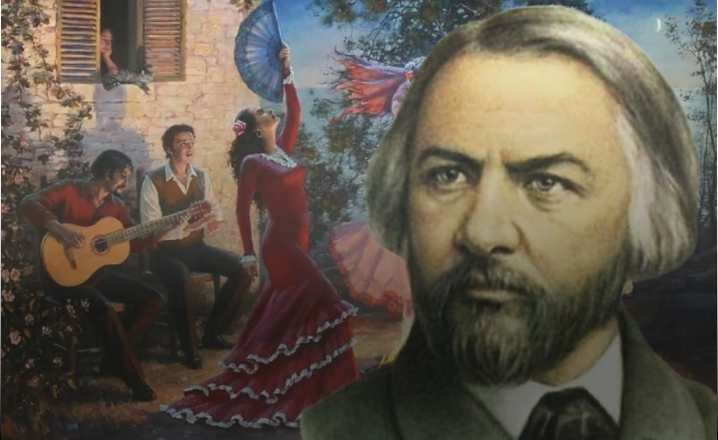
Mikhail Ivanovich Glinka is widely regarded as the father of Russian classical music. Before his emergence in the nineteenth century, much of the music performed in Russia followed Western European traditions, particularly those of Italy, Germany, and France. Glinka changed this landscape by creating a distinctly Russian musical style that blended native folk melodies, national history, and innovative orchestration. His achievements laid the foundation for later generations of Russian composers, including the members of the famous group known as “The Mighty Handful” and composers such as Pyotr Ilyich Tchaikovsky.
Although his catalog of works was relatively small compared to many other composers, Glinka’s influence was enormous. Through his operas, orchestral compositions, songs, and chamber music, he demonstrated that Russian themes could be transformed into sophisticated art music. His legacy continues to shape the identity of Russian classical music and secure his place among the most important composers of the Romantic era.
Childhood
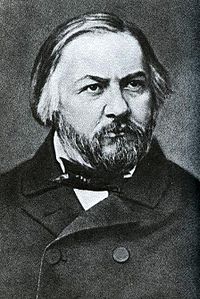
Mikhail Ivanovich Glinka was born on June 1, 1804 (May 20 according to the Old Style calendar), in the village of Novospasskoye, located in the Smolensk region of the Russian Empire. He was born into a wealthy family of the minor nobility. His father, Ivan Nikolayevich Glinka, owned substantial land, while his mother, Yevgeniya Andreyevna Glinka, came from a respected noble family.
Glinka spent much of his early childhood under the care of his grandmother, who was extremely protective. Concerned about his health, she kept him indoors in overheated rooms and shielded him from ordinary childhood activities. While this upbringing may have weakened his physical constitution, it also encouraged him to develop an active imagination and a strong sensitivity to music.
Music entered Glinka’s life at an early age. He was fascinated by the sounds of church bells, folk songs sung by peasants, and the performances of musicians employed on his family’s estate. These early experiences left a profound impression on him and later became important sources of inspiration for his compositions.
As a child, he demonstrated considerable musical talent. He learned to play the piano and violin and quickly developed an ear for melody and harmony. His family recognized his abilities and encouraged his musical education.
Youth
In 1818, Glinka moved to Saint Petersburg to attend the Noble Boarding School associated with the Pedagogical Institute. The city exposed him to a rich cultural environment and provided opportunities to study music more seriously.
While his formal education included a broad range of academic subjects, music remained his primary passion. He studied piano, violin, composition, and singing with several respected teachers. During this period, he became familiar with the works of European masters such as Mozart, Haydn, Beethoven, and Rossini.
Glinka began composing small pieces while still a student. His early works reflected the influence of Western European styles, particularly Italian opera, which was highly popular in Russia at the time. However, he was already developing a personal voice and showing an interest in Russian musical traditions.
After completing his education, Glinka entered government service, a common path for members of the Russian nobility. Nevertheless, he found bureaucratic work unfulfilling and devoted increasing amounts of time to music. His growing reputation as a talented amateur musician brought him into contact with writers, artists, and intellectuals who encouraged his creative ambitions.
A decisive turning point occurred in the late 1820s and early 1830s when Glinka traveled extensively through Europe. He visited Italy, Germany, and other countries, studying music and observing contemporary artistic trends. These experiences broadened his musical horizons and helped him refine his compositional technique.
Adulthood
Glinka returned to Russia with a clear artistic mission: to create a national Russian school of music. Rather than simply imitating European models, he sought to incorporate Russian folk traditions, language, and history into his works.
His first major success came with the opera A Life for the Tsar, completed in 1836. The opera tells the story of Ivan Susanin, a Russian peasant who sacrifices his life to protect the future Tsar Michael Romanov from invading Polish forces. The work was enthusiastically received and became one of the most celebrated operas in Russian history. It established Glinka as the leading composer of his country.
Following this triumph, Glinka composed his second opera, Ruslan and Lyudmila, which premiered in 1842. Based on a poem by Alexander Pushkin, the opera featured fantastical themes, innovative harmonies, and colorful orchestration. Although its initial reception was mixed, later generations recognized it as one of the most influential works in Russian music.
Throughout the 1840s and 1850s, Glinka continued to compose orchestral music, songs, and chamber works. His travels across Europe exposed him to new musical ideas, but he remained committed to developing a distinctly Russian style.
Glinka’s influence extended beyond his own compositions. Younger composers admired his achievements and viewed him as a model for creating national art music. His innovations inspired figures such as Mily Balakirev, Modest Mussorgsky, Alexander Borodin, Nikolai Rimsky-Korsakov, and César Cui, who collectively expanded the Russian musical tradition he had helped establish.
Although he enjoyed periods of artistic success, Glinka also experienced personal disappointments. His marriage was unhappy and eventually ended in separation. He frequently struggled with health problems and bouts of frustration regarding the reception of some of his works. Nevertheless, he remained dedicated to his artistic ideals.
Major Compositions
A Life for the Tsar (1836)
This opera marked the birth of Russian national opera. Combining patriotic themes with memorable melodies and dramatic storytelling, it became one of the most important works in Russian musical history.
Ruslan and Lyudmila (1842)
Based on Pushkin’s literary masterpiece, this opera showcased Glinka’s imagination and originality. Its innovative orchestration and exotic musical language influenced generations of composers.
Kamarinskaya (1848)
Often described as one of the most significant orchestral works in Russian music, Kamarinskaya is built upon Russian folk melodies. Tchaikovsky later remarked that the entire Russian symphonic tradition emerged from this composition.
Spanish Overtures
Inspired by his travels in Spain, Glinka composed orchestral works such as Jota Aragonesa and A Night in Madrid. These pieces demonstrated his ability to absorb foreign influences while maintaining his unique compositional voice.
Songs and Romances
Glinka wrote numerous art songs that became staples of the Russian vocal repertoire. These works displayed his gift for melody and his sensitivity to poetic texts.
Chamber and Piano Music
Although less famous than his operas, Glinka’s chamber and piano compositions reveal his technical skill and lyrical imagination. They contributed to the development of Russian instrumental music.
Death
In his later years, Glinka continued to travel throughout Europe. He spent time in Paris, Berlin, and other cultural centers, maintaining contact with musicians and intellectuals.
His health gradually declined, and he suffered from recurring illnesses. Despite these challenges, he remained active in musical circles and continued to inspire younger composers.
Mikhail Glinka died on February 15, 1857, in Berlin, Prussia, at the age of fifty-two. His death was mourned throughout Russia, where he was already recognized as a national cultural figure.
Initially buried in Berlin, his remains were later transferred to Saint Petersburg and interred at the Tikhvin Cemetery, a resting place for many of Russia’s most distinguished artists and musicians.
Conclusion
Mikhail Glinka occupies a unique position in the history of classical music. At a time when Russian composers largely relied on foreign models, he demonstrated that national traditions could serve as the basis for sophisticated and enduring artistic achievements. Through his operas, orchestral works, songs, and instrumental compositions, he established the foundations of a distinctly Russian musical identity.
His influence extended far beyond his own lifetime. The composers who followed him built upon the principles he introduced, transforming Russia into one of the world’s leading centers of classical music. Today, Glinka is remembered not only as a brilliant composer but also as the pioneer who gave Russian music its authentic voice.
More than a century and a half after his death, his works continue to be performed, studied, and admired throughout the world, ensuring that his legacy remains a vital part of the classical music tradition.
Comments are closed