Introduction
Modest Petrovich Mussorgsky was one of the most original and influential composers of nineteenth-century Russia. Born on March 21, 1839, in Karevo, Russia, he became a central figure in the movement that sought to create a distinctly Russian style of classical music. Unlike many of his contemporaries who looked toward Western Europe for inspiration, Mussorgsky drew heavily upon Russian history, folklore, language, and the lives of ordinary people. His innovative approach to harmony, melody, and musical storytelling helped transform Russian music and left a lasting impact on future generations of composers.
Although his life was marked by personal struggles, financial hardship, and alcoholism, Mussorgsky produced several masterpieces that remain staples of the classical repertoire. Works such as Pictures at an Exhibition, Boris Godunov, and Night on Bald Mountain continue to captivate audiences around the world. His music is celebrated for its emotional honesty, dramatic realism, and vivid depiction of Russian culture.

Childhood
Modest Mussorgsky was born into a wealthy landowning family in the rural region of Pskov Province. His father, Pyotr Mussorgsky, belonged to a noble family with a long military tradition, while his mother, Yulia Chirikova Mussorgskaya, was a talented pianist who recognized her son’s musical gifts at an early age.
From childhood, Mussorgsky displayed exceptional musical ability. His mother provided his first piano lessons and introduced him to the works of major European composers. By the age of seven, he was already performing difficult piano pieces and demonstrating remarkable talent.
Growing up on the family estate exposed Mussorgsky to Russian folk songs and peasant traditions. The melodies, rhythms, and stories he encountered during his early years would later become important sources of inspiration in his compositions. Unlike many aristocratic children who lived largely separated from rural life, Mussorgsky developed a deep appreciation for the culture and speech of ordinary Russians.
In 1849, he moved to Saint Petersburg with his brother to pursue a formal education. There he attended the prestigious Petrischule and later prepared for a military career, following family expectations.
Youth
At the age of thirteen, Mussorgsky entered the School of Cadets of the Guards in Saint Petersburg. Although military discipline occupied much of his time, he continued to develop his musical skills. During this period, he became known as an accomplished pianist among his fellow cadets.
In 1856, he graduated and joined the elite Preobrazhensky Regiment. However, military life did not fully satisfy his artistic ambitions. Soon after arriving in Saint Petersburg’s cultural circles, he met several influential musicians who would change the course of his life.
A particularly important relationship developed with composer Mily Balakirev, who became a mentor and encouraged Mussorgsky’s musical development. Through Balakirev, Mussorgsky met other composers who would later form the group known as “The Five” or “The Mighty Handful.” This circle included Nikolai Rimsky-Korsakov, Alexander Borodin, and César Cui.
The group’s goal was to create a national Russian style of music that reflected the country’s unique history and culture rather than imitating Western European traditions. Inspired by these ideals, Mussorgsky resigned from military service in 1858 and devoted himself entirely to music.
Adulthood
The years that followed were marked by both artistic growth and personal hardship. Mussorgsky experimented boldly with musical forms and developed a style unlike that of any other composer of his time. He sought to reproduce natural speech patterns in music and aimed for a realistic portrayal of human emotions and behavior.
Despite his creativity, financial difficulties frequently plagued him. The emancipation of the serfs in Russia reduced his family’s wealth, forcing him to seek employment in various government positions. Balancing work with composition proved challenging.
During the 1860s and 1870s, Mussorgsky composed many of his most important works. He became increasingly interested in Russian history and literature, often choosing subjects that reflected national themes. His compositions demonstrated a powerful sense of drama and psychological insight.
However, personal tragedy also affected him deeply. The deaths of friends and family members contributed to periods of depression. His growing dependence on alcohol further complicated his life and hindered his productivity.
Although some contemporaries criticized his unconventional style and considered his works technically imperfect, others recognized his extraordinary originality. His music challenged established rules and opened new possibilities for future composers.
Major Compositions
Boris Godunov
Mussorgsky’s greatest achievement is widely considered to be the opera Boris Godunov. Based on historical events and inspired by a play by Alexander Pushkin, the opera explores the reign of Tsar Boris and examines themes of power, guilt, and national identity.
Completed in the early 1870s, the opera broke new ground through its realistic treatment of characters and its emphasis on the Russian people as a central dramatic force. Today, it is regarded as one of the greatest operas ever written.
Pictures at an Exhibition
Composed in 1874, Pictures at an Exhibition began as a suite for solo piano inspired by artwork created by Mussorgsky’s friend, the artist and architect Viktor Hartmann. The work takes listeners on a musical journey through an imaginary art exhibition.
Each movement depicts a different picture, while recurring promenade sections represent the viewer walking between exhibits. The piece became especially famous after being orchestrated by Maurice Ravel in the twentieth century.
Night on Bald Mountain
One of Mussorgsky’s most famous orchestral works, Night on Bald Mountain portrays a supernatural gathering of witches and evil spirits. The composition is notable for its dramatic intensity, vivid orchestration, and imaginative depiction of folklore.
Although the original version was rarely performed during his lifetime, later revisions helped establish the work as a popular concert piece.
Songs and Song Cycles
Mussorgsky also composed numerous songs that reveal his gift for psychological characterization. Collections such as The Nursery, Songs and Dances of Death, and Sunless demonstrate his ability to portray human emotions with extraordinary realism.
These works remain among the finest examples of Russian art song and continue to be admired for their emotional depth and originality.
Khovanshchina
Another major operatic project was Khovanshchina, which depicts political and religious conflicts in seventeenth-century Russia. Although left unfinished at his death, the opera was later completed and orchestrated by other composers.
Today, it is recognized as one of the masterpieces of Russian opera.
Death
By the late 1870s, Mussorgsky’s health had deteriorated significantly due to chronic alcoholism. His physical and mental condition worsened, making it increasingly difficult for him to compose and maintain stable employment.
In February 1881, he suffered a series of severe seizures associated with alcohol-related illness. Friends arranged for his admission to a military hospital in Saint Petersburg, where he received medical care.
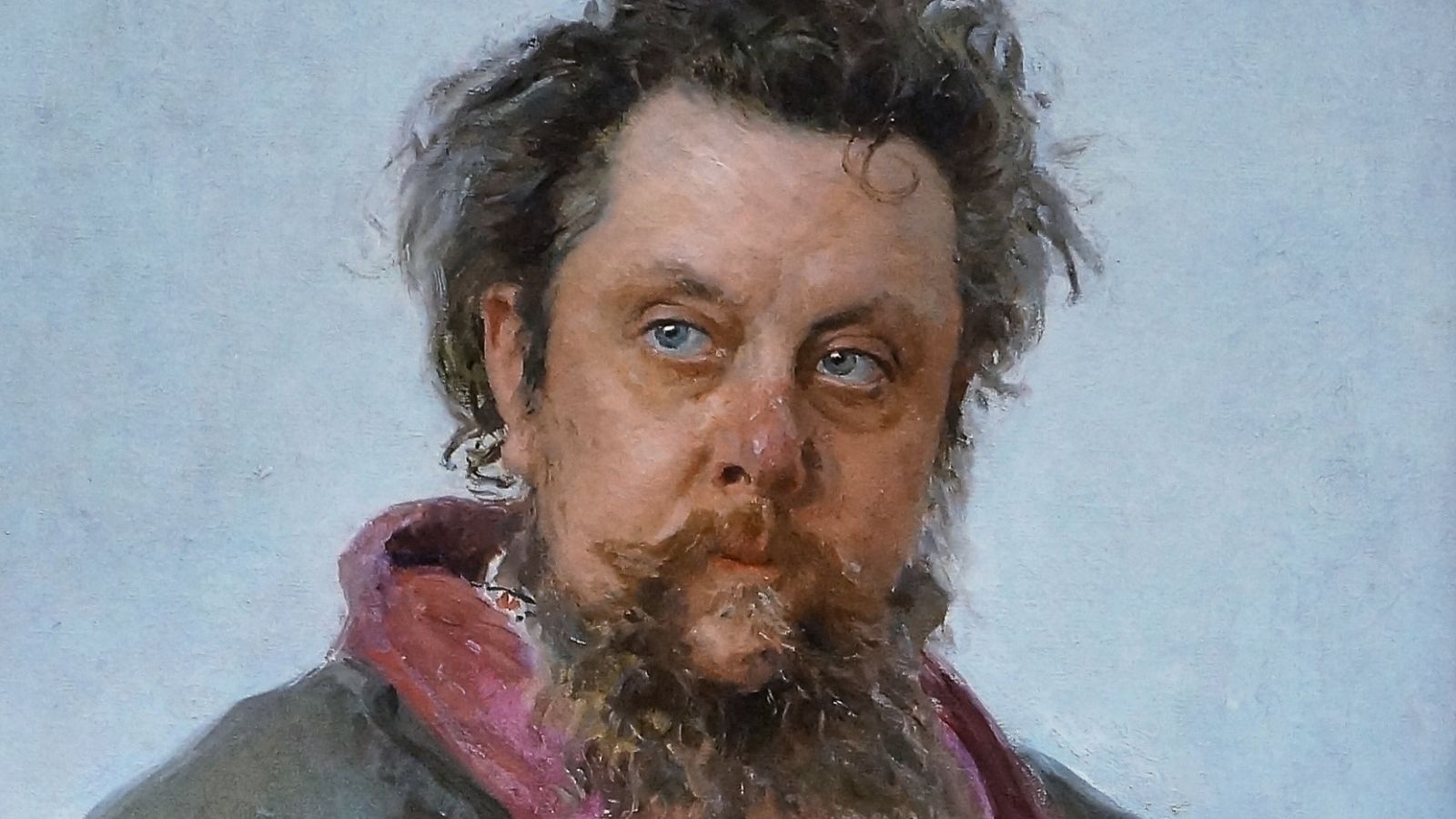
During his hospitalization, the renowned painter Ilya Repin created the famous portrait that has become one of the most recognizable images of the composer. The painting captures Mussorgsky’s exhausted appearance while still conveying his intelligence and individuality.
Despite temporary signs of recovery, his condition continued to decline. Modest Mussorgsky died on March 28, 1881, just one week after his forty-second birthday.
He was buried in Saint Petersburg, where his grave remains a place of tribute for admirers of Russian music.
Conclusion
Modest Mussorgsky’s life was brief, turbulent, and often difficult, yet his contribution to music was extraordinary. Through his commitment to realism, his embrace of Russian culture, and his willingness to challenge established conventions, he created works of remarkable originality and emotional power.
Although many of his compositions required later editing and orchestration by fellow musicians, the creative vision behind them was uniquely his own. His influence can be heard in the music of later Russian composers and in the broader development of modern musical expression.
Today, Mussorgsky is remembered as one of the greatest composers in Russian history. His masterpieces continue to inspire performers, scholars, and audiences worldwide, ensuring that his artistic legacy remains vibrant more than a century after his death.
Comments are closed