Introduction
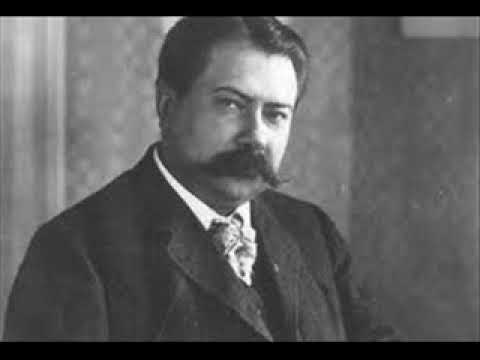
Tor Aulin was one of the most influential figures in Swedish musical life during the late nineteenth and early twentieth centuries. A virtuoso violinist, respected conductor, chamber music advocate, and composer, he played a crucial role in elevating Sweden’s classical music culture. Although he composed several significant works, including violin concertos and chamber music, his greatest contribution may have been his tireless efforts to promote both Scandinavian and European classical repertoire throughout Sweden. His leadership in orchestras, chamber ensembles, and concert organizations helped shape the nation’s musical identity during a period of cultural growth.

Childhood
Tor Bernhard Wilhelm Aulin was born on September 10, 1866, in Stockholm, Sweden. He grew up in a family that valued education and music. His father, Lars Axel Alfred Aulin, was a scholar of classical languages and an amateur violinist, while his mother, Edla Holmberg Aulin, was a trained singer and accomplished pianist.
When Tor was only three years old, his father died, leaving the family in difficult circumstances. Nevertheless, music remained a central part of family life. His maternal relatives encouraged the musical development of both Tor and his sister, Valborg Aulin, who later became a notable composer herself.
Recognizing Tor’s exceptional talent, his family arranged for formal musical training. At the age of eleven, he entered the Royal Conservatory of Music in Stockholm, where he studied violin under Carl Johan Lindberg. These early years laid the technical and artistic foundations that would support his future career.
Youth
Aulin’s talent developed rapidly. At only fifteen years old, he secured a position in the orchestra of the Royal Dramatic Theatre, helping to support his family financially while gaining valuable professional experience.
A decisive moment occurred in 1883 when the celebrated violinist Émile Sauret heard the young musician perform in Stockholm. Impressed by his abilities, Sauret encouraged Aulin to continue his studies in Berlin. Between 1884 and 1886, Aulin studied violin with Sauret and composition with Philipp Scharwenka at the Berlin Conservatory.
The Berlin years exposed him to the broader European musical world and refined his technique into that of a professional virtuoso. Upon returning to Sweden in 1886, he quickly emerged as one of the country’s leading violinists, performing major concertos by composers such as Mendelssohn, Bruch, and Vieuxtemps. His reputation soon spread beyond Sweden to neighboring Scandinavian countries.
Adulthood
The late 1880s and 1890s marked the beginning of Aulin’s mature career. In 1887, he founded the Aulin Quartet, the first fully professional string quartet in Sweden. The ensemble became one of the country’s most respected musical institutions and toured extensively throughout Scandinavia for nearly twenty-five years.
In 1889, Aulin became concertmaster of the Royal Court Orchestra in Stockholm, a prestigious position he held until 1902. During these years, he established himself not only as a performer but also as an influential cultural figure. Alongside fellow composer and pianist Wilhelm Stenhammar, he promoted the music of Swedish composers, particularly that of Franz Berwald, whose works had been largely neglected.
As the new century began, Aulin increasingly devoted his attention to conducting. He helped establish and lead several important orchestral organizations, including the Stockholm Concert Society Orchestra. He also conducted orchestras associated with the Royal Dramatic Theatre and the Southern Sweden Philharmonic Society. Later, he served as conductor of the Gothenburg Orchestra Society, helping to strengthen Sweden’s orchestral traditions.
His commitment to musical education was remarkable. Through concert tours, chamber performances, and orchestral leadership, he brought classical music to audiences throughout Sweden, including many communities that rarely had access to high-quality performances. This educational mission earned him a lasting place in Swedish cultural history.
Major Compositions
Although Aulin devoted much of his life to performance and conducting, he produced a significant body of compositions, most of them centered on the violin.
Violin Concerto No. 1
His earliest concerto demonstrated his mastery of violin writing and reflected the Romantic traditions that influenced his style.
Violin Concerto No. 2 in A Minor, Op. 11
This concerto expanded his reputation as a composer and showcased both virtuosity and lyrical expression.
Violin Concerto No. 3 in C Minor, Op. 14
Often regarded as his masterpiece, this concerto remains one of the most frequently performed Swedish violin concertos. Its dramatic character, technical brilliance, and rich orchestration have secured its place in the Scandinavian repertoire.
Violin Sonata in D Minor, Op. 12
Written in 1892, the sonata combines Romantic passion with sophisticated craftsmanship and remains one of his most respected chamber works.
Four Watercolors (Fyra Akvareller), Op. 15
These short character pieces for violin and piano became some of Aulin’s most beloved compositions. They remain popular among violinists and are frequently performed in Sweden.
Midsummer Dance, Op. 18
This colorful piece reflects Swedish folk influences and demonstrates Aulin’s gift for melodic writing.
Master Olof, Op. 22
Composed as incidental music for the play by August Strindberg, this work illustrates Aulin’s ability to write effective dramatic music for the theater.
Swedish Dances and Other Violin Pieces
Aulin also wrote numerous shorter works for violin and piano that combined Romantic expression with elements of Swedish national style. These pieces helped establish a distinct Scandinavian voice in violin literature.
Death
The final years of Aulin’s life were marked by declining health. He suffered from kidney disease and recurring periods of depression. In 1913, he experienced a stroke that left him partially paralyzed, significantly limiting his ability to work.
Despite these difficulties, he remained devoted to music until the end. His colleagues and friends recalled his determination to continue rehearsing and conducting even as his physical condition worsened.
Tor Aulin died on March 1, 1914, in Saltsjöbaden at the age of forty-seven. His funeral in Stockholm reflected the enormous respect he had earned throughout Sweden’s musical community. Musicians from major orchestras gathered to honor a man whose efforts had transformed the country’s cultural landscape.
Conclusion
Tor Aulin occupies a unique place in Swedish musical history. While his compositions, particularly the Third Violin Concerto and Four Watercolors, continue to be admired, his broader legacy extends far beyond his own works. As a violin virtuoso, conductor, chamber musician, educator, and organizer, he helped build the foundations of modern Swedish classical music.
His promotion of Scandinavian composers, leadership of important orchestras, and dedication to bringing great music to wider audiences established him as one of Sweden’s most influential musicians. More than a century after his death, Tor Aulin remains a central figure in the development of Sweden’s national musical culture and a distinguished representative of the late Romantic tradition.
Comments are closed