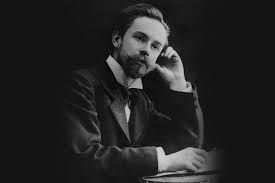
Alexander Scriabin (1872–1915) was one of the most innovative and influential composers of the late Romantic and early modern periods. A Russian pianist, mystic, and composer, Scriabin developed a unique musical language that evolved from the influence of Frédéric Chopin into a highly original style characterized by rich harmonies, spiritual symbolism, and groundbreaking experimentation.
Throughout his career, Scriabin sought to transcend traditional musical forms and create works that expressed profound philosophical and mystical ideas. His compositions continue to fascinate musicians, scholars, and audiences around the world, offering a remarkable journey from Romantic lyricism to visionary modernism.
Below are five of Scriabin’s most important compositions, each representing a significant milestone in his artistic development.
1. Piano Sonata No. 5, Op. 53 (1907)
A Turning Point in Scriabin’s Musical Evolution
The Piano Sonata No. 5 is often regarded as the work that marks Scriabin’s complete transition from late Romanticism to his mature, highly individual style. Written in 1907, it was composed shortly after his orchestral work The Poem of Ecstasy and reflects many of the same ecstatic and mystical ideas.
Unlike his earlier sonatas, which followed more traditional structures, the Fifth Sonata unfolds in a single continuous movement. The music is intense, unpredictable, and emotionally charged, moving rapidly between moments of explosive energy and dreamlike contemplation.
Key Features
- Single-movement structure
- Advanced harmonic language
- Extreme technical demands for the pianist
- Mystical and ecstatic atmosphere
- Frequent use of thematic transformation
Why It Matters
The Fifth Sonata serves as a gateway to Scriabin’s later works and demonstrates his emergence as one of the most original voices in twentieth-century music. It remains one of the most frequently performed and recorded pieces in his piano repertoire.
2. The Poem of Ecstasy, Op. 54 (1908)
A Symphony of Spiritual Awakening
The Poem of Ecstasy is one of Scriabin’s most ambitious orchestral works. Conceived as a musical representation of spiritual liberation and creative transcendence, the piece reflects his growing interest in mysticism and philosophy.
Scored for a massive orchestra, the work unfolds as a continuous symphonic poem lasting approximately twenty minutes. The music gradually builds toward a monumental climax that symbolizes the triumph of the human spirit.
Musical Characteristics
- Rich orchestration
- Continuous symphonic structure
- Expansive thematic development
- Intensely chromatic harmony
- Monumental climax
Historical Significance
This composition established Scriabin as a major orchestral innovator and demonstrated his ability to translate abstract philosophical concepts into powerful musical experiences.
3. Prometheus: The Poem of Fire, Op. 60 (1910)
Music, Color, and Mysticism
Prometheus: The Poem of Fire is perhaps Scriabin’s most revolutionary work. Inspired by the Greek myth of Prometheus, the composition explores themes of creation, enlightenment, and cosmic evolution.
The piece is famous for including a “color organ” or “light keyboard” (clavier à lumières), an instrument designed to project colored lights corresponding to musical harmonies. Scriabin believed that music and color were deeply interconnected and envisioned performances that would engage multiple senses simultaneously.
Key Innovations
- Integration of music and visual effects
- Use of the famous “mystic chord”
- Experimental harmonic language
- Large-scale orchestral and choral forces
- Early concept of multimedia performance
Legacy
Many historians consider Prometheus a precursor to modern multimedia art and immersive performance experiences. The work remains a landmark achievement in both music and artistic experimentation.
4. Piano Sonata No. 9, Op. 68 “Black Mass” (1913)
Darkness and Psychological Intensity
Among Scriabin’s late piano works, the Ninth Sonata occupies a unique place. Often nicknamed the “Black Mass Sonata,” it explores darker emotional territory than many of his other compositions.
The music is filled with tension, ambiguity, and unsettling harmonic progressions. Rather than seeking radiant transcendence, the sonata seems to delve into mystery, obsession, and psychological complexity.
Distinctive Elements
- Dense chromatic harmony
- Ominous atmosphere
- Complex textures
- Continuous thematic transformation
- High expressive intensity
Importance in Scriabin’s Output
The Ninth Sonata demonstrates the remarkable range of Scriabin’s imagination and reveals a more shadowed aspect of his mystical vision. It is widely regarded as one of the masterpieces of twentieth-century piano literature.
5. Piano Sonata No. 10, Op. 70 (1913)
The Threshold of Modernism
Composed in the same period as the Ninth Sonata, the Tenth Sonata represents one of Scriabin’s final and most advanced achievements. The work combines mystical symbolism with extraordinary harmonic freedom.
Scriabin referred to this sonata as an “insect sonata” because of its shimmering, fluttering textures that evoke movement and light. The music often seems suspended between tonality and atonality, anticipating developments that would later become central to modernist music.
Musical Highlights
- Ethereal textures
- Brilliant pianistic writing
- Highly advanced harmonic language
- Mystical atmosphere
- Innovative formal design
Enduring Influence
The Tenth Sonata is frequently cited as one of the most visionary piano works of the early twentieth century. Its harmonic innovations influenced later composers and continue to inspire performers and scholars today.
Scriabin’s Lasting Legacy
Alexander Scriabin occupies a unique position in music history. Beginning as a composer influenced by Romantic traditions, he ultimately forged a musical language unlike any other. His works pushed the boundaries of harmony, form, and artistic expression while exploring profound philosophical and spiritual themes.
The five compositions discussed above—Piano Sonata No. 5, The Poem of Ecstasy, Prometheus: The Poem of Fire, Piano Sonata No. 9 “Black Mass”, and Piano Sonata No. 10—represent the pinnacle of Scriabin’s creative achievement. Together, they illustrate his remarkable journey from Romantic pianist-composer to visionary musical pioneer.
Comments are closed