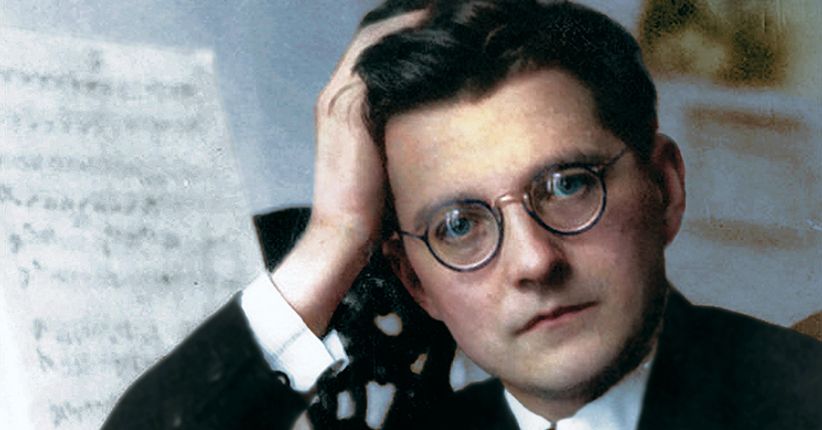
Dmitri Shostakovich’s Five Greatest Masterpieces
Dmitri Shostakovich (1906–1975) was one of the most influential composers of the twentieth century. Living through the Russian Revolution, Stalin’s dictatorship, World War II, and the Cold War, he transformed political oppression, personal suffering, irony, and hope into some of the most powerful music ever written.
His works combine dramatic intensity, profound emotional depth, brilliant orchestration, and unforgettable melodies. Whether writing symphonies, chamber music, concertos, or operas, Shostakovich created compositions that continue to captivate audiences around the world.
Below are five of his most celebrated masterpieces and the reasons they remain central to the classical repertoire.
1. Symphony No. 5 in D Minor, Op. 47 (1937)
Historical Background
Symphony No. 5 is arguably Shostakovich’s most famous work. It was composed after he fell out of favor with Joseph Stalin’s regime following the public condemnation of his opera Lady Macbeth of the Mtsensk District.
Facing the possibility of imprisonment or execution, Shostakovich responded with a symphony officially described as “a Soviet artist’s creative response to just criticism.” While Soviet authorities praised the work as patriotic, many listeners have interpreted it as a deeply personal expression of suffering, resilience, and quiet resistance.
Musical Characteristics
The symphony unfolds across four movements:
- A dramatic opening movement filled with tension.
- A lyrical and emotionally rich second movement.
- A deeply moving Largo considered one of the most beautiful slow movements in twentieth-century music.
- A triumphant finale whose celebratory character has often been interpreted as deliberately ambiguous rather than genuinely joyful.
The emotional complexity of the Fifth Symphony continues to inspire debate among scholars and performers.
Why It Matters
This work established Shostakovich as one of the leading symphonists of the modern era and remains one of the most frequently performed symphonies worldwide.
2. Symphony No. 7 “Leningrad”, Op. 60 (1941)
Historical Background
Written during the Second World War, the Seventh Symphony became a symbol of resistance against Nazi Germany during the Siege of Leningrad.
Although completed after Shostakovich had been evacuated from the city, the work quickly became an international symbol of courage and endurance.
One of its most famous performances occurred in besieged Leningrad itself, where starving musicians assembled to perform the symphony despite extreme hardship.
Musical Characteristics
The work is monumental in scale, lasting approximately 75 to 80 minutes.
Its most famous passage is the first movement’s “invasion theme,” a simple march that gradually grows through repeated variations into an overwhelming orchestral climax.
The remaining movements alternate between moments of tragedy, nostalgia, hope, and determination.
Why It Matters
The Seventh Symphony became one of the defining musical statements of World War II and remains one of history’s greatest musical portrayals of war and human resilience.
3. String Quartet No. 8 in C Minor, Op. 110 (1960)
Historical Background
Many musicians consider the Eighth String Quartet to be Shostakovich’s most personal composition.
Written in just three days while visiting Dresden shortly after the city’s wartime destruction, the quartet is officially dedicated “to the victims of fascism and war.” However, the composer reportedly regarded it as his own musical autobiography.
Musical Characteristics
The work is built around the musical motif D–E♭–C–B, representing the composer’s initials in German notation (D–Es–C–H).
Throughout the five interconnected movements, this motif appears repeatedly alongside quotations from many of Shostakovich’s earlier compositions.
The music alternates between violent outbursts, haunting lamentations, and moments of profound introspection.
Why It Matters
The Eighth Quartet is widely regarded as one of the greatest chamber music works ever written and offers extraordinary insight into the composer’s inner emotional world.
4. Piano Concerto No. 2 in F Major, Op. 102 (1957)
Historical Background
Unlike many of Shostakovich’s darker compositions, the Second Piano Concerto is filled with warmth, humor, and youthful energy.
It was written as a birthday gift for his son Maxim, who was preparing for his graduation examination at the Moscow Conservatory.
Musical Characteristics
The concerto consists of three movements:
- A lively and playful opening.
- A lyrical Andante featuring one of Shostakovich’s most beautiful melodies.
- A brilliant and virtuosic finale overflowing with rhythmic vitality.
Its transparent orchestration and approachable style have made it one of the composer’s most accessible works.
Why It Matters
The concerto demonstrates Shostakovich’s remarkable versatility, proving that he could compose music of extraordinary charm alongside his more tragic masterpieces.
5. Symphony No. 10 in E Minor, Op. 93 (1953)
Historical Background
Completed shortly after Stalin’s death, the Tenth Symphony is often interpreted as Shostakovich’s reflection on decades of political oppression.
Although the composer never explicitly confirmed its program, many commentators believe the work represents both personal liberation and a portrait of Stalin’s tyranny.
Musical Characteristics
The symphony features four expansive movements.
The second movement is particularly famous for its relentless intensity and explosive energy. Many scholars have described it as a musical portrait of Stalin.
The work also prominently features the DSCH musical signature, a recurring motif based on the composer’s initials, symbolizing his personal identity emerging after years of repression.
The finale moves from uncertainty toward a hard-earned sense of triumph.
Why It Matters
The Tenth Symphony is widely considered one of the greatest symphonies of the twentieth century and remains a cornerstone of the orchestral repertoire.
Shostakovich’s Enduring Legacy
Dmitri Shostakovich composed fifteen symphonies, fifteen string quartets, concertos, operas, film scores, piano music, and numerous chamber works. His music reflects the extraordinary challenges of living under totalitarian rule while exploring timeless themes of courage, grief, irony, and the resilience of the human spirit.
His influence extends far beyond Russia. Conductors, performers, composers, and audiences continue to discover new meanings in his music, ensuring that his works remain among the most performed and studied compositions of the modern classical era.
Whether through the monumental drama of the Leningrad Symphony, the emotional honesty of the Eighth String Quartet, or the haunting ambiguity of the Fifth Symphony, Shostakovich’s masterpieces stand as enduring monuments to artistic integrity and human perseverance.
Comments are closed