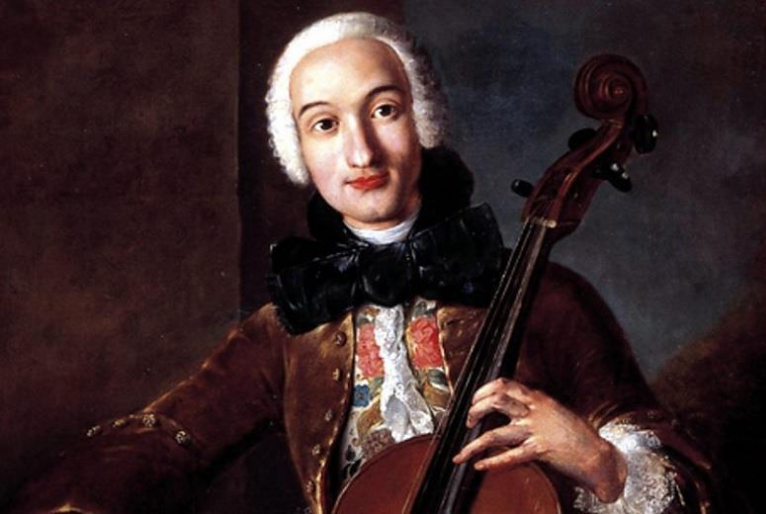
Luigi Boccherini – A Complete Biography
Introduction
Luigi Rodolfo Boccherini (February 19, 1743 – May 28, 1805) was an Italian composer and virtuoso cellist of the Classical era. Celebrated for his prolific chamber music—especially his string quintets—Boccherini helped elevate the cello’s role in ensemble music. His graceful, galante style, often tinged with Spanish and Rococo influences, established him as a distinctive and lasting figure in 18th-century music.

Childhood
Born in Lucca, Italy, Boccherini was the third child of Leopoldo Boccherini, a professional cellist and double-bass player. From as early as age five, Luigi received cello lessons from his father, demonstrating remarkable musical aptitude. By age nine, he continued his studies under Abbé Francesco Vanucci, the music director at the cathedral in San Martino, where he honed his craft further.
Youth
At age thirteen, Boccherini was sent to Rome to study with the celebrated cellist Giovanni Battista Costanzi, who served as the musical director at Saint Peter’s Basilica. This period deeply influenced Boccherini’s musical development, exposing him to the Italian polyphonic tradition and instrumental sophistication.
In 1757, accompanied by his father, he traveled to Vienna, gaining both performance experience and wider recognition. At only 17, in 1760, he made his debut as a composer with his Six Trios for Two Violins and Cello. A public concert in Vienna in 1764 was met with enthusiastic reception.
Adulthood
In 1768, Boccherini moved to Madrid and, by 1770, entered the service of Infante Luis Antonio of Spain, brother to King Charles III. Under the patronage of the Infante, Boccherini thrived artistically—until a dispute with the King over a passage in a trio led to his dismissal. Afterward, he accompanied Infante Luis to Arenas de San Pedro and Candeleda, where he composed many of his most memorable works.
Later in life, Boccherini gained support from other patrons including Lucien Bonaparte, the French ambassador to Spain, and King Frederick William II of Prussia, himself a cellist and arts enthusiast.
Despite periods of favor, Boccherini faced hardships following the deaths of his Spanish patron in 1785, his two wives in 1785 and 1805, and four daughters between 1796 and 1804. Ultimately, personal tragedy overshadowed his final years.
Major Compositions
Boccherini was a prolific composer, especially in the realm of chamber music. He composed over a hundred string quintets—usually scored for two violins, viola, and two cellos, a configuration he helped pioneer—nearly a hundred string quartets, numerous guitar quintets, around 30 symphonies, and 12 cello concertos.
Famous Works
- String Quintet in E major, Op. 11 No. 5 — Celebrated for its graceful minuet third movement, which remains widely performed independently of the work.
- Cello Concerto in B-flat major — One of Boccherini’s best-known concertos, now often heard in its restored original form.
- Guitar Quintet No. 4 in D — Famous for its final movement, a spirited “Fandango,” reflecting Spanish musical traits.
- Musica notturna delle strade di Madrid — A vivid musical depiction of nighttime Madrid, complete with street sounds, church bells, and beggars’ songs.
- Stabat Mater — A sacred vocal work composed in 1781 and revised in 1800, known for its emotional depth.
- Clementina — Boccherini’s only complete stage work, a two-act Spanish-language zarzuela blending folk elements with lyrical comic tones.
Death
Luigi Boccherini passed away in Madrid on May 28, 1805. He was interred at the Pontifical Basilica of St. Michael in Madrid. In 1927, his remains were moved back to his native Lucca, where they were reburied in the Church of San Francesco.
Conclusion
Luigi Boccherini was an extraordinary artist—an accomplished cellist and a composer of elegance, innovation, and emotional depth. His contributions to chamber music, particularly through the development of the string quintet and the prominence he gave to the cello, left a lasting mark on Classical-era composition. His works, imbued with gallant charm, Spanish flair, and personal expression, continue to enchant audiences centuries later. Whether in the graceful minuet of his quintets or the evocative “night music” of Madrid, Boccherini’s voice remains distinctive, intimate, and enduring.
Comments are closed