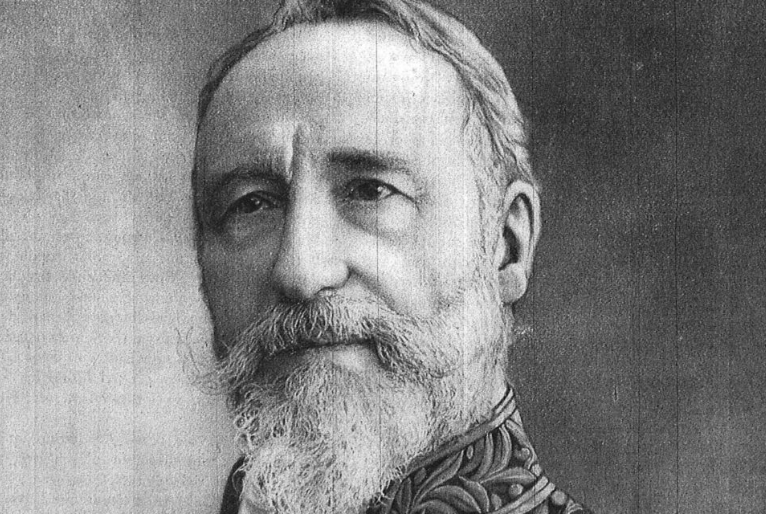
Theodore Dubois – A Complete Biography
INTRODUCTION
Clément François Théodore Dubois (August 24, 1837 – June 11, 1924) was a French Romantic composer, organist, and pedagogue who left an indelible mark on the musical landscape of late 19th and early 20th century France. Often associated with the conservative academic tradition of his time, Dubois was a multifaceted musician whose contributions extended beyond composition to teaching and music theory. While sometimes overlooked by modern audiences, his work as a composer, organist, and educator helped shape generations of French musicians and established him as an important figure in the musical establishment of the Third Republic.
As a composer, Dubois created works across various genres, including operas, oratorios, symphonies, and chamber music. Though he aspired to operatic success, his most enduring compositions proved to be his sacred works, particularly his oratorio “Les Sept Paroles du Christ” (The Seven Last Words of Christ). His theoretical writings, especially his “Traité d’harmonie” (Treatise on Harmony), remained influential teaching tools well into the 20th century.
This biography explores the life and legacy of Theodore Dubois, from his humble beginnings in rural France to his rise as one of the most prominent musical figures in Paris, examining both his artistic achievements and his role in the musical institutions of his time.
==============================================================================
CHILDHOOD
Theodore Dubois was born on August 24, 1837, in Rosnay, a small village in the Marne region of northeastern France, near the city of Reims. Unlike many notable composers of his era, Dubois did not come from a family with musical connections. His father, Nicolas Dubois, earned his living as a basket maker, while his grandfather Jean had been a schoolmaster in their village. His mother, Célinie Dubois (née Charbonnier), devoted herself primarily to raising young Théodore and managing their household.
Despite his family’s lack of musical background, Dubois showed a remarkable interest and aptitude for music from an early age. His initial musical education came under the guidance of Louis Fanart, the choirmaster of Reims Cathedral, who recognized the boy’s talent and provided his first formal piano lessons.
A pivotal moment in young Dubois’s life came when he caught the attention of Vicomte Eugène de Breuil, the mayor of Rosnay. Recognizing the child’s exceptional musical gifts, the Vicomte became Dubois’s patron and introduced him to Jean-Henri Ravina, a respected pianist and composer. This connection would prove crucial for the young musician’s future, as it eventually opened doors to the prestigious Paris Conservatoire, France’s premier musical institution.
Through Ravina’s influential contacts, Dubois gained admission to the Paris Conservatoire in 1854, at the age of seventeen. This opportunity to study in Paris under renowned masters would transform the rural boy from Rosnay into one of France’s most respected musical figures of his generation.
==============================================================================
YOUTH
Dubois’s years at the Paris Conservatoire, then under the direction of composer Daniel Auber, were marked by exceptional achievement and rapid musical development. He studied with some of the most distinguished teachers of the era: piano with Antoine François Marmontel, organ with François Benoist, harmony with François Bazin, and counterpoint and composition with Ambroise Thomas, who would later become his predecessor as director of the Conservatoire.
The young musician’s talent quickly became apparent as he accumulated an impressive collection of academic honors. During his studies, Dubois won first prizes in harmony, fugue, and organ performance. His diligence and natural abilities culminated in 1861 when, at age 24, he was awarded the coveted Prix de Rome, France’s most prestigious award for young composers.
Even before completing his formal education, Dubois began his professional career as an organist. While still a student, he was appointed to play the organ at St. Louis-des-Invalides from 1855 to 1858. He later served under the renowned composer César Franck at Sainte-Clotilde, gaining valuable experience in church music that would influence his later compositions.
The Prix de Rome victory in 1861 marked a significant milestone in Dubois’s development. This prestigious award provided him with a liberally subsidized residency at the French Academy in Rome, housed in the Villa Medici. During his time in Italy, beginning in December 1861, Dubois formed important friendships with fellow students, including Jules Massenet, who would become one of France’s leading opera composers.
His Italian sojourn proved artistically stimulating as he immersed himself in the cultural riches of Rome and traveled extensively throughout Italy. He visited Naples, Pompeii, Venice, Verona, Mantua, Milan, and Florence, absorbing the artistic and musical traditions of each region. These experiences found expression in his compositions from this period, which included an overture in the classical style, an Italian buffo opera titled “La prova di opera seria” (Rehearsal of an Opera Seria), and a solemn Mass. Notably, the legendary pianist and composer Franz Liszt heard this Mass and offered encouragement to the young Dubois, a significant endorsement from one of the century’s most influential musical figures.
==============================================================================
ADULTHOOD
Upon returning to Paris in 1866, Dubois embarked on a steady and distinguished career that would establish him as a central figure in French musical life. He was appointed maître de chapelle (choirmaster) at Sainte-Clotilde, where on Good Friday of 1867, he premiered what would become one of his most enduring works, the oratorio “Les Sept Paroles du Christ” (The Seven Last Words of Christ). This composition was subsequently performed at the Concerts populaires in 1870 and in numerous churches throughout France, cementing his reputation as a composer of sacred music.
The early 1870s brought significant developments in both Dubois’s professional and personal life. In 1871, when Camille Saint-Saëns and Romain Bussine established the influential Société nationale de musique, Dubois became a founding member alongside other notable composers including Henri Duparc, Gabriel Fauré, César Franck, Ernest Guiraud, and his friend Jules Massenet. That same year, he was appointed choirmaster at the Church of the Madeleine and joined the faculty of the Paris Conservatoire as professor of harmony, succeeding Antoine Elwart.
During the Franco-Prussian War of 1870-71, Dubois served in the National Guard. His biographer Hugues Imbert recounts how Dubois and Saint-Saëns would often meet at the église de la Madeleine in military uniform, with Dubois leading the chapel choirs while Saint-Saëns played the great organ. As the Paris Commune’s violent final days approached, Dubois, like Saint-Saëns, fled the city—Saint-Saëns to England and Dubois to his family home in Rosnay.
In August 1872, Dubois married pianist Jeanne Duvinage (1843-1922), whose father was a conductor at the Opéra-Comique. Their union proved to be a happy and enduring one, producing two children and lasting until Jeanne’s death in 1922, just two years before Dubois’s own passing.
Throughout his career, Dubois harbored ambitions to establish himself as an opera composer, though he struggled to gain a foothold at Paris’s major opera houses. Nevertheless, he achieved some success in this arena, beginning with his one-act opera “La Guzla de l’Emir” (The Emir’s Lute), which premiered successfully at the Théâtre Athénée in 1873.
Dubois’s career continued its steady ascent through the 1870s and 1880s. In 1877, he succeeded Camille Saint-Saëns as organist at La Madeleine, a prestigious position he would hold until 1896. His academic career similarly progressed, as he advanced from professor of harmony to professor of composition at the Conservatoire in 1891, following the death of Léo Delibes.
Recognition of Dubois’s stature in French musical life came in 1894 when, after the death of Charles Gounod, he was elected to the Académie des Beaux-Arts, an honor that acknowledged what his biographer Jann Pasler described as “the clarity and idealism of his music.” Two years later, in 1896, Dubois reached the pinnacle of his institutional career when he succeeded his former teacher Ambroise Thomas as director of the Paris Conservatoire.
As director of the Conservatoire from 1896 to 1905, Dubois maintained the institution’s traditionally conservative curriculum. His tenure ended controversially amid a scandal over the Prix de Rome competition, when the faculty allegedly attempted to prevent the modernist composer Maurice Ravel from winning the prize. Though this episode has sometimes been portrayed as a defeat for Dubois and the academic establishment, some scholars suggest that the reality was more nuanced, as Dubois himself had shown openness to musical developments of his time through his membership in the progressive Société Nationale de Musique.
After his retirement from the Conservatoire in 1905, Dubois continued to compose and remained active in French musical life until his final years. His last major theoretical work, the “Traité d’harmonie” (Treatise on Harmony), was published in 1921, just three years before his death, and became a standard text in music education.
==============================================================================
MAJOR COMPOSITIONS
Theodore Dubois produced a diverse body of work spanning multiple genres, though his reputation has rested primarily on his sacred compositions and theoretical writings rather than the operatic works to which he aspired. His compositional style has been characterized as capable and tasteful, firmly rooted in the classical tradition, though perhaps lacking the striking originality that might have secured him a more prominent place in music history.
His most enduring composition is undoubtedly the oratorio “Les Sept Paroles du Christ” (The Seven Last Words of Christ), composed in 1867 during his tenure as choirmaster at Sainte-Clotilde. This work continues to be performed occasionally in modern times and represents the pinnacle of his sacred output. Another significant oratorio, “Le Paradis Perdu” (Paradise Lost), composed in 1878, further demonstrated his skill in the genre.
In the realm of organ music, his “Toccata in G” (1889) has maintained a place in the regular organ repertoire and stands as one of his more frequently performed instrumental works. His contributions to sacred music extended beyond oratorios to include motets and the “Messe Pontificale” (Pontifical Mass) of 1895, works that reflected his extensive experience as a church musician at some of Paris’s most prestigious churches.
Despite his limited success as an opera composer, Dubois persisted in this genre throughout his career. Following his early one-act opera “La Guzla de l’Emir” (1873), he composed the more ambitious “Aben-Hamet” and “Xavière” (1895), though none achieved lasting success on the operatic stage.
Dubois’s instrumental output included three symphonies, with his “Symphonie française” (French Symphony) of 1908 representing a late contribution to the genre. His chamber music encompasses works such as the “Trio No. 2” (1911) and the “Quintette pour piano” (Piano Quintet) of 1905, compositions that showcase his solid craftsmanship and classical sensibilities.
Beyond his compositions, Dubois made a significant contribution to music education through his theoretical writings. His “Traité d’harmonie” (Treatise on Harmony), published in 1921, was long considered a definitive work on the subject and remained in use for many years after his death. These pedagogical texts, along with his influence as a teacher of composers such as Paul Dukas, George Enescu, Albéric Magnard, and Florent Schmitt, constitute an important part of his legacy.
==============================================================================
DEATH
Theodore Dubois died on June 11, 1924, in Paris, at the age of 86, just two years after the death of his wife Jeanne. His passing marked the end of an era in French music, as he represented a generation of composers and pedagogues who had helped shape the country’s musical institutions during the Third Republic.
By the time of his death, musical tastes had shifted significantly from the classical traditions he had championed throughout his career. The innovations of composers like Claude Debussy, Maurice Ravel (whose early career had been affected by Dubois’s conservative policies at the Conservatoire), and Igor Stravinsky had transformed the musical landscape, making Dubois’s style seem increasingly traditional and academic to contemporary audiences.
Nevertheless, Dubois left behind a substantial legacy, both through his compositions and his influence as an educator. His theoretical works continued to be used in music education, and his former students, including several who would become significant composers in their own right, carried forward aspects of his teaching even as they developed their own distinctive voices.
Dubois was laid to rest in Paris, the city where he had spent most of his professional life and risen to prominence in its musical institutions. His death received notice in the French musical press, which acknowledged his long service to French musical education and his contributions as a composer, particularly in the realm of sacred music.
==============================================================================
CONCLUSION
Theodore Dubois’s legacy presents something of a paradox in music history. During his lifetime, he achieved remarkable success within the French musical establishment, rising to the highest positions in the country’s most prestigious musical institutions and receiving numerous honors. Yet in the century since his death, his reputation has been overshadowed by more innovative contemporaries and former students whose music proved more enduring.
Often characterized as a representative of academic conservatism, Dubois has sometimes been unfairly reduced to a symbol of resistance to musical progress. A more nuanced assessment recognizes that while he maintained a commitment to classical traditions and formal clarity, he was not entirely closed to the musical developments of his time, as evidenced by his membership in the progressive Société Nationale de Musique.
As a composer, Dubois may not have possessed the striking originality of some of his contemporaries, but his works—particularly his sacred compositions—demonstrate solid craftsmanship, tasteful melodic invention, and a deep understanding of musical form. His oratorio “Les Sept Paroles du Christ” stands as his most significant contribution to the repertoire and continues to be performed occasionally in modern times.
Perhaps Dubois’s most lasting influence came through his role as an educator. During his decades of teaching at the Paris Conservatoire, he helped shape generations of French musicians, including several who would go on to significant careers as composers. His theoretical writings, particularly his “Traité d’harmonie,” remained standard educational texts well into the 20th century.
Theodore Dubois’s life and career offer valuable insights into the musical institutions and aesthetic values of Third Republic France. While he may not rank among the most innovative composers of his era, his contributions to French musical life—as composer, organist, teacher, and administrator—deserve recognition as part of the rich tapestry of 19th-century musical culture.
Comments are closed