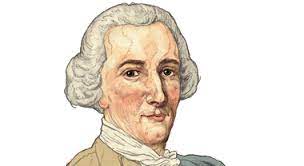
Baldassare Galuppi – A Complete Biography
Introduction
Baldassare Galuppi stands as one of the most important musical figures of the eighteenth century, a central architect of opera buffa and a prolific composer whose influence spread throughout Europe. Active during the height of the Venetian musical tradition, Galuppi produced a vast catalog of operas, sacred works, and instrumental music that shaped both contemporary taste and future generations of composers. His partnership with the celebrated playwright Carlo Goldoni transformed Italian comic opera into a refined dramatic form, balancing lively theatricality with elegant musical craftsmanship. Although his work was overshadowed in the nineteenth century, modern scholarship has restored Galuppi’s position as a key contributor to the evolution of classical style.

Childhood
Galuppi was born on October 18, 1706, on the island of Burano in the Venetian lagoon. His father, a barber and amateur violinist, recognized early signs of musical aptitude and encouraged his studies. By age ten, Galuppi was already proficient on the harpsichord, and his family ensured that he received lessons from local teachers.
The cultural environment of Venice, with its churches, conservatories, and public theaters, offered abundant musical exposure. As a young boy, Galuppi experienced the grandeur of Venetian sacred music and the excitement of opera, which left a lasting impression. His earliest compositions date from this period, including a modest opera written in his teens. Though not initially successful, these early attempts showed ambition and developing skill.
Youth
During his youth, Galuppi studied composition with Antonio Lotti, one of the most distinguished Venetian composers of the era. Lotti’s rigorous training in counterpoint and vocal writing deeply influenced Galuppi’s stylistic approach. Under Lotti’s guidance, he developed a strong foundation in both sacred and theatrical composition.
Galuppi’s first notable opportunities came in the 1720s, when he began working as a harpsichordist and assistant in Venetian theaters. His reputation grew steadily as he collaborated with various librettists and ventured into opera production. By the late 1730s, he had begun experimenting with the fusion of expressive melody and comedic timing that would eventually define his mature operatic style.
His breakthrough came with the opera Dorinda, which earned favorable attention and opened doors for prominent commissions. Galuppi quickly demonstrated an ability to write music that was both sophisticated and accessible, a quality that resonated with audiences across social classes.
Adulthood
Galuppi’s adulthood marked the height of his career and international recognition. In the 1740s, he entered into a historic collaboration with playwright Carlo Goldoni. The two artists elevated opera buffa into a refined dramatic form, integrating believable characters, natural dialogue, and music that reinforced comedic action without sacrificing elegance. Their partnership produced several highly successful works and set a new standard for Italian comic opera.
Galuppi held several prestigious positions in Venice, including maestro di coro at the renowned Ospedale degli Incurabili, where he trained young female musicians and composed sacred works of exceptional quality. His mastery of choral textures and expressive harmonic language contributed to the institution’s artistic prestige.
In 1765, Galuppi accepted an invitation to serve as court composer and music director for Catherine the Great in St. Petersburg. During his three-year tenure in Russia, he introduced Italian operatic style to the imperial court, composed new works, and oversaw musical training and performances. His influence significantly shaped Russian musical culture and contributed to the development of its classical tradition.
Galuppi returned to Venice in 1768, resuming his duties as maestro at St. Mark’s Basilica. He remained a central figure in the city’s musical life, widely respected for his experience, versatility, and refinement as a composer and educator.
Major Compositions
Galuppi’s output exceeds three hundred compositions, covering opera, sacred music, and instrumental works. Among these, several categories stand out:
Operas
Galuppi’s operas are his most historically significant achievements. His partnership with Goldoni produced landmarks of opera buffa, including:
- Il filosofo di campagna
- Il mondo della luna
- La buona figliuola
- Il conte Caramella
These operas distinguished themselves through lively ensembles, memorable melodies, and psychologically nuanced characters. His opera seria compositions, although less innovative, were also admired for their craftsmanship and vocal expressiveness.
Sacred Music
Galuppi wrote an extensive body of sacred works for Venetian institutions, including masses, motets, psalms, and oratorios. Pieces such as the Dixit Dominus and Confitebor exemplify his ability to combine contrapuntal skill with lyrical clarity, reflecting the grandeur of Venetian Baroque traditions while pointing toward Classical-era refinement.
Instrumental Works
His keyboard sonatas, once overshadowed by those of Domenico Scarlatti, have gained renewed attention for their charm, balance, and forward-looking simplicity. These works helped shape the emerging galant style, emphasizing clarity of texture and expressive melodic lines.
Although his instrumental works were less widely circulated in the nineteenth century, modern scholarship recognizes them as important contributions to the early Classical idiom.
Death
Galuppi remained active as a composer until his final days. He died in Venice on January 3, 1785, at the age of seventy-eight. His passing was widely mourned, and the city honored him with a burial in the church of San Vitale. Although changing musical tastes in the nineteenth century led to a period of relative neglect, his contributions were never forgotten by historians and performers who recognized his essential role in the development of European musical theater.
Conclusion
Baldassare Galuppi’s career embodied the transition from late Baroque complexity to the clarity and expressive immediacy of the Classical period. His operas shaped the future of musical comedy, influencing composers throughout Italy and beyond. His sacred and instrumental works enriched the repertory of his time and demonstrated a disciplined yet lyrical approach to composition.
Comments are closed