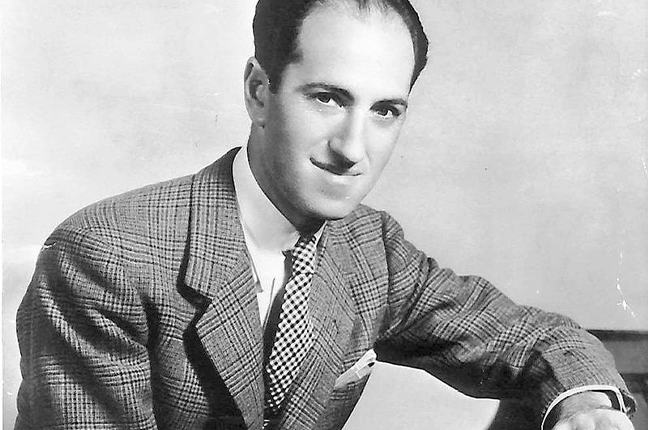
Introduction
Few composers have had as profound an impact on American music as George Gershwin. A gifted pianist, songwriter, and composer, Gershwin successfully bridged the worlds of classical music, jazz, and popular entertainment. His innovative style helped define the sound of twentieth-century America, blending European classical traditions with the rhythms and harmonies of jazz.
Through works such as Rhapsody in Blue, An American in Paris, and Porgy and Bess, Gershwin created a distinctly American musical language. Despite a career that lasted little more than two decades, his influence on composers, performers, and audiences remains immense. His music continues to be performed worldwide and stands as a symbol of American cultural achievement.
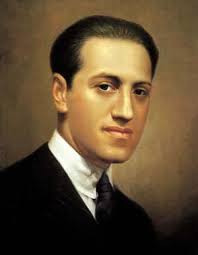
Chapter 1: Childhood
George Gershwin was born Jacob Gershwine on September 26, 1898, in Brooklyn, New York. He was the second child of Russian-Jewish immigrants Morris and Rose Gershwin, who had emigrated from the Russian Empire in search of better opportunities in America.
Growing up in a modest household, George was an energetic and often restless child. Unlike many famous composers, he showed little early interest in music. His fascination with the piano began almost by accident when his family purchased an instrument intended for his older brother, Ira. To everyone’s surprise, George immediately demonstrated an exceptional natural talent.
At the age of eleven, he began formal piano lessons under Charles Hambitzer, a respected teacher who recognized the boy’s extraordinary abilities. Hambitzer introduced him to the works of composers such as Frédéric Chopin, Franz Liszt, and Claude Debussy. Under his guidance, George developed strong technical skills while maintaining an interest in popular music and jazz emerging from New York’s vibrant streets.
Music quickly became the center of his life. He spent countless hours practicing, improvising, and listening to the sounds of the city that would later influence many of his compositions.
Chapter 2: Youth
By his teenage years, Gershwin had become determined to pursue music professionally. At fifteen, he left high school and accepted a job as a “song plugger” in Tin Pan Alley, New York’s bustling music publishing district. His job involved playing and promoting sheet music for customers and performers.
This experience proved invaluable. Gershwin became familiar with the mechanics of songwriting, audience tastes, and the commercial side of the music business. He learned how successful popular songs were constructed and developed remarkable skills as a pianist and arranger.
In 1916, he published his first song, “When You Want ‘Em, You Can’t Get ‘Em.” Though not a major success, it marked the beginning of his professional composing career. Three years later, his song “Swanee,” popularized by Al Jolson, became a national hit and established Gershwin as one of America’s rising musical talents.
During this period, George worked tirelessly while studying harmony, orchestration, and composition. His ambition extended beyond popular music; he dreamed of creating works that would unite classical and contemporary American styles.
Chapter 3: Adulthood
The 1920s marked Gershwin’s emergence as a major figure in American music. Working closely with his brother Ira Gershwin, a brilliant lyricist, he composed a series of successful Broadway musicals that captivated audiences.
Their collaboration produced numerous hits, including Lady, Be Good!, Funny Face, Girl Crazy, and Strike Up the Band. The partnership became one of the most celebrated songwriting teams in American history.
A major turning point came in 1924 with the premiere of Rhapsody in Blue. Commissioned by bandleader Paul Whiteman, the work combined jazz rhythms with classical orchestral forms. Its premiere was a sensation and demonstrated that American popular music could be elevated into the concert hall.
Gershwin’s growing fame brought international recognition. During a visit to Europe, he met influential composers such as Maurice Ravel and Sergei Prokofiev. Although he sought formal study with Ravel, the French composer reportedly declined, believing that extensive academic training might diminish Gershwin’s unique musical voice.
In 1928, Gershwin composed An American in Paris, a symphonic poem inspired by his experiences in France. The work further demonstrated his ability to blend jazz and classical traditions.
Throughout the 1930s, he continued writing for Broadway, concert halls, and eventually Hollywood, where he composed music for films while maintaining his reputation as one of America’s foremost composers.
Chapter 4: Major Compositions
George Gershwin’s catalog includes some of the most recognizable works in American musical history.
Rhapsody in Blue (1924)
Perhaps his most famous composition, Rhapsody in Blue revolutionized American concert music by combining jazz elements with symphonic structure. Its opening clarinet glissando remains one of the most recognizable passages in classical music.
Concerto in F (1925)
This piano concerto further demonstrated Gershwin’s ability to integrate jazz idioms into traditional classical forms. Unlike Rhapsody in Blue, Gershwin personally orchestrated the work.
An American in Paris (1928)
Inspired by his travels in France, this orchestral composition depicts the experiences of an American visitor exploring Paris. It remains a staple of the orchestral repertoire.
Cuban Overture (1932)
Following a trip to Cuba, Gershwin composed this vibrant work incorporating Latin American rhythms and percussion.
Porgy and Bess (1935)
Often regarded as Gershwin’s masterpiece, Porgy and Bess combines opera, jazz, blues, and folk traditions. Based on the novel by DuBose Heyward, the opera includes the famous aria “Summertime.”
Although initially receiving mixed reviews and limited commercial success, Porgy and Bess eventually became recognized as one of the greatest American operas ever written.
Popular Songs
Working primarily with Ira Gershwin, George composed numerous standards that have remained popular for generations, including:
- “I Got Rhythm”
- “Embraceable You”
- “Someone to Watch Over Me”
- “The Man I Love”
- “Fascinating Rhythm”
- “They Can’t Take That Away from Me”
- “A Foggy Day”
- “Love Is Here to Stay”
These songs became central works in both popular music and jazz repertoires.
Chapter 5: Death
In the mid-1930s, while living and working in Hollywood, Gershwin began experiencing severe headaches, dizziness, memory lapses, and coordination problems. Initially, the symptoms were not fully understood.
As his condition worsened, medical examinations eventually revealed a brain tumor. Emergency surgery was performed in July 1937, but the tumor proved too advanced.
George Gershwin died on July 11, 1937, in Hollywood, California, at the age of only thirty-eight. His death shocked the musical world, as he was widely regarded as one of America’s most brilliant creative talents with many productive years still ahead of him.
Thousands mourned his passing, and tributes poured in from musicians, composers, and admirers around the world.
Conclusion
George Gershwin transformed American music by creating a bridge between popular entertainment and classical composition. His ability to merge jazz, blues, Broadway, and European traditions resulted in a musical style that was uniquely American and universally appealing.
Although his life was tragically short, his achievements were extraordinary. Works such as Rhapsody in Blue, An American in Paris, and Porgy and Bess remain cornerstones of the concert repertoire, while his songs continue to be performed by jazz musicians, singers, and orchestras across the globe.
More than eight decades after his death, George Gershwin remains one of the most influential composers in American history. His music captured the energy, optimism, diversity, and creativity of the United States during a transformative era and continues to inspire audiences around the world.
Comments are closed