Introduction
Niccolò Paganini stands among the most extraordinary figures in the history of classical music. Born in the late eighteenth century, he revolutionized violin performance through unprecedented technical mastery, dazzling audiences across Europe with feats that seemed almost supernatural. His virtuosity inspired admiration, envy, and even fear, leading to legends that he had made a pact with the devil to achieve his remarkable abilities.
Beyond his legendary status as a performer, Paganini was also an innovative composer whose works expanded the technical and expressive possibilities of the violin. His influence extended far beyond his lifetime, inspiring generations of musicians, including many of the greatest violinists and composers of the nineteenth century. Today, he remains one of the most celebrated and influential virtuosos in the history of Western music.
Childhood
Niccolò Paganini was born on October 27, 1782, in the Republic of Genoa, now part of Italy. He was the third of six children born to Antonio Paganini and Teresa Bocciardo. His father worked as a dockworker and trader but also had a deep interest in music.
Recognizing his son’s musical talent at an early age, Antonio began teaching Niccolò the mandolin when he was around five years old. Shortly afterward, the young boy started studying the violin. His father proved to be a strict and demanding teacher, often requiring long hours of practice. These intense lessons laid the foundation for Paganini’s future technical brilliance.
As a child, Paganini displayed exceptional musical gifts. He quickly surpassed the abilities of local teachers and began studying with more advanced musicians in Genoa. His rapid progress attracted attention, and by the age of eleven, he was already performing publicly. Audiences were astonished by the young musician’s remarkable skill and expressive playing.
The combination of natural talent, relentless practice, and ambitious instruction enabled Paganini to develop a unique command of the violin. During these formative years, he also began composing music, experimenting with techniques that would later become hallmarks of his style.
Youth
During his teenage years, Paganini’s reputation continued to grow throughout northern Italy. He performed in numerous cities and gained recognition as one of the most promising young violinists of his generation.
Around the age of fifteen, Paganini sought greater artistic independence. Although his father had played a central role in his musical development, the young musician increasingly pursued his own career. He began traveling more extensively and establishing himself as a professional performer.
His youth was marked by both artistic achievements and personal challenges. Various accounts describe periods of financial instability, gambling, and an unconventional lifestyle. These experiences contributed to the colorful reputation that followed him throughout his life.
Musically, however, Paganini continued to advance at an astonishing pace. He developed techniques that many believed impossible, including rapid left-hand pizzicato, harmonics, wide interval leaps, and extraordinary bowing effects. His performances amazed audiences and distinguished him from every other violinist of the era.
By the beginning of the nineteenth century, Paganini had become a prominent figure in Italian musical circles. His growing fame prepared the way for the international success that would define his adult career.
Adulthood
Paganini’s adult life was characterized by unprecedented artistic triumphs. During the early 1800s, he served at the court of Elisa Bonaparte, the sister of Napoleon Bonaparte, in Lucca. This position provided financial security and opportunities to compose and perform.
After leaving court service, Paganini embarked on extensive concert tours throughout Europe. Beginning in the 1820s, he performed in major cultural centers such as Milan, Vienna, Prague, Berlin, Paris, and London. Everywhere he appeared, audiences flocked to hear him.
His concerts became legendary. Listeners were captivated by his extraordinary technical abilities, dramatic stage presence, and expressive interpretations. Many had never witnessed such virtuosity. Reports of his performances spread rapidly through newspapers and personal accounts, making him one of the first international musical celebrities.
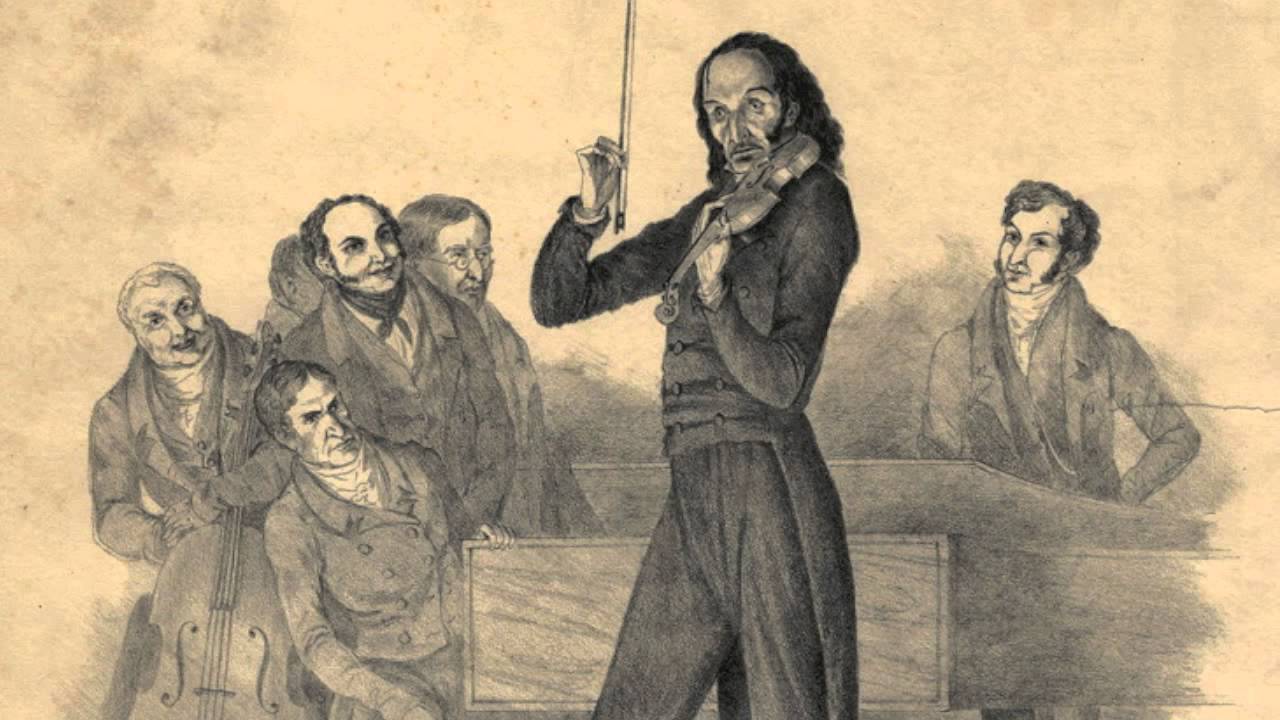
Paganini’s appearance also contributed to his mystique. He was tall and thin, with a pale complexion and distinctive features. Combined with his astonishing technique, his appearance fueled rumors that supernatural forces were responsible for his abilities. Some spectators genuinely believed that no ordinary human could perform as he did.
Financially, Paganini achieved remarkable success. He earned large sums through concerts and became one of the wealthiest musicians of his time. However, his health often troubled him. Throughout his life, he suffered from various illnesses that gradually weakened him.
Despite these difficulties, he continued to perform and compose, leaving a lasting impact on European musical culture. His influence extended beyond violinists to composers such as Franz Liszt, who sought to achieve on the piano the same level of virtuosity that Paganini had demonstrated on the violin.
Major Compositions
Although Paganini is remembered primarily as a performer, his compositions occupy an important place in the violin repertoire.
24 Caprices for Solo Violin, Op. 1
His most famous work is the collection known as the 24 Caprices for Solo Violin. Written between approximately 1802 and 1817, these pieces represent a landmark in violin literature. Each caprice explores different technical challenges, pushing the limits of what the instrument can accomplish.
The twenty-fourth caprice became particularly famous. Its memorable theme inspired numerous composers, including Johannes Brahms, Sergei Rachmaninoff, and Franz Liszt, who created variations based upon it.
Violin Concertos
Paganini composed six violin concertos. Among them, the Violin Concerto No. 1 in D Major remains the most frequently performed. The concerto showcases brilliant technical passages while also highlighting lyrical expression and orchestral color.
Variations on “Nel cor più non mi sento”
This work demonstrates Paganini’s ability to transform a simple operatic melody into a dazzling display of virtuosity. It became a favorite among violinists seeking to exhibit technical skill.
Moto Perpetuo
The Moto Perpetuo is one of Paganini’s best-known short works. Characterized by continuous rapid motion, it demands exceptional precision and endurance from the performer.
Other Chamber and Solo Works
Paganini also composed numerous sonatas, quartets, and pieces for guitar and violin. His interest in the guitar significantly influenced his compositional style, particularly in matters of harmony and accompaniment.
Collectively, his works expanded the technical vocabulary of the violin and established new standards for virtuoso performance.
Death
By the late 1830s, Paganini’s health had deteriorated severely. Years of illness and physical strain limited his ability to perform. He spent much of his final years seeking medical treatment while managing his financial affairs.
Niccolò Paganini died on May 27, 1840, in Nice, which was then part of the Kingdom of Sardinia. He was fifty-seven years old.
Even after his death, controversy surrounded him. Because of persistent rumors regarding his alleged association with supernatural forces and because he had not received the last rites of the Catholic Church before his death, church authorities initially refused him a traditional Catholic burial.
As a result, his remains were moved several times over the following decades. Eventually, after lengthy negotiations and official approvals, Paganini received a proper burial in Parma, Italy.
The unusual circumstances surrounding his funeral further contributed to the legends that had accompanied him throughout his life.
Conclusion
Niccolò Paganini transformed the art of violin performance more profoundly than perhaps any musician before him. Through exceptional talent, relentless dedication, and relentless innovation, he expanded the technical and expressive boundaries of his instrument.
His dazzling concerts captivated Europe and established a new model of the virtuoso performer. His compositions, particularly the 24 Caprices, remain central to the violin repertoire and continue to challenge even the most accomplished musicians.
More than a century and a half after his death, Paganini’s influence remains unmistakable. Violinists still measure themselves against the standards he established, while audiences continue to be fascinated by the artistry and mystery that defined his life. His legacy endures as one of the greatest and most influential figures in the history of classical music.
Comments are closed