Introduction
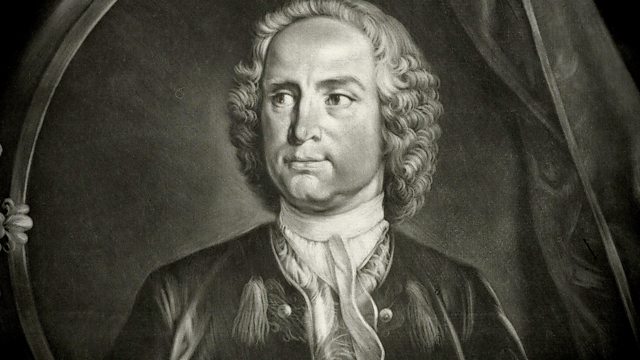
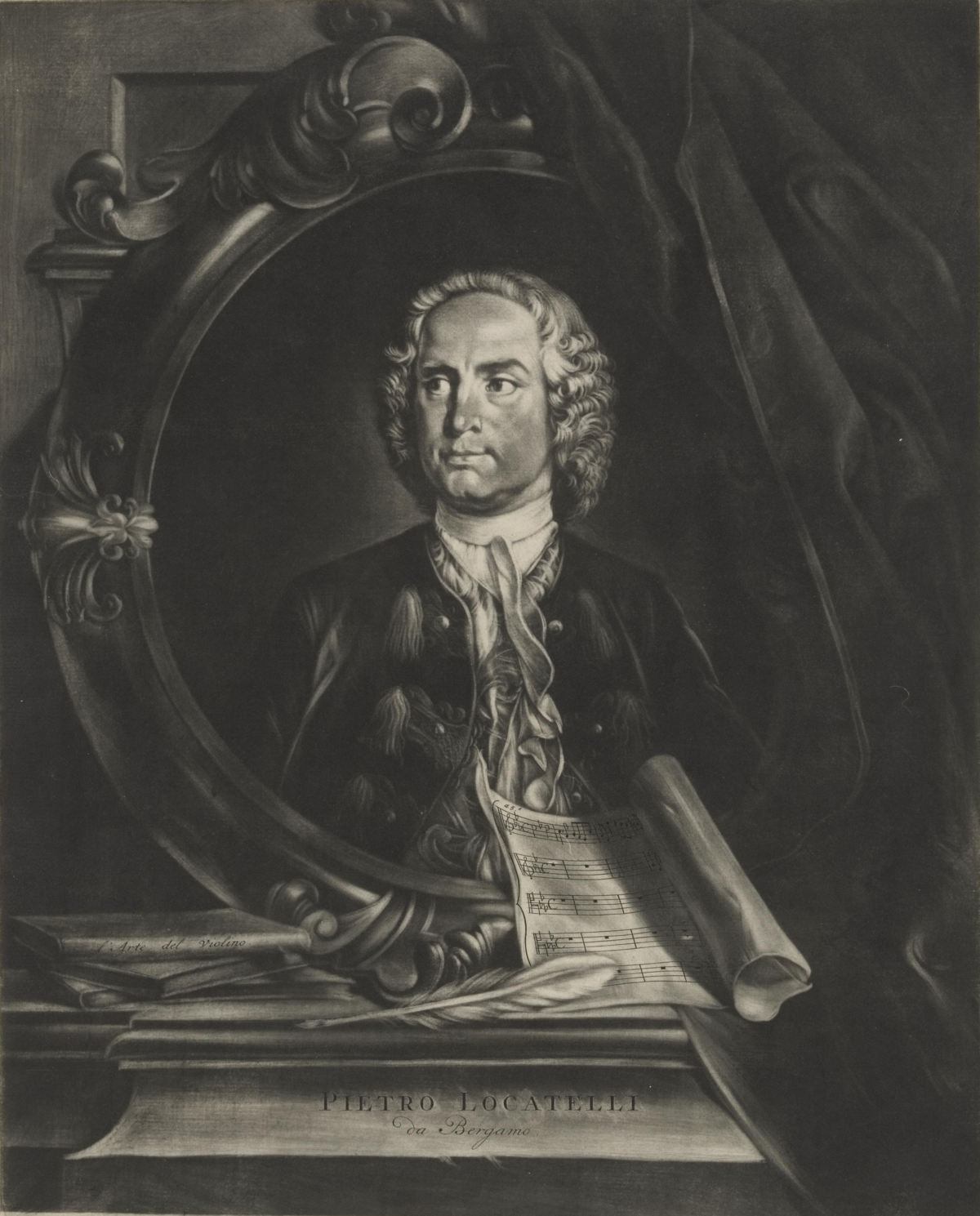
Pietro Antonio Locatelli was one of the most influential violinists and composers of the late Baroque era. Born in 1695 in Bergamo, Italy, he became renowned for expanding the technical possibilities of the violin to unprecedented levels. His innovative compositions, particularly those written for his own performances, anticipated many of the virtuosic techniques later associated with Niccolò Paganini. Through his compositions, teaching, and publications, Locatelli helped shape the future development of violin performance and left a lasting legacy in European music.
Childhood
Pietro Antonio Locatelli was born on September 3, 1695, in Bergamo, then part of the Republic of Venice. Little documentation survives regarding his earliest years, but it is clear that he demonstrated remarkable musical talent from a young age. His first musical experiences were connected to the Basilica of Santa Maria Maggiore in Bergamo, one of the city’s most important religious and cultural institutions.
As a child, Locatelli studied violin with local musicians and quickly distinguished himself through his exceptional technical abilities. By the age of fourteen, he had already become a member of the instrumental ensemble of Santa Maria Maggiore, an achievement that reflected both his talent and his dedication to musical study. These formative years provided him with a strong foundation in the Italian violin tradition that would later flourish in his compositions and performances.
Youth
Recognizing that greater opportunities existed beyond Bergamo, the young Locatelli moved to Rome in 1711 at the age of sixteen. Rome was one of Europe’s most important musical centers, attracting composers, performers, and patrons from across the continent.
Although it has often been suggested that he studied with the celebrated violinist and composer Arcangelo Corelli, modern scholarship indicates that any direct connection was probably brief. More likely, Locatelli studied with prominent Roman musicians such as Giuseppe Valentini and Antonio Montanari. Nevertheless, Corelli’s influence on his musical language remained evident throughout his career.
During his years in Rome, Locatelli performed for aristocratic patrons and became associated with influential noble households. He also joined important musical organizations and gained experience as both a performer and composer. In 1721, he published his first major collection, XII Concerti Grossi, Op. 1, marking the beginning of his international reputation as a composer.
Adulthood
Between 1723 and 1728, Locatelli traveled extensively throughout Italy and Germany. He performed in cities such as Munich, Dresden, Berlin, Frankfurt, and Kassel. These tours enhanced his reputation as one of Europe’s leading violin virtuosos. Audiences were astonished by his technical mastery, including his use of double stops, harmonics, rapid passagework, and performances in exceptionally high positions on the violin fingerboard.
In 1729, Locatelli settled permanently in Amsterdam. This move proved decisive for his career. Amsterdam was a major center for music publishing, offering him opportunities unavailable elsewhere in Europe. Rather than pursuing a career as a touring performer, he concentrated on teaching wealthy amateur musicians, organizing private concerts, and publishing his works.
Locatelli became financially successful and highly respected within Amsterdam’s cultural circles. He also engaged in business ventures, including the sale of imported Italian violin strings. His comfortable financial position allowed him to maintain artistic independence and devote considerable attention to the publication and preservation of his music.
Beyond music, Locatelli developed broad intellectual interests. His personal library contained hundreds of books on literature, science, theology, history, mathematics, and the arts. This collection reflected the curiosity and scholarship that characterized many leading intellectual figures of the Enlightenment era.
Major Compositions
Locatelli’s reputation rests primarily on his contributions to violin music. His compositions are notable for combining expressive musical content with extraordinary technical demands.
L’Arte del Violino, Op. 3 (1733)
His most famous work is L’Arte del Violino, a collection of twelve violin concertos accompanied by twenty-four capriccios. These capriccios explored techniques that were revolutionary for their time, including extensive use of high positions, multiple stops, complex arpeggios, and advanced bowing techniques. The work became one of the most influential violin publications of the eighteenth century and significantly advanced the technical development of the instrument.
Concerti Grossi, Op. 1
Published in 1721, these concertos demonstrate the influence of Corelli while also revealing Locatelli’s growing individuality as a composer. They combine formal elegance with expressive melodic writing and remain important examples of the concerto grosso genre.
Flute Sonatas, Op. 2
These sonatas reflect Locatelli’s versatility and his ability to write idiomatically for instruments other than the violin. They became particularly popular among amateur musicians in Amsterdam.
Violin Sonatas, Op. 6
The violin sonatas further demonstrate his interest in technical innovation. Several movements contain passages that push the performer to the limits of eighteenth-century violin technique.
Trio Sonatas, Op. 5 and Op. 8
These chamber works reveal a more intimate side of Locatelli’s musical personality. They balance technical sophistication with graceful melodic writing and illustrate the growing influence of the galant style during the later Baroque period.
Death
Locatelli spent the final decades of his life in Amsterdam. Although he appeared less frequently in public concerts than during his younger years, he remained active as a teacher, editor, publisher, and respected member of the city’s musical community.
He died on March 30, 1764, at his home on the Prinsengracht in Amsterdam at the age of sixty-eight. He was buried in the English Reformed Church at the Begijnhof. At the time of his death, he left behind a substantial estate, an extensive library, valuable musical manuscripts, and a reputation as one of Europe’s most remarkable violin virtuosos.
Conclusion
Pietro Locatelli occupies a unique place in music history. While firmly rooted in the Baroque tradition established by Corelli and his contemporaries, he pushed violin technique far beyond the limits previously imagined. His innovations laid the groundwork for the virtuoso tradition that would flourish in the nineteenth century, culminating in the achievements of Niccolò Paganini and other celebrated violinists.
As both a composer and performer, Locatelli combined artistic imagination with technical daring. His works continue to be studied and performed today, not only as masterpieces of Baroque music but also as milestones in the evolution of violin performance. More than two centuries after his death, his influence remains evident in the technical and expressive possibilities embraced by violinists around the world.
Comments are closed