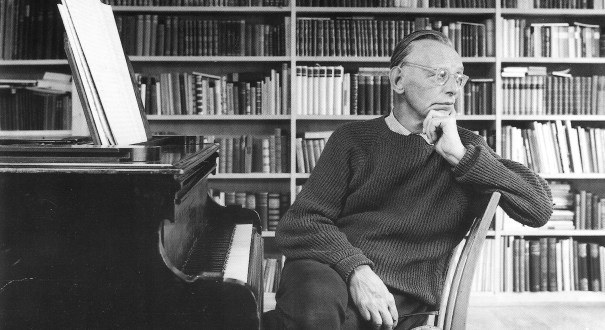
Carl Orff: A Pioneer of Twentieth-Century Music
Carl Orff (1895–1982) was a German composer and music educator whose innovative works have left a lasting impact on classical music. Best known for his dramatic choral compositions and his influential approach to music education, the Orff Schulwerk, he developed a distinctive musical language centered on rhythm, percussion, and expressive vocal writing.
Unlike many composers of his time, Orff focused less on complex harmonic development and more on powerful rhythmic patterns, repetition, and the close relationship between music, language, and movement. Drawing inspiration from ancient drama, medieval poetry, and ritual performance, he created works that remain popular with audiences worldwide.
The following five compositions are widely regarded as Carl Orff’s most significant musical achievements.
1. Carmina Burana (1935–1936)
Carmina Burana is unquestionably Carl Orff’s most famous composition and one of the most recognizable choral works ever written.
The cantata is based on a medieval collection of poems discovered at the Benedictine monastery of Benediktbeuern in Bavaria. Written in Latin, Middle High German, and Old French, the texts explore themes such as fate, fortune, love, springtime, drinking, and the pleasures of life.
The opening and closing chorus, “O Fortuna,” has become one of the most iconic pieces in classical music. Its dramatic power has led to its frequent use in films, television, commercials, sporting events, and video games.
Highlights
- Large mixed chorus
- Children’s choir
- Three vocal soloists
- Full symphony orchestra
- Extensive percussion section
- Powerful dramatic structure
Today, Carmina Burana remains one of the most frequently performed choral works in the international classical repertoire.
2. Catulli Carmina (1940–1943)
Following the success of Carmina Burana, Orff composed Catulli Carmina, inspired by the passionate poetry of the ancient Roman poet Catullus.
The work centers on Catullus’ love for Lesbia, presenting themes of desire, jealousy, heartbreak, and emotional conflict. Rather than telling a straightforward narrative, the composition unfolds as a theatrical meditation on love and human passion.
Musically, Catulli Carmina continues Orff’s signature style through:
- Strong rhythmic drive
- Prominent choral writing
- Percussion-based accompaniment
- Clear and expressive treatment of the text
Although less frequently performed than Carmina Burana, many scholars consider it one of Orff’s most sophisticated and artistically refined compositions.
3. Trionfo di Afrodite (1951–1953)
Trionfo di Afrodite completes Orff’s celebrated Trionfi Trilogy, which consists of:
- Carmina Burana
- Catulli Carmina
- Trionfo di Afrodite
Drawing on ancient Greek and Roman wedding poetry, the work celebrates love, marriage, and fertility through monumental choral and orchestral writing.
The music possesses a ceremonial and ritualistic character, reflecting Orff’s belief that music should unite drama, movement, and collective expression. Rich choral textures, bold percussion, and majestic orchestration create an atmosphere of solemn celebration.
4. Antigonae (1947–1949)
With Antigonae, Orff began a remarkable series of operas inspired by Greek tragedy.
Based closely on Friedrich Hölderlin’s German translation of Sophocles’ Antigone, the opera preserves much of the original dramatic intensity while presenting it through Orff’s unique musical language.
Rather than relying on traditional operatic melodies, Antigonae emphasizes:
- Rhythmic speech
- Text-driven vocal lines
- Dramatic declamation
- Extensive percussion
- Powerful orchestral color
The result is a theatrical experience in which music serves the dramatic expression of the text rather than conventional lyricism.
5. Prometheus (1963–1968)
One of the most ambitious works of Orff’s later career, Prometheus is based directly on Aeschylus’ ancient Greek tragedy Prometheus Bound.
A distinctive feature of the opera is that it is performed in Ancient Greek, preserving the original language of the classical drama.
The composition features:
- An enormous percussion section
- Highly expressive vocal declamation
- Ritualistic musical atmosphere
- Dramatic orchestral writing
- Strong influence from ancient Greek theater
Because of its complexity and demanding performance requirements, Prometheus is staged less frequently than Orff’s earlier works. Nevertheless, it is widely regarded as one of his greatest artistic achievements.
Carl Orff’s Musical Style
Several defining characteristics appear throughout Orff’s compositions:
- Rhythm takes precedence over complex harmony.
- Percussion plays a central musical role.
- Large choruses are frequently employed.
- Ancient, medieval, and classical texts provide literary inspiration.
- Music and theater are closely integrated.
- Repetition and ostinato patterns create dramatic momentum.
- Musical language remains direct, accessible, and emotionally powerful.
These elements combine to form a distinctive style that is immediately recognizable and continues to influence composers and performers around the world.
Carl Orff’s Legacy
Carl Orff’s influence extends far beyond the concert hall. His compositions have inspired film scores, television productions, popular culture, and countless choral performances.
Equally important is his contribution to music education through the Orff Schulwerk, an approach that encourages creativity, improvisation, movement, singing, and active participation. Today, Orff’s educational philosophy is used in schools and conservatories across the globe.
Decades after his death, Carl Orff remains one of the most frequently performed composers of the twentieth century. His ability to combine rhythm, language, drama, and music into a unified artistic experience continues to captivate performers and audiences alike.
Comments are closed