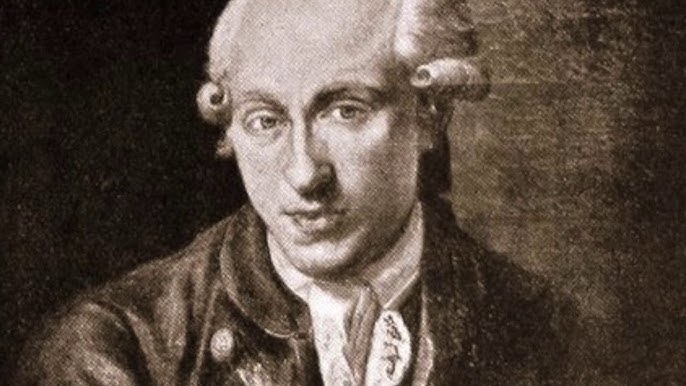
Johann Gottfried Walther – A Complete Biography
Introduction
Johann Gottfried Walther (September 18, 1684 – March 23, 1748) was a prominent German music theorist, organist, composer, and lexicographer of the Baroque era. He is particularly noted for his significant contributions to music theory and his close relationship with Johann Sebastian Bach, who was his second cousin and a colleague in Weimar. Walther’s most enduring legacy is arguably his Musicalisches Lexicon, the first comprehensive dictionary of musical terms and biographies in the German language.
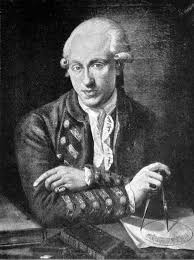
Childhood
Johann Gottfried Walther was born on September 18, 1684, in Erfurt, Germany. As a child, he began his musical education early, studying the organ and taking singing lessons in his hometown. He entered the lower school of Erfurt in 1691 and received organ instruction from Johann Bernhard Bach and Johann Andreas Kretschmar. In 1702, at the age of eighteen, he became an organist at Erfurt’s Thomaskirche.
Youth
After his early appointment as organist at Erfurt’s Thomaskirche in 1702, Walther briefly studied at the local university before dedicating himself entirely to music, particularly music theory. In 1703, he embarked on a period of travel across Germany, where he met influential musicians such as Andreas Werckmeister, a theorist who became his mentor. He also studied composition with Buttstett and later with Wilhelm Hieronymus in Nuremberg in 1706. These experiences significantly shaped his theoretical and compositional understanding during his youth.
Adulthood
In 1707, Johann Gottfried Walther was appointed organist at the Weimar Stadtkirche, a position he held until his death. During his time in Weimar, he became a close colleague and friend of Johann Sebastian Bach, who was also his second cousin and godfather to Walther’s first son. Between 1708 and 1714, their friendship deepened, and Walther served as music teacher to Prince Johann Ernst, nephew of the reigning duke. For the young prince, he wrote the Praecepta der musicalischen Composition (1708), a significant treatise on musical theory. In 1721, Walther was appointed a court musician (Hof-musicus) in the ducal orchestra of Wilhelm Ernst, though he received no further promotions. His most notable achievement during this period was the compilation of the Musicalisches Lexicon, published in Leipzig in 1732. This monumental work was the first comprehensive German dictionary of musical terms and biographies, drawing on over 250 sources and referencing Johann Mattheson more than 200 times. It remains an invaluable resource for the study of Baroque music.
Major Compositions
Johann Gottfried Walther’s compositions were highly regarded by his contemporaries, with a significant focus on organ music. He made a major contribution to the repertoire of music based on chorales, composing 132 organ preludes based on Lutheran chorale melodies. Some of his free keyboard music also survives. Walther was also renowned for his organ transcriptions of orchestral concertos by contemporary Italian and German masters, including Albinoni, Gentili, Taglietti, Giuseppe Torelli, Vivaldi, and Telemann. He created 14 such transcriptions, which notably served as models for J.S. Bach’s own famous concerto transcriptions. His theoretical works, such as the Praecepta der musicalischen Composition (1708) and the monumental Musicalisches Lexicon (1732), are also considered major contributions.
Death
Johann Gottfried Walther passed away on March 23, 1748, in Weimar, Germany, at the age of 63. He had served as the organist at the Weimar Stadtkirche from 1707 until his death, a tenure spanning over four decades.
Conclusion
Johann Gottfried Walther’s life and work represent a significant chapter in Baroque music history. His contributions as an organist, composer, and especially as a music theorist and lexicographer, were foundational. His Musicalisches Lexicon stands as a pioneering work, providing an invaluable snapshot of musical knowledge and biographical information of his era. His organ compositions, particularly his chorale preludes and concerto transcriptions, influenced contemporaries like J.S. Bach. Walther’s dedication to both performance and scholarly pursuits cemented his legacy as a multifaceted and influential figure in 18th-century German music.
Comments are closed