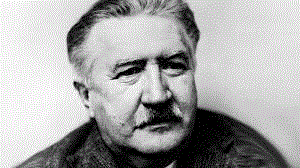
Josef Suk – A Complete Biography
Introduction
Josef Suk (January 4, 1874 – May 29, 1935) was a Czech composer, violinist, and teacher whose music bridged the late-Romantic world of Antonín Dvořák and the emerging Czech modernism of the early 20th century. He is remembered both for his intensely personal orchestral works — most famously the Asrael Symphony — and for chamber music and smaller-scale pieces that reveal a carefully wrought craft, strong melodic gift, and often a somber, reflective spirit.
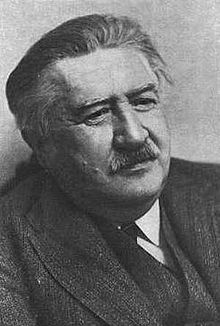
Childhood
Josef Suk was born in the village of Křečovice in Bohemia (then part of Austria-Hungary) into a musical household. His father, Josef Suk Sr., was a choirmaster and musician who introduced the boy to organ, piano, and violin. From early on Suk showed talent, and at age eleven he entered the Prague Conservatory, where his studies would set the foundation for his dual career as performer and composer.
Youth
At the Prague Conservatory Suk studied violin and composition and received a strong grounding in counterpoint and form. He completed his diploma in 1891 with his Piano Quartet (Op. 1) as his graduation piece but remained closely involved with the Conservatory scene. During the 1890s he became a student and then a close friend of Antonín Dvořák, who exerted a profound influence on Suk’s early musical language. The relationship with Dvořák also became personal: Suk married Dvořák’s daughter Otilie (often called Otilka) in 1898, an event that brought great happiness and creative flowering to the composer’s life.
Adulthood
Suk’s adulthood was marked by a growing independence in style together with deep personal tragedy. After his marriage he produced works that displayed a warm lyricism and a Czech national character. But Dvořák’s death in 1904 and the sudden death of Otilie in 1905 shattered Suk’s world and led directly to some of his most significant – and grief-laden – music. He threw himself into composition as a means of processing loss, producing the substantial and monumental Asrael Symphony (Symphony No. 2, Op. 27), dedicated to the memory of both Dvořák and Otilie. Later in life Suk combined composition with teaching: he served as a professor of composition at the Prague Conservatory and was an influential figure in Czech musical life while also performing as a violinist and working with chamber ensembles.
Major Compositions
Suk wrote across genres: orchestral music, chamber works, piano pieces, and incidental music. Among his major works are:
- Symphony No. 1 in E-flat major, Op. 7 (1898) – an early large-scale orchestral statement that shows Dvořák’s influence but already hints at Suk’s emerging voice.
- Symphony No. 2 “Asrael”, Op. 27 (1905–06) – his funeral symphony, composed in the wake of Dvořák’s and Otilie’s deaths; powerful, mournful and one of his most important achievements.
- Serenade for Strings, Op. 6 (1892) – a beloved chamber-orchestral piece noted for its lyricism and graceful textures.
- Pohádka (Fairy Tale), Op. 16 – incidental music to a drama, reflecting Suk’s gift for atmospheric writing.
- Chamber music and piano pieces – including a Piano Trio, string quartets, and numerous short piano works that trace his stylistic development from Dvořák-influenced romanticism toward a more individual, often modal and introspective idiom.
Suk’s music is consistently characterized by carefully shaped melodies, contrapuntal skill, and an often autumnal emotional palette. His orchestration can be rich and Straussian in scope (especially in Asrael), yet his chamber writing remains intimate and finely detailed.
Death
Josef Suk’s later years were quieter but still productive; he continued to teach and to compose. He retired from active professional duties in the early 1930s but remained an honored figure in Czech musical life until his death on May 29, 1935, in Benešov (then Czechoslovakia). He was buried in his native region, leaving behind a body of work that has steadily found champions among conductors and chamber ensembles.
Conclusion
Josef Suk occupies a distinctive place in the transition from 19th-century Czech romanticism to the first half of the 20th century. Deeply shaped by his teacher and father-in-law Antonín Dvořák, Suk nonetheless matured into a composer with a personal voice—one that often confronted sorrow and mortality with serious, searching music. Works such as the Asrael Symphony and the Serenade for Strings continue to be performed and recorded, and Suk’s influence — both as a composer and as a teacher at the Prague Conservatory — helped shape generations of Czech musicians. His life, marked by both creative devotion and personal tragedy, produced music of profound inwardness and craft.
Comments are closed