Introduction
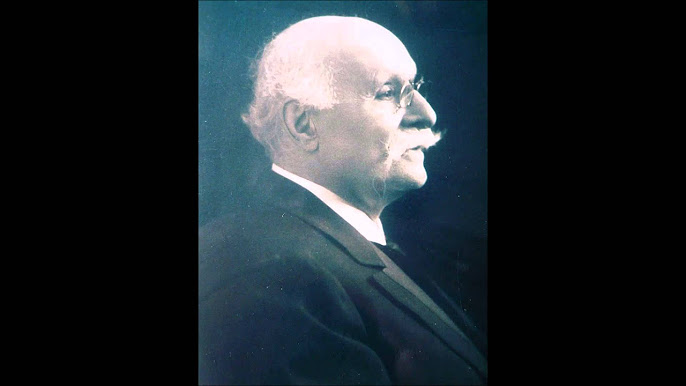
Émile Waldteufel was one of the most celebrated composers of dance music in nineteenth-century Europe. Best remembered today for his enchanting waltz The Skaters (Les Patineurs), he was a French pianist, conductor, and composer whose elegant melodies captivated audiences across France, Britain, and beyond. Often compared to the great Viennese waltz composer Johann Strauss II, Waldteufel developed a distinctive musical style characterized by graceful phrasing, refined orchestration, and lyrical charm. During his lifetime, he composed hundreds of dance works, including waltzes, polkas, mazurkas, and galops, becoming a central figure in the musical life of the French Second Empire and the early Third Republic.
Childhood
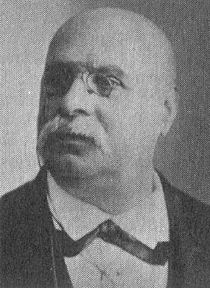
Charles Émile Waldteufel was born on December 9, 1837, in Strasbourg, Alsace, France. He came from a deeply musical family whose roots traced back to generations of professional musicians. The family surname had originally been Lévy, but the name Waldteufel had become established through earlier family generations.
His father, Louis Waldteufel, was a respected violinist and conductor who led a successful orchestra. His mother, Flora Neubauer, was also musically gifted and contributed significantly to Émile’s early musical education. Growing up in such an environment, young Émile was surrounded by music from his earliest years and quickly demonstrated remarkable talent at the piano.
When his older brother Léon earned admission to the prestigious Paris Conservatory as a violin student, the entire family relocated to Paris. This move proved decisive for Émile’s future, placing him at the center of France’s musical and cultural life.
Youth
In Paris, Waldteufel received formal musical training and enrolled at the Paris Conservatory between 1853 and 1857. There he studied piano and developed the technical and artistic skills that would later define his career. Among his fellow students were future musical luminaries such as Jules Massenet and Georges Bizet.
Despite his talent, financial difficulties forced him to interrupt his studies temporarily. To help support his family, he worked at a piano manufacturing company. Nevertheless, his dedication to music never wavered. He continued composing and performing while benefiting from the growing reputation of his father’s orchestra, which had become one of the most prominent ensembles in Paris.
During these years, Waldteufel refined his understanding of dance music, orchestration, and public performance. His experiences in salons, social gatherings, and musical events provided valuable opportunities to observe the tastes of fashionable Parisian society, knowledge that would later contribute greatly to his success as a composer.
Adulthood
Waldteufel’s professional breakthrough came in 1865 when he was appointed court pianist to Empress Eugénie, the wife of Emperor Napoleon III. Soon afterward, he became director of dance music for the imperial court, overseeing the musical entertainment at prestigious court balls and social events.
His position brought him into contact with aristocrats, politicians, and cultural figures throughout France. He regularly directed performances at the famous imperial gatherings in Biarritz, Compiègne, and the Tuileries Palace. In 1868, he married Célestine Dufau, a former singer associated with the Opéra-Comique. Together they had three children.
The Franco-Prussian War of 1870 and the collapse of the Second Empire brought significant political change to France. Although the imperial court disappeared, Waldteufel successfully adapted to the new era. His orchestra continued performing at presidential receptions held at the Élysée Palace, allowing him to maintain his prominent role in French society.
A turning point in his international career occurred in 1874 when he performed before the Prince of Wales, the future King Edward VII of Great Britain. The prince was particularly impressed by Waldteufel’s music and helped introduce it to British audiences. A publishing agreement with the London firm Hopwood & Crew followed, greatly expanding the composer’s reputation.
Throughout the 1870s and 1880s, Waldteufel’s music became immensely popular in Britain. His works were frequently performed at Buckingham Palace and other prestigious venues. He toured extensively, conducting concerts in major European cities such as London, Berlin, and Paris. By the 1880s, he had become one of the most famous dance music composers in the world.
Unlike many of his contemporaries, Waldteufel favored subtle harmonic colors and elegant melodic lines. His music possessed a refined French sensibility that distinguished it from the more energetic Viennese style associated with Johann Strauss II. This distinctive musical voice helped establish his lasting reputation.
Major Compositions
During his career, Waldteufel composed approximately 270 dance works, including waltzes, polkas, mazurkas, quadrilles, and galops. Many became immensely popular throughout Europe.
Les Patineurs (The Skaters’ Waltz), Op. 183 (1882)
This is unquestionably Waldteufel’s masterpiece and remains one of the most recognizable waltzes ever written. Inspired by the atmosphere of winter skating, the work evokes gliding movements, festive gatherings, and elegant outdoor recreation. Its enduring popularity has ensured Waldteufel’s place in musical history.
Estudiantina, Op. 191 (1883)
Inspired by Spanish student musical ensembles, this lively and colorful waltz became one of his greatest international successes. It showcased his gift for memorable melodies and sophisticated orchestration.
Dolorès, Op. 170 (1880)
A graceful and expressive waltz that demonstrated Waldteufel’s ability to combine elegance with emotional depth.
España, Op. 236 (1886)
Reflecting the European fascination with Spanish culture, this work incorporates rhythmic vitality and colorful melodic elements.
Les Sirènes, Op. 154 (1878)
One of his most admired earlier waltzes, notable for its flowing melodies and refined atmosphere.
Other Significant Works
- Mon Rêve, Op. 151
- Pluie de Diamants, Op. 160
- Chantilly, Op. 171
- La Source, Op. 180
- Coquetterie, Op. 218
- Vision, Op. 235
These works helped establish Waldteufel as one of the foremost composers of dance music during the late nineteenth century.
Death
After decades of success, Waldteufel gradually withdrew from public life. He retired from his official duties in 1899, having spent more than three decades shaping the musical atmosphere of French high society.
His wife, Célestine Dufau, died in 1914. Less than a year later, on February 12, 1915, Émile Waldteufel passed away in Paris at the age of seventy-seven. He was buried in Père Lachaise Cemetery alongside his wife.
His death occurred during the First World War, a conflict that transformed Europe and marked the end of the social world in which his music had flourished. Nevertheless, his compositions continued to be performed and appreciated by audiences long after his passing.
Conclusion
Émile Waldteufel occupies a unique place in the history of classical and popular orchestral music. Although often overshadowed by the Strauss family, he created a distinctive body of work that reflected the elegance and sophistication of French musical culture during the nineteenth century. His waltzes combined melodic beauty, graceful orchestration, and emotional warmth, qualities that continue to appeal to listeners today.
Through masterpieces such as The Skaters’ Waltz, Estudiantina, and Dolorès, Waldteufel achieved international fame and helped define the sound of European ballroom music during the Belle Époque. More than a century after his death, his music remains a cherished part of the orchestral repertoire, ensuring that his legacy endures as one of the great masters of the waltz.
Comments are closed