Introduction
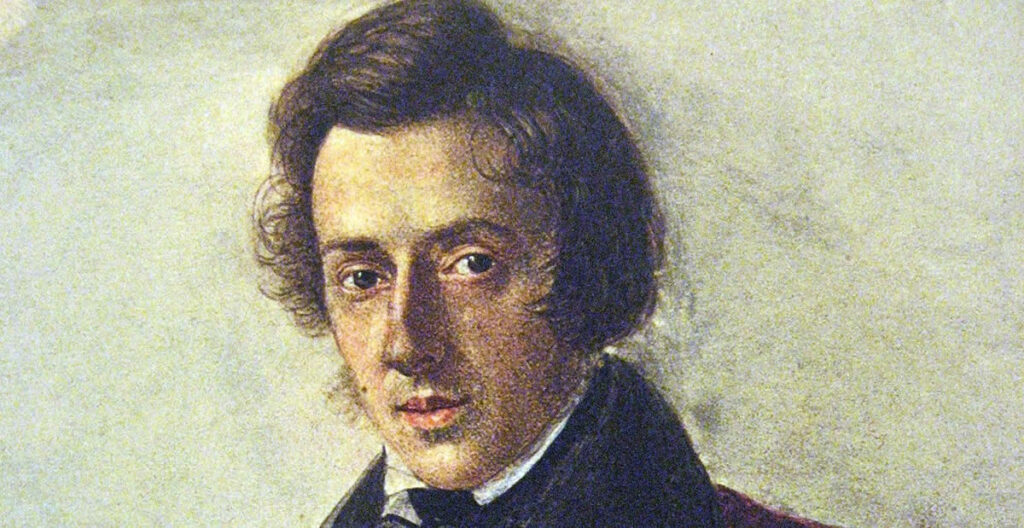
Frédéric Chopin stands among the most influential composers in the history of classical music. Renowned for his poetic piano works, expressive melodies, and innovative harmonic language, he transformed the possibilities of piano composition during the Romantic era. Although he lived only thirty-nine years, his artistic achievements left a lasting impact on music that continues to inspire performers, composers, and audiences worldwide.
Born in Poland and later residing in France, Chopin combined elements of Polish folk traditions with the refined elegance of European classical music. His compositions, including nocturnes, mazurkas, polonaises, ballades, études, and preludes, remain central to the piano repertoire and are celebrated for their emotional depth, technical brilliance, and lyrical beauty.
Childhood
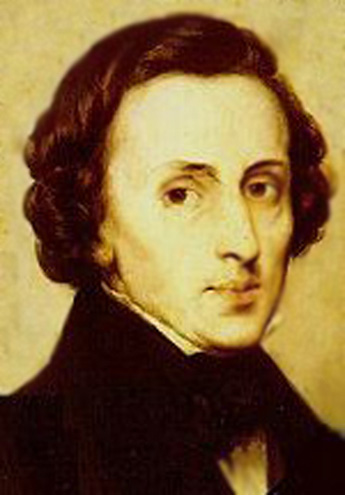
Frédéric François Chopin was born on March 1, 1810, in Żelazowa Wola, a village near Warsaw in what was then the Duchy of Warsaw. His father, Nicolas Chopin, was a French-born educator who had settled in Poland, while his mother, Justyna Krzyżanowska, came from a respected Polish family and possessed considerable musical talent.
Shortly after his birth, the family moved to Warsaw, where Nicolas obtained a position teaching at a prestigious educational institution. The Chopin household was cultured and intellectually vibrant, providing an ideal environment for young Frédéric’s development.
Chopin displayed extraordinary musical abilities from an early age. By the age of six, he had begun piano lessons under the guidance of Wojciech Żywny, who introduced him to the works of Johann Sebastian Bach and Wolfgang Amadeus Mozart. His remarkable talent quickly became evident, and by the age of seven he was already composing short piano pieces.
As a child prodigy, Chopin frequently performed in Warsaw’s aristocratic salons. Audiences were astonished by his natural musicianship, refined technique, and sensitivity. Newspapers began referring to him as a musical genius, comparing him to Mozart. Despite the attention, he remained a thoughtful and reserved child who preferred artistic pursuits to public acclaim.
Youth
During his teenage years, Chopin continued his musical education while attending the Warsaw Lyceum and later the Warsaw Conservatory. There he studied composition under Józef Elsner, who recognized the young musician’s exceptional originality and encouraged him to develop his own artistic voice.
Throughout his youth, Chopin became deeply connected to Polish culture and national traditions. He traveled throughout the countryside, where he encountered folk dances and melodies that would later influence many of his compositions. The rhythms and spirit of Polish dances such as the mazurka and polonaise became defining elements of his musical style.
By his late teens, Chopin had already established a reputation as one of Poland’s finest young pianists and composers. He gave successful public performances in Warsaw and composed works that demonstrated increasing maturity and sophistication.
In 1829 and 1830, he traveled to Vienna, one of Europe’s leading musical centers. His concerts were warmly received, and critics praised his elegant technique and imaginative compositions. These experiences convinced him that an international career was possible.
In November 1830, shortly before a major uprising against Russian rule erupted in Poland, Chopin left his homeland. Although he hoped to return, political circumstances and the turmoil of the era prevented him from doing so. The separation from Poland became a source of lifelong sorrow and profoundly influenced his music.
Adulthood
After leaving Poland, Chopin spent time in Vienna before eventually settling in Paris in 1831. Paris was then the cultural capital of Europe and home to many prominent artists, writers, and musicians. There, Chopin quickly gained recognition among the city’s artistic elite.
Unlike many virtuoso pianists of his time, Chopin preferred intimate salon performances to large public concerts. His delicate touch and nuanced expression were best appreciated in smaller settings. He became a sought-after piano teacher, attracting wealthy and talented students from across Europe.
In Paris, Chopin formed friendships with many important cultural figures, including composers, painters, and writers. He was particularly admired by fellow musicians such as Franz Liszt, Hector Berlioz, and Robert Schumann. Schumann famously praised Chopin’s genius and recognized his unique contribution to music.
One of the most significant relationships in Chopin’s life was with the French novelist Aurore Dupin, better known by her pen name, George Sand. Their relationship began in 1838 and lasted nearly a decade. During this period, Chopin produced some of his greatest masterpieces.
The couple spent the winter of 1838–1839 on the Spanish island of Majorca. Although the climate was expected to improve Chopin’s health, the stay proved difficult due to illness and unfavorable conditions. Nevertheless, he completed several important works during this time.
Throughout the 1840s, Chopin continued composing and teaching despite increasingly poor health. His music became more sophisticated and emotionally profound, reflecting both his artistic maturity and personal struggles. Following the end of his relationship with George Sand in 1847, his physical and emotional condition declined significantly.
In 1848, Chopin traveled to England and Scotland, giving performances and visiting admirers. Although the trip brought temporary financial support, it exhausted his fragile health and marked the final chapter of his public career.
Major Compositions
Chopin devoted most of his creative energy to the piano, producing a body of work that revolutionized piano literature.
Among his most celebrated compositions are the Nocturnes, which elevated the lyrical piano miniature into a highly expressive art form. These pieces are admired for their singing melodies, rich harmonies, and emotional subtlety.
His Études transformed technical exercises into concert masterpieces. Works such as the “Revolutionary Étude” combine extraordinary virtuosity with dramatic emotional power.
The Polonaises represent Chopin’s patriotic spirit and connection to Poland. The “Heroic Polonaise” is particularly famous for its grandeur, strength, and nationalistic character.
His Mazurkas are among his most personal creations. Drawing inspiration from Polish folk dances, they blend sophisticated musical craftsmanship with national identity.
The Ballades introduced a new form of musical storytelling. These four works are considered some of the greatest achievements in Romantic piano music, combining narrative depth with structural innovation.
Chopin also composed the twenty-four Preludes, the Piano Sonatas, the Scherzos, the Impromptus, and the Barcarolle. His Piano Concerto No. 1 and Piano Concerto No. 2 remain staples of the concerto repertoire.
Each of these works demonstrates Chopin’s extraordinary ability to merge technical brilliance with profound emotional expression, creating music that continues to resonate with audiences around the world.
Death
For much of his adult life, Chopin suffered from chronic illness. Historians generally believe he was afflicted by a severe pulmonary disease, most likely tuberculosis, although modern medical discussions have proposed other possible conditions.
By the late 1840s, his health had deteriorated dramatically. He became increasingly weak and was often unable to compose or perform. Friends and admirers rallied around him during his final months, offering emotional and financial support.
Frédéric Chopin died in Paris on October 17, 1849, at the age of thirty-nine. His passing was mourned throughout Europe, where he had become one of the most respected musical figures of his generation.
A funeral service was held at the Church of the Madeleine in Paris, featuring music that reflected his deep admiration for Mozart. According to his wishes, his body was buried in Père Lachaise Cemetery in Paris. His heart, however, was returned to Warsaw and placed in the Church of the Holy Cross, symbolizing his enduring connection to his homeland.
Conclusion
Frédéric Chopin remains one of the greatest composers in the history of classical music. Through his innovative piano writing, expressive melodies, and profound emotional sensitivity, he reshaped the artistic possibilities of the instrument and helped define the Romantic era.
His music continues to captivate listeners with its beauty, elegance, and humanity. More than a century and a half after his death, pianists around the world regard his works as essential repertoire, while audiences continue to find inspiration and emotional connection in his compositions.
Chopin’s legacy endures not only through his masterpieces but also through the countless musicians influenced by his artistic vision. His life, marked by extraordinary creativity and personal resilience, remains a testament to the enduring power of music to express the deepest dimensions of human experience.
Comments are closed