Introduction
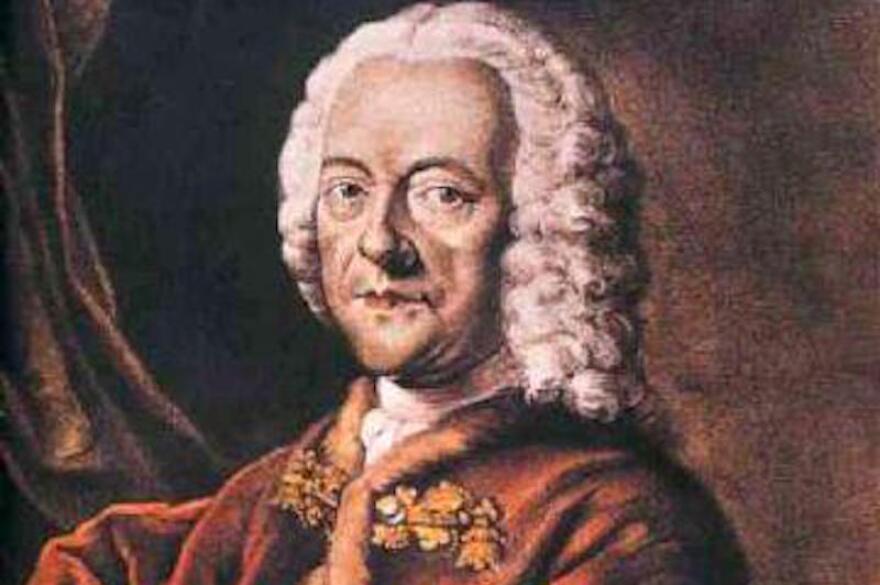
Georg Philipp Telemann (1681–1767) was one of the most prolific and influential composers of the Baroque era. During his lifetime, he was regarded as one of Germany’s greatest musicians, often enjoying greater fame than his contemporaries Johann Sebastian Bach and George Frideric Handel. A master of sacred music, opera, orchestral works, chamber music, and instrumental compositions, Telemann helped shape the musical landscape of eighteenth-century Europe.
His remarkable ability to blend German, French, Italian, and Eastern European musical styles made him one of the most innovative composers of his generation. With thousands of works attributed to his name, Telemann left behind a musical legacy that bridged the High Baroque period and the early Classical era.
Chapter 1: Childhood
Georg Philipp Telemann was born on March 14, 1681, in Magdeburg, a city in the Duchy of Magdeburg within the Holy Roman Empire, now part of modern Germany. He came from a respected Lutheran family with strong religious traditions. His father, Heinrich Telemann, was a Lutheran pastor, while his mother, Maria Haltmeier Telemann, came from a family of clergymen.
Telemann’s father died when Georg was only four years old, leaving his mother responsible for raising the family. Despite the family’s religious background and limited connection to professional music, the young Telemann displayed extraordinary musical talent from an early age.
Without formal instruction, he taught himself to play several instruments, including the violin, recorder, zither, flute, keyboard, and oboe. By the age of ten, he was already composing music. His first major composition, an opera entitled Sigismundus, was written when he was only twelve years old.
His mother, however, feared that a musical career would be financially unstable. Hoping to discourage his growing interest in music, she confiscated his instruments and attempted to steer him toward a more traditional profession. Nevertheless, Telemann’s passion for music proved impossible to suppress. He continued studying composition independently, often in secret.
During his years at school in Zellerfeld and later in Hildesheim, he expanded his musical knowledge through self-study and exposure to a variety of musical traditions. By his late teens, he had become proficient on numerous instruments and had developed impressive compositional skills.
Chapter 2: Youth
In 1701, Telemann entered the University of Leipzig to study law, fulfilling his mother’s wishes. However, his musical abilities quickly attracted attention. Rather than focusing exclusively on legal studies, he became deeply involved in Leipzig’s musical life.
Shortly after arriving at the university, he was commissioned to compose music for major churches in the city. His compositions gained popularity, and he founded a student musical society known as the Collegium Musicum. This ensemble became an important institution for public concerts and would later be directed by Johann Sebastian Bach.
Telemann’s growing reputation led him to become musical director of Leipzig’s opera house. His operatic productions were well received and demonstrated his versatility as a composer. During this period, he wrote church cantatas, instrumental works, and operas while establishing himself as one of Germany’s most promising young musicians.
In 1705, Telemann accepted a position as Kapellmeister to Count Erdmann II of Promnitz in Sorau (now Żary, Poland). This appointment proved highly influential. There he encountered French court music, particularly the works of Jean-Baptiste Lully and André Campra. He also absorbed elements of Polish and Moravian folk music, which would later enrich his compositional style.
These experiences broadened his artistic horizons and contributed to the cosmopolitan musical language that became one of his defining characteristics.
Chapter 3: Adulthood
Telemann’s professional success continued throughout adulthood. After serving in Sorau, he moved to Eisenach, where he worked at the ducal court and became acquainted with Johann Sebastian Bach. The two composers developed a lasting friendship and mutual respect.
In 1712, Telemann accepted a prestigious position in Frankfurt am Main as municipal music director and Kapellmeister of the city’s principal churches. During his years in Frankfurt, he composed numerous church cantatas, orchestral suites, chamber works, and instrumental concertos. He also organized public concerts that helped increase access to music beyond aristocratic circles.
The most significant appointment of his career came in 1721 when he became Director of Music for Hamburg’s five principal churches. This position made him one of the most important musical figures in northern Germany.
Hamburg remained his home for the rest of his life. His responsibilities included composing sacred music, directing performances, supervising church musicians, teaching, and organizing public concerts. He also managed opera productions and became involved in music publishing, an area in which he was remarkably innovative.
Unlike many composers of his era, Telemann frequently published his own works. This entrepreneurial approach gave him greater financial independence and broader international recognition.
In 1737, Telemann traveled to Paris, where he spent several months. French audiences admired his music, and the trip further strengthened his appreciation for French musical styles. By this point, he had become one of Europe’s most respected composers.
Despite professional success, his personal life was not without difficulties. His second marriage was troubled, and his wife’s gambling debts created serious financial problems. Nevertheless, Telemann’s productivity and popularity allowed him to overcome these challenges.
As he aged, he continued composing while also pursuing interests in literature, botany, and music theory. Even in his eighties, he remained artistically active.
Chapter 4: Major Compositions
Telemann’s output was extraordinary. Modern scholars estimate that he composed more than 3,000 works, although many have been lost.
His compositions covered nearly every musical genre of the Baroque period.
Tafelmusik (1733)
Perhaps his most famous collection, Tafelmusik (“Table Music”), consists of orchestral suites, concertos, quartets, trios, and solo works intended for sophisticated social gatherings. It remains one of the masterpieces of Baroque instrumental music.
Paris Quartets
These chamber works showcase Telemann’s mastery of blending French elegance with Italian virtuosity and German contrapuntal craftsmanship. They remain among the most frequently performed chamber compositions of the eighteenth century.
Der Tag des Gerichts
This large-scale oratorio demonstrates Telemann’s skill in sacred vocal music and his ability to create dramatic musical narratives.
Passions
Telemann composed dozens of Passion settings based on the suffering and crucifixion of Christ. These works were written for church services and became central components of Hamburg’s religious life.
Orchestral Suites
His orchestral suites reveal an extraordinary gift for melody, colorful orchestration, and rhythmic vitality. Many incorporate French dance forms while maintaining German structural rigor.
Concertos
Telemann composed numerous concertos for flute, violin, trumpet, oboe, recorder, viola, and various instrumental combinations. These works helped expand the concerto repertoire during the Baroque era.
Sacred Cantatas
Among his most significant contributions are approximately 1,700 church cantatas, making him one of the most prolific composers of sacred music in history.
Operas
Although many have not survived, Telemann composed numerous operas that contributed significantly to the development of German opera during the early eighteenth century.
Chapter 5: Death
During his later years, Telemann gradually reduced his professional activities due to declining health and worsening eyesight. Nevertheless, he continued composing well into his eighties, demonstrating remarkable intellectual and artistic vitality.
Following the death of his son Andreas in 1755, Telemann assumed responsibility for raising his grandson, Georg Michael Telemann. Despite personal losses and physical limitations, he remained active in Hamburg’s musical community.
On June 25, 1767, Georg Philipp Telemann died in Hamburg at the age of eighty-six. Contemporary accounts recorded the cause of death as a chest illness. His passing marked the end of one of the longest and most productive careers in the history of Western music.
He was succeeded in Hamburg by Carl Philipp Emanuel Bach, the son of Johann Sebastian Bach and Telemann’s godson.
Conclusion
Georg Philipp Telemann stands as one of the towering figures of the Baroque era. Although later generations often focused more heavily on Bach and Handel, modern scholarship has restored Telemann to his rightful place among the greatest composers of the eighteenth century.
His extraordinary productivity, stylistic versatility, and willingness to incorporate diverse musical influences made him a pioneer of musical innovation. He successfully united German contrapuntal traditions with French elegance, Italian lyricism, and Eastern European folk elements, creating a uniquely cosmopolitan musical language.
Telemann’s influence extended far beyond his lifetime. His efforts in music publishing, public concerts, and artistic independence anticipated developments that would become increasingly important during the Classical period. Today, his compositions are performed throughout the world, and his reputation continues to grow as musicians and scholars rediscover the richness of his vast body of work.
More than two and a half centuries after his death, Georg Philipp Telemann remains a symbol of creativity, versatility, and artistic excellence in the history of classical music.
Comments are closed