
Introduction
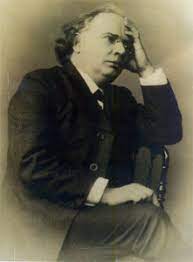
Julius Röntgen was one of the most prolific yet underappreciated composers of the late Romantic and early modern eras. A gifted pianist, conductor, educator, and composer, he played a crucial role in the development of musical life in the Netherlands while maintaining strong artistic ties to Germany and Scandinavia. Throughout a career spanning more than six decades, Röntgen composed hundreds of works, including symphonies, concertos, chamber music, piano pieces, songs, and choral compositions.
Born in Leipzig during a period of extraordinary musical activity, Röntgen grew up surrounded by some of the greatest musicians of the nineteenth century. He developed friendships with Johannes Brahms, Franz Liszt, Edvard Grieg, Pablo Casals, and many other prominent figures. Although his music was overshadowed during the twentieth century by the rise of modernism, recent decades have witnessed renewed interest in his remarkable artistic legacy.
This biography traces the life of Julius Röntgen from his childhood in Leipzig to his final years in the Netherlands, highlighting his achievements as a composer, performer, and cultural leader.
Childhood
Julius Engelbert Röntgen was born on May 9, 1855, in Leipzig, Germany. Music was deeply embedded in his family. His father, Engelbert Röntgen, was a distinguished violinist who served as concertmaster of the renowned Gewandhaus Orchestra. His mother, Pauline Klengel, was a talented pianist from a respected musical family.
Unlike many children of his era, Julius did not attend a traditional school. Instead, he received a comprehensive education at home from his parents, grandparents, and private tutors. This environment allowed him to focus heavily on music from an early age.
His first piano lessons came from his mother and grandfather. Soon afterward, he studied with some of Leipzig’s most respected musicians, including Louis Plaidy and Carl Reinecke. He also learned harmony, counterpoint, and composition under Moritz Hauptmann, one of the leading theorists of the period.
The young Röntgen quickly demonstrated extraordinary musical talent. By the age of nine, he had already begun composing. His earliest known works included violin duets and piano pieces. Family friends and professional musicians recognized him as a child prodigy.
Growing up in Leipzig exposed him to a rich musical culture. The city was one of Europe’s leading centers for classical music, associated with composers such as Johann Sebastian Bach, Felix Mendelssohn, and Robert Schumann. These influences left a lasting impression on the young composer.
An important event occurred when he was only fourteen years old. During a visit to Weimar, he met Franz Liszt, one of the greatest pianists and composers of the nineteenth century. Liszt listened to the young musician perform and was impressed by his abilities, encouraging his continued development.
Youth
During his teenage years, Röntgen continued to refine his skills as both a pianist and composer. He completed additional studies in Munich with Franz Lachner, a respected conductor and composer who had known Franz Schubert personally.
As a young performer, Röntgen appeared in concerts throughout Germany, often presenting his own compositions. These performances helped establish his reputation as an exceptionally gifted pianist.
In the 1870s, he became acquainted with many leading musicians of the day. Among the most significant was Johannes Brahms, whose influence on Röntgen’s compositional style would remain evident throughout his career. The two developed a lasting friendship, and Brahms became one of Röntgen’s most important artistic mentors.
Another significant relationship emerged when Röntgen met the Swedish violinist and composer Amanda Maier. The two shared a deep love of music and eventually married in 1880. Amanda herself was a remarkable musician and one of the most respected female composers of her generation.
A major turning point came in 1877 when Röntgen had to choose between career opportunities in Vienna and Amsterdam. He selected Amsterdam, a decision that would shape the remainder of his life and have a profound impact on Dutch musical culture.
Adulthood
After settling in Amsterdam, Röntgen quickly became one of the city’s most influential musicians. Initially employed as a piano teacher, he soon expanded his activities to include conducting, performing, composing, and organizing musical events.
The Netherlands at that time lacked many of the musical institutions found in Germany. Röntgen worked tirelessly to change this situation. In 1884, he helped establish the Amsterdam Conservatory, which would become one of the country’s leading musical institutions. He later served as its director and played a central role in educating future generations of Dutch musicians.
The same year, he was actively involved in the founding of the Concertgebouw, the famous Amsterdam concert hall that would become one of the most prestigious musical venues in the world.
As a performer, Röntgen earned widespread respect. He appeared both as a solo pianist and as an accompanist. His collaborators included many distinguished artists, among them the violinist Carl Flesch, the singer Johannes Messchaert, and the legendary cellist Pablo Casals.
His friendship with Johannes Brahms remained strong throughout the composer’s life. When Brahms visited Amsterdam, Röntgen frequently performed his works. In one memorable event, Röntgen performed Brahms’s Second Piano Concerto under the composer’s own direction.
Röntgen also maintained close relationships with Scandinavian musicians, particularly Edvard Grieg. Frequent visits to Denmark brought him into contact with numerous Nordic artists and intellectuals. These experiences enriched his musical language and contributed to the distinctive character of many of his compositions.
The death of his wife Amanda in 1894 was a devastating personal loss. Several years later, he married the pianist Abrahamina des Amorie van der Hoeven. Together they raised a musical family, and several of their children pursued professional careers in music.
Following World War I, Röntgen became a naturalized Dutch citizen. Although German by birth, he had spent most of his adult life in the Netherlands and was widely regarded as a leading figure in Dutch cultural life.
In 1924, he retired from many of his public duties and moved to Bilthoven, near Utrecht. There he lived in a specially designed house called Gaudeamus. The residence became a gathering place for composers, performers, and intellectuals from across Europe.
During his retirement years, Röntgen entered an extraordinarily productive creative period. He composed approximately one hundred works during the final eight years of his life, demonstrating remarkable artistic vitality even in old age.
Major Compositions
Julius Röntgen was one of the most prolific composers of his era. His catalog contains more than six hundred works and covers nearly every major musical genre.
Symphonies
Among his most significant achievements are his twenty-five symphonies. These works reveal a composer deeply rooted in the traditions of Brahms and the German Romantic school while also exploring newer harmonic ideas.
Notable symphonies include:
- Symphony No. 7 in A Minor
- Symphony No. 10 in D Major
- Symphony No. 15
- Symphony No. 21
- Symphony No. 24
- Bi-Tonal Symphony (1930)
Concertos
Röntgen composed numerous concertos, including:
- Seven Piano Concertos
- Three Violin Concertos
- Three Cello Concertos
- Several concertos for other instruments
These works showcase his understanding of instrumental technique and his experience as a virtuoso performer.
Chamber Music
Many scholars consider his chamber music among his greatest accomplishments. Important works include:
- Piano Trios
- String Quartets
- Piano Quintets
- Violin Sonatas
- Cello Sonatas
These compositions display exceptional craftsmanship and melodic richness.
Piano Music
As a concert pianist, Röntgen wrote extensively for his own instrument. His piano works range from small character pieces to large-scale sonatas and concert works.
Vocal and Choral Music
He composed numerous songs, cantatas, and choral works. Many reflect his interest in Dutch folk traditions and literary texts.
Other Contributions
Röntgen also completed the unfinished Second String Quartet of Edvard Grieg. This project reflected both his admiration for Grieg and his skill as a composer capable of working within another musician’s style.
Death
In his final years, Röntgen remained intellectually curious and artistically active. He studied contemporary musical developments and showed interest in the works of composers such as Igor Stravinsky, Paul Hindemith, Arnold Schoenberg, and Willem Pijper.
In 1930, he received an honorary doctorate from the University of Edinburgh in recognition of his contributions to music. The award represented international acknowledgment of a lifetime devoted to artistic excellence.
Despite advancing age, he continued composing at an astonishing pace. His final completed work was a piano quintet written in 1932.
Julius Röntgen died in Utrecht, Netherlands, on September 13, 1932, at the age of seventy-seven. His passing marked the end of a remarkable musical career that had spanned the transition from the Romantic era into the modern age.
Conclusion
Julius Röntgen occupies a unique place in European music history. Born into the rich musical environment of nineteenth-century Leipzig, he became a bridge between German Romanticism, Dutch musical culture, and Scandinavian artistic traditions.
As a composer, he produced an enormous body of work characterized by craftsmanship, lyrical beauty, and structural mastery. As a pianist and educator, he influenced countless musicians and helped establish institutions that continue to shape musical life in the Netherlands. His friendships with figures such as Brahms, Liszt, Grieg, Casals, and Tovey placed him at the center of European musical culture during a transformative period.
Although his reputation declined after his death, the growing revival of interest in neglected Romantic composers has brought renewed attention to his achievements. Today, scholars, performers, and audiences increasingly recognize Julius Röntgen as one of the most significant and productive composers of his generation.
His legacy endures not only through his extensive catalog of compositions but also through the institutions, students, and musical traditions he helped cultivate. Julius Röntgen remains an important figure whose contributions continue to enrich the world of classical music.
Comments are closed