Introduction
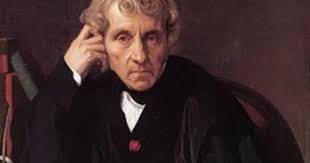
Luigi Cherubini was one of the most respected composers of the late Classical and early Romantic eras. Born in Florence and later established in Paris, he became renowned for his operas, sacred music, and his influential role as director of the Paris Conservatory. His music combined the elegance of Italian tradition with the dramatic intensity and structural rigor that characterized French musical culture. Admired by composers such as Beethoven, who considered him among the greatest living composers of his time, Cherubini left a lasting mark on European music through both his compositions and his teaching.

Childhood
Luigi Cherubini was born in Florence, Italy, on September 14, 1760. He was the son of Bartolomeo Cherubini, a musician who worked as a harpsichordist and music teacher. Growing up in a musical household, young Luigi was introduced to music at an exceptionally early age. By the time he was six years old, he had already begun formal musical instruction under his father’s guidance.
His talent became evident quickly. As a child, he studied composition and keyboard performance while absorbing the rich musical traditions of Florence. By his early teenage years, he had already composed several sacred works, including masses and other liturgical pieces. His remarkable abilities attracted the attention of influential patrons, who recognized his potential and helped support his education.
Youth
During his late teens, Cherubini received advanced training under the distinguished composer Giuseppe Sarti. Sarti emphasized strict counterpoint and encouraged his student to study the works of Renaissance masters such as Palestrina. This rigorous training profoundly shaped Cherubini’s compositional style and gave him a mastery of musical structure that would distinguish his later works.
In 1779, Cherubini premiered one of his earliest operas, Quinto Fabio. Over the following years, he composed numerous operas for theaters throughout Italy, gaining valuable experience and increasing recognition. Seeking broader opportunities, he traveled to London in the mid-1780s, where several of his operatic works were successfully staged. His growing reputation eventually led him to Paris, a city that would become the center of his professional life.
Adulthood
Cherubini settled permanently in Paris during the late 1780s. France was experiencing dramatic political and cultural changes, and the composer quickly adapted to his new environment. His breakthrough came with the opera Lodoïska in 1791, a work that demonstrated his ability to combine powerful drama with innovative orchestral writing. The opera’s success established him as a leading figure in French musical life.
Among his most celebrated operas was Médée (1797), which became one of the defining works of French opera. The work’s psychological intensity and dramatic depth influenced later generations of composers and performers. Another notable success followed with Les Deux Journées (1800), further strengthening his reputation throughout Europe.
Although widely admired by musicians, Cherubini experienced a difficult relationship with Napoleon Bonaparte, who preferred a lighter musical style. During the Napoleonic era, Cherubini’s career advanced more slowly than expected. Nevertheless, his prestige among fellow composers remained exceptionally high. He traveled to Vienna, where he met both Haydn and Beethoven, both of whom admired his work.
After the fall of Napoleon, Cherubini’s fortunes improved significantly. In 1816 he became music director of the royal chapel under King Louis XVIII. In 1822 he was appointed director of the Paris Conservatory, one of the most influential musical positions in Europe. As director, he maintained rigorous academic standards and helped shape the education of many future composers and musicians. He also completed his important theoretical treatise, Cours de contrepoint et de fugue, in 1835.
Major Compositions
Cherubini’s output was extensive and varied, encompassing operas, sacred music, chamber works, and orchestral compositions.
Operas
His most important operatic works include:
- Lodoïska (1791)
- Médée (1797)
- Les Deux Journées (1800)
- Faniska (1806)
- Les Abencérages (1813)
These works helped bridge the Classical and Romantic periods and influenced later French grand opera. Médée remains his most famous stage work and continues to be performed today.
Sacred Music
In his later years, Cherubini increasingly focused on religious compositions. His sacred music is often regarded as the pinnacle of his achievement. Notable works include:
- Requiem in C Minor (1816)
- Requiem in D Minor (1836)
- Mass in F Major
- Solemn Mass in D Minor
The Requiem in C Minor was particularly admired by Beethoven, as well as later composers such as Schumann and Brahms.
Chamber Music
Though less prolific in chamber music than some of his contemporaries, Cherubini produced several highly respected string quartets and a string quintet. These works display exceptional craftsmanship and contrapuntal mastery.
Death
In his final years, Cherubini devoted much of his time to teaching, administration, and sacred composition. Despite occasional criticism for his strict and demanding personality, he remained one of the most respected musical authorities in France. He received numerous honors, including membership in the French Academy of Fine Arts and promotion to Commander of the Legion of Honor, becoming the first musician to receive that distinction.
Luigi Cherubini died in Paris on March 15, 1842, at the age of eighty-one. He was buried in the famous Père Lachaise Cemetery, where many of France’s most celebrated cultural figures rest. His tomb, designed with artistic elegance, reflects the esteem in which he was held by the French nation.
Conclusion
Luigi Cherubini occupies a unique position in music history. Born during the height of the Classical era and living long enough to witness the rise of Romanticism, he successfully combined the discipline of eighteenth-century composition with the emotional power and dramatic expression that would define nineteenth-century music. His operas transformed French musical theater, his sacred works became models of religious composition, and his leadership at the Paris Conservatory influenced generations of musicians.
While he is sometimes overshadowed today by composers such as Mozart, Beethoven, and Rossini, Cherubini’s contribution to Western classical music remains immense. His mastery of counterpoint, his innovations in opera, and his profound sacred compositions earned him the admiration of many of the greatest composers who followed him. Through his music and educational legacy, Luigi Cherubini secured a permanent place among the most important composers of the Classical and early Romantic periods.
Comments are closed