Introduction
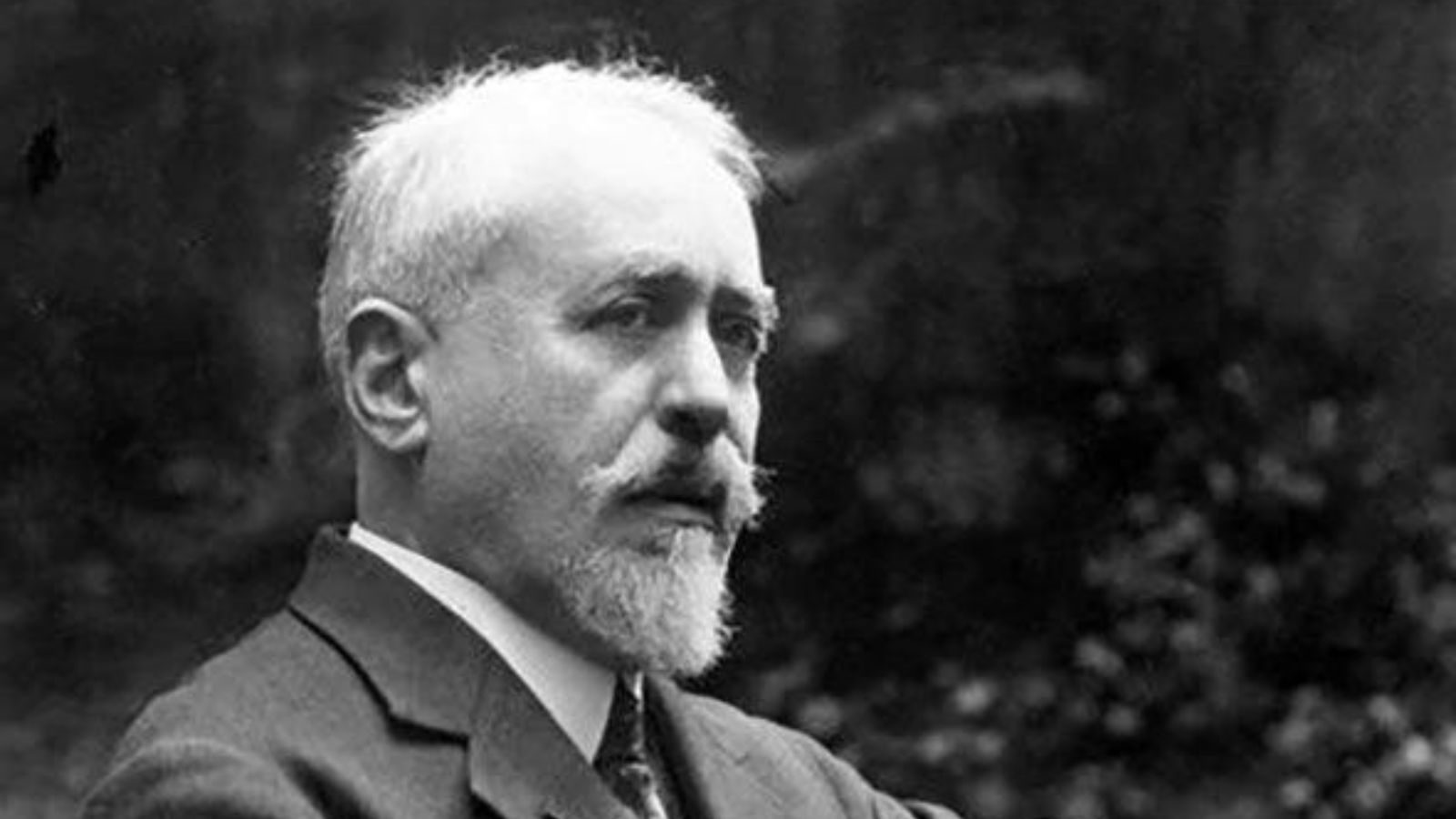
Paul Dukas was one of the most respected French composers of the late nineteenth and early twentieth centuries. Although his published output was relatively small, his reputation rests on the exceptional quality of his compositions, his meticulous craftsmanship, and his influential role as a teacher and music critic. Today, he is best remembered for The Sorcerer’s Apprentice, a brilliant orchestral scherzo that gained worldwide popularity and remains a staple of the concert repertoire.
Dukas belonged to a generation of French composers that included Claude Debussy and Maurice Ravel. While he shared some characteristics with these contemporaries, he developed a highly individual style marked by structural rigor, rich orchestration, and a deep respect for classical forms. His influence extended beyond his compositions through his teaching of future musical giants and his thoughtful contributions to music criticism.
Childhood
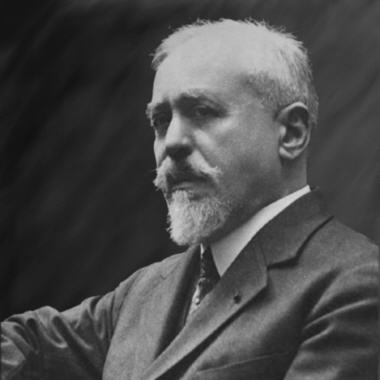
Paul Abraham Dukas was born on October 1, 1865, in Paris. He was the youngest of three children in a prosperous Jewish family. His father, Jules Dukas, was a banker, while his mother, Eugénie Dukas, died when Paul was only five years old. Her death had a profound impact on the family and on the young boy.
Unlike many famous composers, Dukas did not display extraordinary musical talent at a very early age. His childhood education was broad and included literature, languages, and general academic subjects. Music gradually became his primary interest during his adolescence rather than in early childhood.
The cultural environment of Paris exposed him to a rich artistic atmosphere. The city was one of Europe’s leading musical centers, and young Dukas had access to concerts, operas, and artistic discussions that stimulated his developing imagination.
Youth
Dukas began studying music seriously during his teenage years. In 1881, at the age of sixteen, he entered the prestigious Paris Conservatoire, where he studied piano, harmony, and composition.
Among his most important teachers was Théodore Dubois. During his years at the Conservatoire, Dukas formed friendships with several promising young musicians, including Claude Debussy. These relationships helped shape his artistic development and exposed him to a wide variety of musical ideas.
Dukas competed several times for the prestigious Prix de Rome, one of France’s most important composition prizes. Although he came close to winning, he never secured first place. His disappointment led him to leave the Conservatoire before completing the traditional path expected of many French composers.
Despite this setback, Dukas continued refining his craft independently. During the 1880s and early 1890s, he devoted himself to intense study of orchestration, counterpoint, and musical structure. He developed a reputation for perfectionism, often revising or destroying works that failed to meet his exacting standards.
Adulthood
By the 1890s, Dukas had begun establishing himself as a composer of considerable promise. He also became active as a music critic, writing insightful articles for leading French journals. His criticism was admired for its intelligence, fairness, and deep understanding of musical technique.
His breakthrough came in 1897 with the premiere of The Sorcerer’s Apprentice. The work achieved immediate success and made Dukas internationally famous. Its brilliant orchestration, vivid storytelling, and technical mastery demonstrated his exceptional gifts as a composer.
In 1907, Dukas completed his only opera, Ariane et Barbe-Bleue (Ariadne and Bluebeard), based on a play by Maurice Maeterlinck. The opera was praised for its sophisticated orchestration and dramatic depth, further solidifying his reputation.
Dukas also composed significant orchestral and piano works during this period. However, his perfectionism remained legendary. He frequently withdrew compositions from publication and destroyed many manuscripts, believing they did not achieve his artistic ideals. As a result, his surviving catalog is relatively small compared to those of many contemporaries.
In later years, Dukas became an influential teacher. He joined the faculty of the Paris Conservatoire and later taught at the École Normale de Musique de Paris. Among his students were several composers who would become major figures in twentieth-century music, including Olivier Messiaen and Joaquín Rodrigo.
His reputation as a teacher was based not only on technical expertise but also on his encouragement of originality and artistic integrity.
Major Compositions
Although Dukas left behind a limited body of published work, several compositions remain highly respected and frequently performed.
The Sorcerer’s Apprentice (1897)
This symphonic scherzo, inspired by a poem by Johann Wolfgang von Goethe, is Dukas’s most famous work. It tells the story of an apprentice magician whose attempt to use magic spirals out of control. The composition became even more popular after its inclusion in the 1940 Disney film Fantasia.
Symphony in C Major (1896)
This large-scale symphony demonstrates Dukas’s mastery of orchestral writing and classical structure. Although less famous than The Sorcerer’s Apprentice, it is regarded as one of the finest French symphonies of its era.
Ariane et Barbe-Bleue (1907)
Dukas’s only completed opera is a sophisticated reinterpretation of the Bluebeard legend. The work combines rich orchestration, psychological depth, and advanced harmonic language.
Piano Sonata in E-flat Minor (1901)
One of the most substantial piano sonatas of the French repertoire, this composition displays remarkable technical complexity and emotional power.
La Péri (1912)
This ballet-poem is considered one of Dukas’s masterpieces. The work is celebrated for its luminous orchestration and exotic atmosphere. Its brilliant fanfare for brass instruments remains particularly famous.
Variations, Interlude and Finale on a Theme by Rameau (1902–1903)
Written for piano, this work pays tribute to the great French Baroque composer Jean-Philippe Rameau while demonstrating Dukas’s own creativity and technical brilliance.
Death
During the final decades of his life, Dukas composed relatively little, focusing increasingly on teaching, criticism, and mentoring younger musicians. He remained highly respected throughout the French musical community.
Paul Dukas died on May 17, 1935, in Paris at the age of sixty-nine. His death marked the loss of one of France’s most admired musical intellectuals.
Many colleagues and students paid tribute to his extraordinary standards, integrity, and dedication to artistic excellence. His influence continued through the generations of composers he had taught and inspired.
Conclusion
Paul Dukas occupies a unique place in music history. While he composed far fewer works than many of his contemporaries, the music he chose to preserve reflects an uncompromising pursuit of perfection. His compositions combine technical mastery, expressive depth, and brilliant orchestration, making them enduring contributions to the classical repertoire.
Beyond his achievements as a composer, Dukas served as an influential critic, educator, and mentor. His guidance helped shape some of the most important musical voices of the twentieth century. Today, he is remembered not only for the enduring popularity of The Sorcerer’s Apprentice but also for the exceptional quality of his artistic legacy.
Comments are closed