Introduction
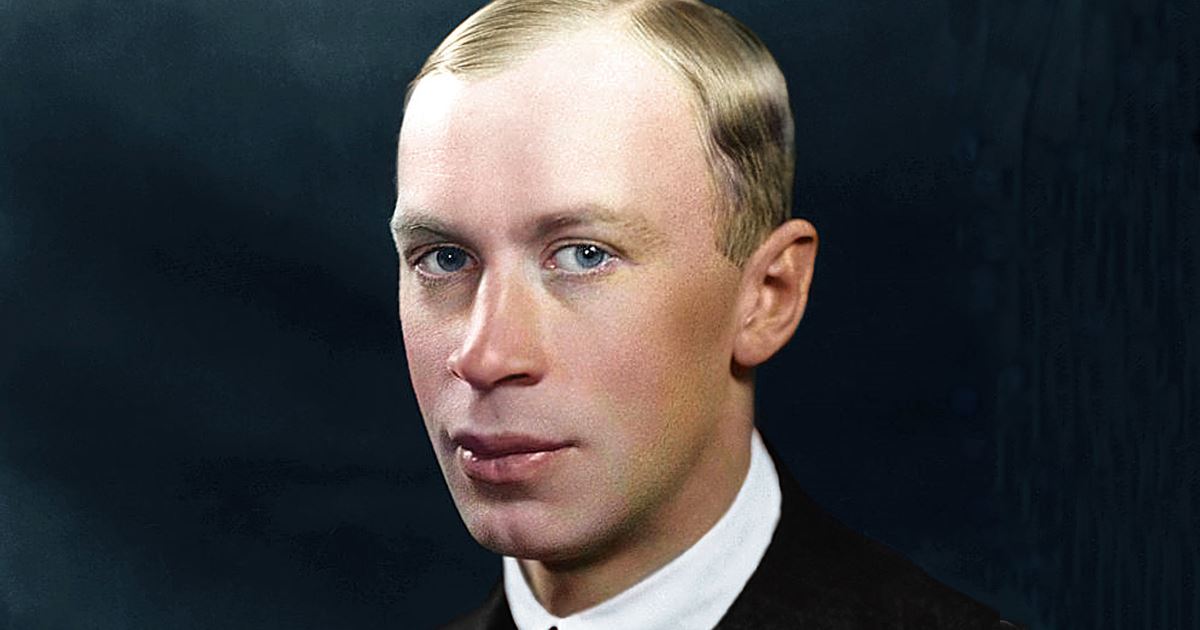
Sergei Prokofiev was one of the most influential composers of the twentieth century. Renowned for his innovative harmonies, energetic rhythms, memorable melodies, and brilliant orchestration, he played a crucial role in shaping modern classical music. His works range from symphonies and operas to ballets, concertos, film scores, and chamber music. Combining modernist experimentation with lyrical beauty, Prokofiev developed a unique musical voice that distinguished him from his contemporaries.
Born during the final decades of the Russian Empire and living through revolutions, wars, and political upheaval, Prokofiev’s life reflected the turbulent history of his era. Despite numerous challenges, he produced an extraordinary body of work that continues to be performed and admired worldwide. His compositions, including Peter and the Wolf, Romeo and Juliet, and the Classical Symphony, remain staples of the concert repertoire.
Childhood
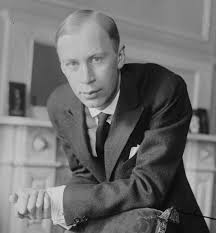
Sergei Sergeyevich Prokofiev was born on April 23, 1891, in the rural village of Sontsovka, located in what is now Ukraine. He was the only surviving child of Sergei Alekseyevich Prokofiev, an agricultural engineer, and Maria Grigorievna Prokofieva, a talented amateur pianist who greatly influenced her son’s musical development.
From an early age, Prokofiev displayed extraordinary musical abilities. His mother introduced him to the piano and encouraged his growing interest in music. By the age of five, he was already composing simple pieces. His first known composition, a small piano work entitled Indian Gallop, demonstrated a remarkable instinct for melody and structure.
As a child, Prokofiev spent countless hours studying piano scores and attending performances whenever possible. His mother recognized his exceptional talent and provided him with opportunities to develop his skills. By the age of nine, he had composed several short piano pieces and even attempted to write operas.
The family’s relative prosperity enabled them to seek professional musical instruction. In 1902, the respected Russian composer Reinhold Glière was hired to tutor the young prodigy during the summer months. Glière’s guidance significantly enhanced Prokofiev’s compositional technique and encouraged his creative ambitions.
Youth
Recognizing their son’s exceptional abilities, Prokofiev’s parents moved him to Saint Petersburg in 1904 so he could attend the prestigious Saint Petersburg Conservatory. At only thirteen years old, he entered one of Russia’s most respected musical institutions.
During his years at the conservatory, Prokofiev studied composition, piano, conducting, and theory under distinguished teachers. He quickly gained a reputation as a brilliant but unconventional student. While many of his professors admired his technical skills, some found his musical ideas provocative and rebellious.
Prokofiev developed a style characterized by sharp dissonances, bold rhythms, and unexpected harmonic progressions. These qualities often shocked audiences accustomed to more traditional music. Nevertheless, his originality earned him increasing recognition among fellow students and musicians.
As a pianist, Prokofiev possessed extraordinary technical abilities. His performances were known for their precision, power, and confidence. In 1914, he won the conservatory’s prestigious Anton Rubinstein Prize for piano performance, further establishing his reputation as one of Russia’s most promising young musicians.
During these formative years, he composed numerous works that revealed his emerging voice, including piano pieces, orchestral compositions, and his first piano concertos. By the time he graduated, Prokofiev was already recognized as a leading figure among the younger generation of Russian composers.
Adulthood
The outbreak of World War I and the subsequent Russian Revolution profoundly affected Prokofiev’s life. During the years surrounding these events, he continued composing and performing while seeking opportunities beyond Russia.
In 1918, Prokofiev left his homeland and traveled to the United States. He hoped to establish an international career and gain greater artistic freedom. Although his initial success in America was mixed, he attracted attention as both a composer and pianist.
Following his American period, Prokofiev spent many years in Europe, particularly in Paris, where he became associated with important artistic circles. He collaborated with influential cultural figures and produced some of his most significant works. During this time, he established himself as one of the foremost modern composers in the world.
In 1923, he married the Spanish singer Lina Llubera. The couple had two sons. Although their marriage later deteriorated, Lina played an important role in Prokofiev’s personal and professional life during the 1920s and 1930s.
Throughout the 1920s and early 1930s, Prokofiev enjoyed considerable success across Europe. His ballets, concertos, and orchestral works were performed by leading musicians and ensembles. However, he increasingly felt drawn to the Soviet Union, where government officials encouraged his return.
In 1936, Prokofiev permanently returned to the Soviet Union. Initially, he was welcomed as a celebrated national artist. During this period, he composed several works intended for wider audiences, including educational and patriotic pieces.
Life in the Soviet Union eventually became more difficult. Government authorities increasingly demanded that composers create music that conformed to official cultural policies. In 1948, Prokofiev became one of several prominent composers criticized by Soviet authorities for producing music considered overly formalistic. These political pressures damaged his career and restricted performances of some of his works.
At the same time, his health began to decline. Despite recurring illnesses and growing personal difficulties, Prokofiev continued composing with remarkable determination. Many of his late works demonstrate both artistic maturity and emotional depth.
Major Compositions
Prokofiev’s catalog includes masterpieces in nearly every major musical genre.
Among his most celebrated orchestral works is the Classical Symphony (Symphony No. 1), composed in 1917. Inspired by the style of eighteenth-century composers, the work combines elegance, wit, and modern energy. It remains one of the most frequently performed symphonies of the twentieth century.
His ballet Romeo and Juliet stands as one of the greatest achievements in ballet history. Based on Shakespeare’s tragedy, the score features unforgettable melodies, dramatic intensity, and brilliant orchestration. The famous “Dance of the Knights” has become one of the most recognizable pieces in classical music.
Another landmark ballet is Cinderella, which demonstrates Prokofiev’s gift for lyrical storytelling and colorful orchestral writing. The score remains popular among ballet companies worldwide.
For younger audiences, Prokofiev composed Peter and the Wolf in 1936. This musical tale introduces orchestral instruments through memorable themes assigned to different characters. It has become one of the most beloved educational works in classical music.
His operatic achievements include The Love for Three Oranges, known for its humor and inventive music, and War and Peace, an ambitious adaptation of Leo Tolstoy’s epic novel.
Prokofiev also composed five piano concertos, all showcasing his extraordinary pianistic abilities. The Third Piano Concerto is particularly admired for its virtuosity, rhythmic vitality, and melodic brilliance.
His film scores, especially those written for director Sergei Eisenstein, represent another significant contribution. The music for Alexander Nevsky and Ivan the Terrible demonstrated his ability to enhance cinematic storytelling through powerful musical expression.
Among his later works, the Fifth Symphony stands as a monumental achievement. Written during World War II, it reflects both the tragedy and resilience of humanity and is often regarded as one of the greatest symphonies of the twentieth century.
Death
During his final years, Prokofiev suffered from serious health problems, including high blood pressure and recurring illnesses that limited his ability to work. Although physically weakened, he continued composing and refining his musical ideas.
Sergei Prokofiev died on March 5, 1953, in Moscow at the age of sixty-one. His death occurred on the same day as that of Soviet leader Joseph Stalin. As a result, public attention focused overwhelmingly on Stalin’s passing, and news of Prokofiev’s death received relatively little immediate recognition.
The circumstances surrounding his funeral reflected the unusual situation. Large public gatherings and official resources were devoted primarily to Stalin’s memorial events, leaving Prokofiev’s funeral comparatively modest despite his immense artistic stature.
Following his death, appreciation for his music steadily grew both within the Soviet Union and internationally. Scholars, performers, and audiences increasingly recognized the breadth and significance of his achievements.
Conclusion
Sergei Prokofiev occupies a central place in the history of modern classical music. Combining innovation with accessibility, he created a musical language that was both distinctive and enduring. His compositions display extraordinary imagination, technical mastery, and emotional range.
Throughout a life marked by political upheaval, artistic controversy, and personal challenges, Prokofiev remained committed to his creative vision. His works continue to inspire musicians, audiences, and composers around the world.
Today, Prokofiev is remembered not only as one of Russia’s greatest composers but also as a major international figure whose music transcends cultural and historical boundaries. From the playful charm of Peter and the Wolf to the dramatic power of Romeo and Juliet and the grandeur of his symphonies, his legacy remains vibrant and influential, securing his place among the most important composers of the twentieth century.
Comments are closed