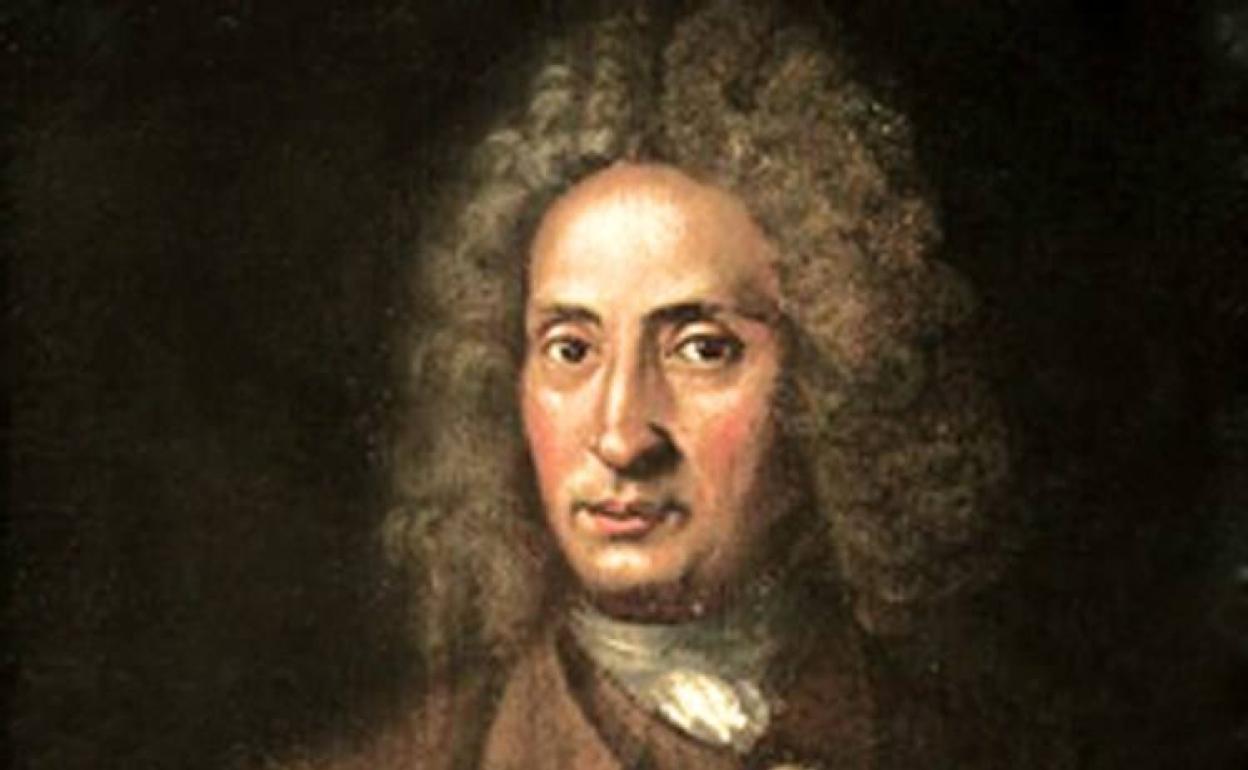
Tomaso Albinoni – A Complete Biography
Introduction
Tomaso Giovanni Albinoni (1671–1751) was an Italian Baroque composer whose life and work offer a fascinating glimpse into the vibrant musical culture of Venice. Although he was a prolific and celebrated composer of operas during his lifetime, he is primarily remembered today for his instrumental music, particularly his concertos and sonatas. Unlike many of his contemporaries, Albinoni maintained a rare financial independence, allowing him to pursue music as a dilettante veneto (Venetian amateur) rather than seeking permanent employment in a court or church. This unique position shaped his career, granting him the freedom to compose prolifically across various genres, even as much of his work was later lost to history.
Childhood and Youth
Born in Venice on June 8, 1671, Tomaso Albinoni was the eldest son of Antonio Albinoni, a wealthy and successful paper merchant and manufacturer of playing cards who owned several shops and properties in the city. Growing up in a family of means, young Tomaso received a comprehensive education, which included training in music. He studied both the violin and singing, quickly demonstrating a significant talent.
As the eldest son, Tomaso was initially expected to take over the lucrative family business. However, his passion for music was evident, and he dedicated his spare time to his artistic pursuits. His wealthy background was instrumental in his early career, as it afforded him the luxury of composing without the financial pressures that bound most professional musicians of the time. This independence was solidified upon his father’s death, when Antonio Albinoni’s will exempted Tomaso from the duty of managing the family enterprise, allowing him to fully commit to his musical vocation.
Adulthood and Career
Albinoni’s professional musical career began in 1694, a pivotal year that saw the publication of his first collection of instrumental music, the 12 Sonate a tre (Opus 1), and the production of his first opera, Zenobia, regina de’ Palmireni, in Venice. The dedication of his Opus 1 to Cardinal Pietro Ottoboni, a fellow Venetian and influential patron of the arts, signaled his entry into the elite musical circles of Italy.
In 1705, Albinoni married Margherita Rimondi, and the couple went on to have six children. The marriage ceremony itself highlighted Albinoni’s standing, with Antonino Biffi, the maestro di cappella of St. Mark’s Basilica, serving as a witness.
Throughout his adulthood, Albinoni gained considerable fame across Italy, primarily as a composer of opera. He saw his works produced in major Italian cities, including Genoa, Bologna, Mantua, Naples, and his native Venice. He also dedicated his popular Op. 3 suites to Ferdinando de’ Medici, Grand Prince of Tuscany, in 1701. His reputation extended beyond Italy; in 1722, he was invited by Maximilian II Emanuel, Elector of Bavaria, to direct two of his operas in Munich, a significant honor that attested to his international standing.
Despite his initial financial independence, Albinoni faced a reversal of fortune. Around 1721, the family business was taken over by an old creditor of his father following a lawsuit, and Albinoni’s private income largely ceased. This financial setback, combined with the general decline in documentation, contributes to the obscurity surrounding the final decades of his life.
Major Compositions and Legacy
Albinoni was a remarkably prolific composer, though much of his output has been lost. He is credited with writing at least 80 operas, of which only two survive in complete form: Zenobia, regina de’ Palmireni and La Statira. His instrumental music, however, is what secured his lasting legacy. His works include numerous concertos, sonatas for one to six instruments, and sinfonias.
A key contribution was his pioneering work in the concerto form. He was one of the first Italian composers to write concertos for the oboe, a relatively new instrument at the time, producing a collection of highly influential works between 1705 and 1719. These works, along with his violin concertos, were widely circulated and admired. The German master Johann Sebastian Bach was among his admirers, using Albinoni’s themes for four of his own keyboard fugues (BWV 946, 950, 951, 951a).
It is essential to address the work for which Albinoni is most famous today: the Adagio in G minor. While universally attributed to him, the work is, in fact, a 20th-century composition. It was created by the Italian musicologist and Albinoni biographer Remo Giazotto, who published it in 1958, claiming to have reconstructed it from a small fragment of a sonata by Albinoni, allegedly discovered in the ruins of the Dresden State Library after World War II. Modern scholarship has cast serious doubt on the existence of this fragment, leading most experts to conclude that the Adagio is a neo-Baroque work composed entirely by Giazotto in the style of Albinoni.
Death
The final years of Tomaso Albinoni’s life remain largely undocumented, contributing to a historical misconception about his death. For many years, scholars believed he had died around 1740 because a collection of his violin sonatas was published in France as a “posthumous” work. However, records from the parish of San Barnaba in Venice confirm that Tomaso Giovanni Albinoni lived on in his native city in relative obscurity. He died on January 17, 1751, at the age of 79. The cause of death was recorded as diabetes mellitus.
Conclusion
Tomaso Albinoni’s career embodies the transition and dynamism of the Baroque era. He was a composer of high standing, celebrated in his time for his dramatic operas and influential instrumental works. His unique status as an independent artist, free from the constraints of courtly employment, allowed him to cultivate a distinctive and prolific output. While the destruction of the Dresden State Library during World War II resulted in the tragic loss of much of his work, his surviving instrumental music, particularly his concertos, continues to be performed and appreciated. The enduring popularity of the Adagio in G minor, despite its disputed authorship, is a testament to the powerful, elegant style of the Venetian Baroque that Albinoni championed and to which he made an indelible, though often obscured, contribution.
Comments are closed