Introduction
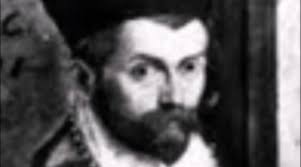
Giovanni Croce was one of the most important composers of the late Renaissance and an influential member of the Venetian School of music. Living during a period of transition between the Renaissance and the early Baroque era, he contributed significantly to both sacred and secular music. Although his name is not as widely recognized today as those of Claudio Monteverdi or the Gabrielis, Croce was highly respected during his lifetime and played a crucial role in shaping the musical culture of Venice, one of Europe’s greatest artistic centers.
Known for his elegant madrigals, lively canzonettas, and expressive sacred compositions, Croce combined technical mastery with accessibility. His works were admired throughout Italy and beyond, particularly in England, where they influenced a generation of composers. As a priest, singer, choirmaster, and composer, he devoted his life to the service of music and the Church, leaving behind a legacy that reflects the artistic brilliance of Renaissance Venice.

Childhood
Giovanni Croce was born around 1557 in the coastal town of Chioggia, near Venice, in the Republic of Venice. Chioggia was a thriving fishing community located on the Adriatic Sea and shared many cultural ties with Venice itself. The town also produced several notable musicians, including the renowned theorist and composer Gioseffo Zarlino.
Croce displayed musical talent at an early age. According to historical accounts, he joined the choir of Chioggia Cathedral as a child. His abilities attracted the attention of Gioseffo Zarlino, who recognized the young boy’s potential and brought him to Venice. Around the age of eight, Croce became a choirboy at St. Mark’s Basilica, one of the most prestigious musical institutions in Europe.
The experience profoundly shaped his future. At St. Mark’s, he received an exceptional musical education and was exposed to the rich traditions of Venetian sacred music. Under the guidance of Zarlino, he learned composition, counterpoint, vocal performance, and liturgical practice. These formative years laid the foundation for his later success as a composer and church musician.
Youth
As Croce matured, he remained closely connected to St. Mark’s Basilica. During his youth, he developed his skills as both a singer and a composer. The musical environment of Venice was particularly vibrant during the second half of the sixteenth century. Composers, performers, and theorists from across Europe came to the city, making it one of the leading centers of musical innovation.
Croce absorbed the traditions established by earlier Venetian masters while also cultivating his own distinctive style. Unlike some of his contemporaries who favored grand and highly complex compositions, he often preferred clarity, balance, and melodic charm.
By the 1580s, Croce had become an active figure in Venetian musical life. In 1585, he was ordained as a priest, marking an important step in both his religious and professional career. Around this time, he was associated with the Church of Santa Maria Formosa, where he likely served as a parish priest while continuing his musical activities.
His early compositions began to attract attention, particularly his secular vocal works. These pieces demonstrated his gift for memorable melodies and his ability to capture the spirit of Venetian social life.
Adulthood
Croce’s adult life was closely intertwined with the musical institutions of Venice. Throughout the late sixteenth century, he continued serving as a singer at St. Mark’s Basilica while composing an increasing number of sacred and secular works.
In 1593, he was appointed assistant choirmaster at St. Mark’s, serving under Baldassare Donato. This position brought greater responsibilities and allowed him to influence the musical direction of one of Europe’s most celebrated churches.
When Donato died in 1603, Croce succeeded him as Maestro di Cappella of St. Mark’s Basilica. This prestigious appointment placed him among the leading musicians of his generation. As choirmaster, he supervised singers, directed performances, composed music for important religious ceremonies, and maintained the high artistic standards expected at St. Mark’s.
However, his tenure was affected by declining health. Historical records suggest that the quality of the choir at St. Mark’s diminished somewhat during these years, not because of any lack of musical ability on Croce’s part, but largely because illness limited his effectiveness as an administrator and conductor.
Despite these challenges, Croce remained a prolific composer. His music reflected both the traditional Renaissance style and the emerging innovations that would characterize the Baroque era. He demonstrated an ability to balance conservative musical techniques with newer approaches involving multiple choirs, instrumental accompaniment, and dramatic contrasts.
Croce’s reputation extended beyond Italy. His compositions were published and reprinted in several European countries, particularly England and the Netherlands. English composers admired his work, and his influence can be seen in the development of the English madrigal tradition.
Major Compositions
Giovanni Croce composed a substantial body of sacred and secular music. His works reveal both technical craftsmanship and an appealing sense of musical expression.
Madrigals and Canzonettas
Croce achieved particular fame through his madrigals and canzonettas. Published in multiple collections between 1585 and 1607, these pieces were admired for their elegance, rhythmic vitality, and accessibility.
Among his most celebrated secular collections are:
- Il primo libro de madrigali
- Mascarate piacevoli et ridicolose per il carnevale (1590)
- Triaca musicale (1595)
- Le Fiammette
- Canzonette a tre e quattro voci
The Mascarate piacevoli et ridicolose per il carnevale is especially notable for its humorous depiction of Venetian carnival scenes. These works combined music with theatrical elements and reflected the festive spirit of Renaissance Venice.
Sacred Music
Croce’s sacred output was equally significant and included:
- Masses
- Motets
- Psalms
- Music for Vespers
- Liturgical settings for major church celebrations
His sacred compositions demonstrate a gradual evolution from the smooth polyphonic style associated with Giovanni Pierluigi da Palestrina toward the more dramatic Venetian style that would later flourish in the Baroque period.
Notable sacred works include:
- Motetti a otto voci
- Messe a otto voci
- Various double-choir psalm settings
- Sacre Cantilene Concertate (published posthumously)
Many of these works were written specifically for the musicians of St. Mark’s Basilica and showcase the distinctive acoustics and musical traditions of that famous church.
Influence on European Music
Croce’s music was widely disseminated throughout Europe. His madrigals were especially popular in England, where they helped inspire composers such as Thomas Morley. English musicians appreciated the clarity, charm, and singable nature of his works.
His compositions contributed significantly to the spread of the Italian madrigal and influenced the development of vocal music in several countries. Although later overshadowed by figures such as Monteverdi, Croce played a vital role in shaping the musical transition from the Renaissance to the Baroque era.
Death
During the final years of his life, Croce struggled with poor health. Despite his physical difficulties, he continued to fulfill his responsibilities at St. Mark’s Basilica and remained active as a composer.
Giovanni Croce died in Venice on May 15, 1609, at approximately fifty-two years of age. His death marked the end of a distinguished career that had spanned more than three decades.
Following his passing, the position of Maestro di Cappella at St. Mark’s was assumed by Giulio Cesare Martinengo. A few years later, the office would be occupied by Claudio Monteverdi, who would lead Venetian music into a new era.
Although Croce did not achieve the lasting fame of some of his successors, his contributions remained respected among musicians and scholars. His works continued to be performed and studied long after his death.
Conclusion
Giovanni Croce occupies an important place in the history of Western music. As a composer, priest, singer, and choirmaster, he embodied the artistic and spiritual ideals of Renaissance Venice. His music reflects a remarkable balance between tradition and innovation, combining the refined polyphony of the Renaissance with elements that anticipated the expressive style of the Baroque period.
His secular works captured the humor, vitality, and social life of Venetian culture, while his sacred compositions demonstrated deep devotion and technical excellence. Through his madrigals, canzonettas, masses, and motets, Croce influenced musicians across Europe and helped shape the development of vocal music during a critical period of musical history.
Today, scholars recognize Giovanni Croce as one of the leading figures of the Venetian School and an important bridge between two great musical eras. His legacy continues to offer valuable insight into the rich artistic world of Renaissance Venice and the evolution of European music.
Comments are closed