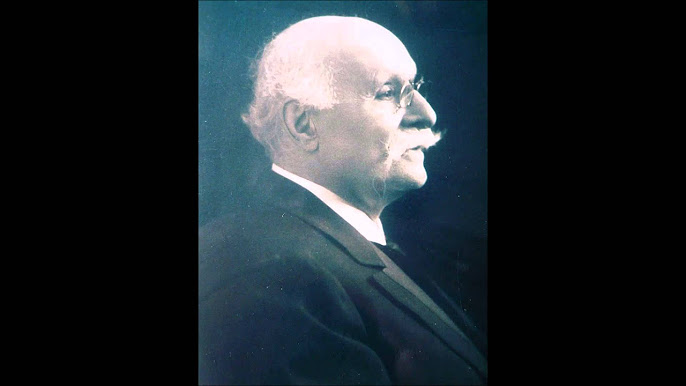
Émile Waldteufel – A Complete Biography
Introduction
Émile Waldteufel (1837–1915) was France’s pre-eminent composer of salon and ballroom music in the late 19th century, a Parisian counterpart to the Viennese Strauss circle. He wrote some 250–270 dances—waltzes, polkas, and galops—of which “Les Patineurs” (“The Skaters’ Waltz,” Op. 183, 1882) became an international evergreen.
Childhood
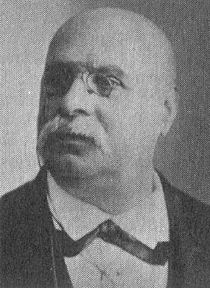
Born Charles Émile Lévy in Strasbourg on December 9, 1837, Waldteufel came from an Alsatian Jewish family of professional musicians. His father, Lazare “Louis” Lévy (known professionally as Louis Waldteufel), led a popular dance orchestra, and his mother, Flora Neubauer, was a Bavarian pianist; the family’s professional use of the Germanic surname “Waldteufel” predated Émile’s career.
When Émile’s elder brother Léon won a place at the Paris Conservatoire, the family moved to Paris, where the young pianist began formal study. Early lessons came from his father and local musicians in Strasbourg before the Conservatoire years.
Youth
At the Conservatoire de Paris he studied piano with Antoine Marmontel and harmony with Laurent, but he left before completing the program, supporting himself by testing pianos for the Scholtus firm, teaching, and playing at soirées—experience that honed his feel for elegant, danceable melody.
Adulthood
Waldteufel’s breakthrough came at court. In 1865 he was appointed pianist to Empress Eugénie; the following year he became conductor of the imperial state balls for Napoleon III, leading music at the Tuileries, Compiègne, and Biarritz. After the fall of the Empire in 1870, he continued in official functions, presiding over grand presidential balls at the Élysée.
An 1874 engagement heard by the Prince of Wales (the future Edward VII) launched his international career; the prince helped secure a long-term publishing contract with London’s Hopwood & Crew, bringing Waldteufel’s waltzes into British royal programs and onto European stages. Tours to London in 1885 and Berlin in 1889 consolidated his reputation.
Major Compositions
Les Patineurs (The Skaters’ Waltz), Op. 183 (1882). Waldteufel’s best-known work evokes a winter day in Paris with glinting horn calls and sleigh bells—lyric, buoyant, and deftly orchestrated.
Estudiantina, Op. 191 (1883). A set of waltzes fashioned from Paul Lacôme’s immensely popular “Estudiantina” melody; Waldteufel’s orchestral version helped disseminate the tune internationally.
España, Op. 236 (1886). An ingenious waltz-suite after Emmanuel Chabrier’s España rhapsody; Waldteufel’s adaptation threads Chabrier’s Spanish-tinged ideas through his own suave dance architecture.
Dolorès, Op. 170 (1880). A lyrical waltz favored in late-19th-century orchestral and salon programs, often appearing in piano and ensemble arrangements.
Minuit (Polka), Op. 168 (c. 1880). A sparkling polka that shows Waldteufel’s flair beyond the waltz proper.
Among many others, “Roses de Noël,” Op. 230, also enjoyed broad popularity in recordings and concert anthologies.
Death
Waldteufel retired from official duties in 1899 and died in Paris on February 12, 1915. He is buried in Père-Lachaise Cemetery. His catalog—measured in the hundreds of dance pieces—secured him a durable place in 19th-century light orchestral music.
Conclusion
Émile Waldteufel distilled the urbane grace of Parisian society into music that still glides across rinks and ballrooms. While his contemporary Johann Strauss II defined the Viennese waltz, Waldteufel fashioned a French idiom—lighter on its feet, elegant in line, and impeccably crafted for dance—that keeps “Les Patineurs,” “Estudiantina,” and “España” alive in the repertoire.
Comments are closed