
Introduction
Giuseppe Verdi stands among the greatest composers in the history of Western classical music. Renowned for his powerful operas, unforgettable melodies, and deep understanding of human emotions, Verdi became a central figure in nineteenth-century Italian music. His works transformed opera and continue to be performed worldwide more than a century after his death. Through masterpieces such as Rigoletto, Il Trovatore, La Traviata, Aida, Otello, and Falstaff, Verdi created a legacy that shaped the future of opera and secured his place among the most influential composers of all time.
Beyond his musical achievements, Verdi became a symbol of Italian nationalism during the movement for Italian unification. His life spanned a period of dramatic political and social change, and his music often reflected the hopes, struggles, and aspirations of his fellow Italians. His remarkable journey from humble beginnings in rural Italy to international fame remains one of the most inspiring stories in music history.
Childhood
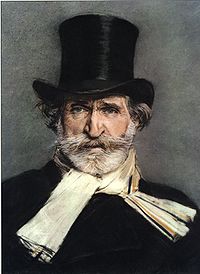
Giuseppe Fortunino Francesco Verdi was born on October 10, 1813, in the village of Le Roncole, near Busseto, in the Duchy of Parma, which was then under French rule during the Napoleonic era. He was the son of Carlo Giuseppe Verdi, an innkeeper and small landowner, and Luigia Uttini, a spinner.
Verdi grew up in modest circumstances. Despite limited financial resources, his parents recognized his interest in music from an early age. The local church played an important role in his musical development. As a child, he learned to play the organ and demonstrated an exceptional ear for music.
His first musical instruction came from local musicians in Busseto. The town possessed a strong musical culture, and Verdi benefited greatly from exposure to church music and local performances. By the age of ten, he was already serving as an organist and displaying talents that surpassed those of many older musicians.
A crucial figure in his early life was Antonio Barezzi, a wealthy merchant and music enthusiast who became Verdi’s patron. Barezzi recognized the young musician’s potential and provided both financial and emotional support, helping him pursue a serious musical education.
Youth
As Verdi entered adolescence, his musical ambitions grew. He studied composition, harmony, and instrumental performance while continuing to work as an organist. Antonio Barezzi arranged opportunities for him to perform and gain practical experience in music.
In 1832, Verdi traveled to Milan, Italy’s most important musical center, hoping to gain admission to the prestigious Milan Conservatory. However, he was rejected. The institution cited his age and perceived deficiencies in piano technique as reasons for the refusal.
Although this setback could have ended his aspirations, Verdi remained determined. Instead of attending the conservatory, he studied privately with Vincenzo Lavigna, a respected composer and former musician at La Scala. Under Lavigna’s guidance, Verdi immersed himself in the study of composition and opera.
During this period, he attended numerous performances at La Scala and absorbed the works of major composers. These experiences significantly broadened his musical horizons and helped shape his artistic identity.
In 1836, Verdi married Margherita Barezzi, the daughter of his patron. The marriage initially brought happiness, but tragedy soon followed. The couple had two children, both of whom died in infancy. Shortly afterward, Margherita herself died in 1840 at the age of twenty-six. These devastating losses plunged Verdi into profound grief.
Adulthood
Verdi’s professional career began with his first opera, Oberto, which premiered at La Scala in 1839 and achieved moderate success. Encouraged by this reception, he composed a comic opera, Un giorno di regno. Unfortunately, the work failed commercially and critically.
Combined with the recent deaths of his wife and children, the failure left Verdi devastated. He seriously considered abandoning composition altogether. However, an opportunity soon emerged that would change his life.
In 1842, Verdi premiered Nabucco at La Scala. The opera became an extraordinary success and established him as a leading composer. The chorus “Va, pensiero,” sung by Hebrew exiles longing for their homeland, resonated deeply with Italian audiences living under foreign domination. The work elevated Verdi to national prominence.
The success of Nabucco launched a period of intense productivity. Throughout the 1840s, Verdi composed numerous operas, including I Lombardi, Ernani, Attila, and Macbeth. He later described these years as his “galley years” because of the relentless pace at which he worked.
By the 1850s, Verdi had entered a mature phase of artistic development. He produced a remarkable trio of masterpieces: Rigoletto (1851), Il Trovatore (1853), and La Traviata (1853). These operas demonstrated greater psychological depth, dramatic sophistication, and musical innovation than his earlier works.
During this period, Verdi developed a lasting relationship with soprano Giuseppina Strepponi, who had sung in the premiere of Nabucco. The couple eventually married in 1859 and spent much of their lives together at Verdi’s estate, Sant’Agata.
As his reputation spread internationally, Verdi received commissions from major opera houses across Europe. His fame extended far beyond Italy, making him one of the most celebrated composers of his era.
Verdi also became involved in public life. He supported the movement for Italian unification and was admired as a patriotic figure. Following the establishment of a unified Italy, he briefly served in the national parliament, although politics never became his primary focus.
His later years brought even greater artistic achievements. In 1871, he composed Aida for the opening celebrations associated with the Khedivial Opera House in Cairo. The opera became one of the most beloved works in the operatic repertoire.
Following Aida, Verdi considered retirement but continued composing. Inspired by his collaboration with librettist Arrigo Boito, he produced two final masterpieces: Otello (1887) and Falstaff (1893). These works demonstrated extraordinary creativity and showed that Verdi remained an innovative force even in old age.
Major Compositions
Throughout his long career, Verdi composed more than two dozen operas, many of which remain central to the modern repertoire.
Nabucco (1842)
Nabucco marked Verdi’s breakthrough. The opera’s themes of oppression, freedom, and national identity captured public imagination and established his reputation throughout Italy.
Ernani (1844)
Based on a play by Victor Hugo, Ernani demonstrated Verdi’s growing mastery of dramatic storytelling and emotional intensity.
Macbeth (1847)
Inspired by William Shakespeare’s tragedy, Macbeth revealed Verdi’s interest in psychological complexity and dramatic realism.
Rigoletto (1851)
Often considered one of Verdi’s greatest achievements, Rigoletto tells the tragic story of a court jester and his daughter. The opera contains some of Verdi’s most memorable music, including “La donna è mobile.”
Il Trovatore (1853)
Known for its passionate melodies and dramatic plot, Il Trovatore quickly became one of the most popular operas ever written.
La Traviata (1853)
Based on a contemporary story rather than historical or mythical subjects, La Traviata explores themes of love, sacrifice, and social hypocrisy. It remains among the most frequently performed operas worldwide.
Don Carlos (1867)
This ambitious grand opera combines political intrigue, personal conflict, and philosophical themes. It is regarded as one of Verdi’s most complex works.
Aida (1871)
Set in ancient Egypt, Aida blends intimate human drama with grand spectacle. Its triumphal scenes and emotional depth have made it a lasting favorite.
Requiem (1874)
Although primarily known for opera, Verdi composed a monumental Requiem Mass in memory of writer Alessandro Manzoni. The work is considered one of the greatest sacred compositions ever written.
Otello (1887)
Based on Shakespeare’s Othello, Otello represents the culmination of Verdi’s mature style. It is widely regarded as one of the finest operas in history.
Falstaff (1893)
Verdi’s final opera, Falstaff, is a brilliant comedy inspired by Shakespeare. Written when he was nearly eighty years old, it displays remarkable wit, energy, and craftsmanship.
Death
During his final years, Verdi remained one of Italy’s most respected public figures. Although advanced age limited his activities, he continued to oversee his estate and support charitable causes.
One of his most significant philanthropic achievements was the establishment of the Casa di Riposo per Musicisti in Milan, a retirement home for elderly musicians. Verdi considered this institution among his proudest accomplishments.
In January 1901, Verdi suffered a stroke while staying at the Grand Hotel et de Milan. His condition gradually worsened over several days. On January 27, 1901, Giuseppe Verdi died at the age of eighty-seven.
His death prompted an unprecedented outpouring of grief throughout Italy and beyond. Hundreds of thousands of people mourned the loss of the nation’s most beloved composer. His funeral became a major national event, reflecting the immense impact he had on Italian culture and identity.
Later that year, Verdi’s remains were transferred to the Casa di Riposo per Musicisti, where he was buried alongside his wife, Giuseppina Strepponi.
Conclusion
Giuseppe Verdi’s life was a remarkable journey from rural poverty to international acclaim. Through perseverance, talent, and unwavering dedication, he overcame personal tragedy and professional setbacks to become one of history’s greatest composers.
His operas revolutionized musical drama by combining memorable melodies with profound emotional and psychological insight. Works such as Rigoletto, La Traviata, Aida, Otello, and Falstaff continue to captivate audiences across generations and cultures.
Verdi’s influence extends far beyond the opera house. He became a symbol of Italian unity, a champion of artistic excellence, and a composer whose music speaks directly to universal human experiences. More than a century after his death, his legacy remains vibrant, ensuring his place among the immortals of classical music.
Comments are closed