1. Introduction
The Baroque period represents one of the most significant and transformative chapters in the history of Western classical music. Extending approximately from 1600 to 1750, this era witnessed profound changes in musical composition, performance, instrumental development, and artistic expression. It was a period characterized by extraordinary creativity, technical innovation, and the emergence of musical forms that would profoundly influence the subsequent development of Western music.
The term Baroque is generally associated with the Portuguese word barroco, referring to an irregularly shaped pearl. Initially used in a somewhat pejorative sense to describe art considered extravagant, elaborate, or excessively ornamental, the term eventually came to designate an entire artistic and cultural movement. In music, the Baroque aesthetic was distinguished by its dramatic contrasts, elaborate ornamentation, expressive intensity, and sophisticated harmonic structures.
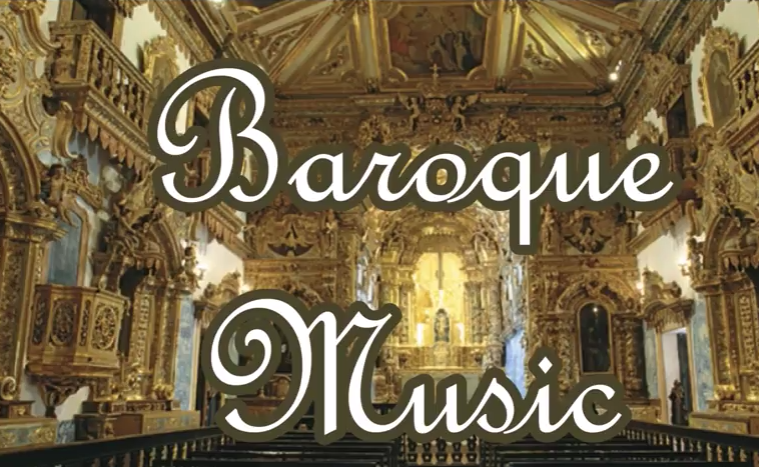
Baroque music developed alongside the broader cultural movement of the Baroque, which encompassed architecture, painting, sculpture, literature, and theatre. Like these other artistic disciplines, music increasingly emphasized grandeur, emotional expression, theatricality, and the capacity to move the audience.
The period produced some of the most influential composers in Western musical history, including Claudio Monteverdi, Arcangelo Corelli, Antonio Vivaldi, Johann Sebastian Bach, George Frideric Handel, and Henry Purcell. Their contributions established foundations upon which much of the subsequent classical tradition would be built.
Understanding the history of Baroque music therefore requires examining not only its composers and compositions but also the political, religious, philosophical, and cultural circumstances that shaped its development.
2. Historical Origins and Cultural Background
The emergence of Baroque music around the beginning of the seventeenth century was closely connected to the intellectual and artistic transformations taking place in Europe during the late Renaissance.
During the sixteenth century, Renaissance music had achieved considerable sophistication, particularly through the development of polyphonic vocal composition. Composers such as Giovanni Pierluigi da Palestrina cultivated intricate contrapuntal techniques, in which several independent melodic lines were combined into a harmonious musical structure.
Despite the remarkable achievements of Renaissance polyphony, certain musicians and intellectuals began advocating a different approach to musical expression. They believed that music should communicate emotions more directly and that the complexity of polyphonic writing could sometimes obscure the meaning of the text.
One of the most important developments in this transformation occurred in Florence, Italy, where a group of intellectuals, poets, musicians, and scholars known as the Florentine Camerata gathered during the late sixteenth century.
Members of this circle sought to revive what they understood to be the dramatic principles of ancient Greek music and theatre. They believed that music should serve the expressive power of poetry and that a single melodic line, supported by instrumental accompaniment, could communicate human emotions more effectively than elaborate polyphony.
These ideas contributed to the development of monody, a musical style characterized by a prominent solo vocal melody accompanied by instruments.
Monody became one of the principal foundations of early Baroque music and played an essential role in the emergence of opera, one of the period’s most influential artistic innovations.
The transition from Renaissance to Baroque music was not instantaneous. Rather, it developed gradually through the experimentation of composers who sought new ways to combine melody, harmony, drama, and emotional expression.
3. The Emergence of Opera
Among the most important achievements of the early Baroque period was the creation and establishment of opera.
Opera emerged in Italy around the beginning of the seventeenth century as an attempt to recreate the dramatic and musical ideals associated with ancient Greek theatre. It combined music, poetry, acting, scenery, costumes, and theatrical spectacle into a unified artistic experience.
One of the earliest surviving operas is Euridice, composed by Jacopo Peri and first performed in Florence in 1600. Although earlier experiments in musical drama had already taken place, this work represents a landmark in the establishment of opera as a distinct musical genre.
However, the composer who most significantly advanced early opera was Claudio Monteverdi (1567–1643).
His opera L’Orfeo, first performed in Mantua in 1607, is widely regarded as one of the foundational masterpieces of the operatic tradition. Monteverdi demonstrated that music could do considerably more than accompany theatrical action: it could express psychological complexity, intensify dramatic conflict, and communicate the emotional dimensions of human experience.
Monteverdi also developed the expressive possibilities of instrumental accompaniment, vocal declamation, and harmonic tension. His music represented an important synthesis between Renaissance polyphonic traditions and the emerging Baroque aesthetic.
Opera rapidly spread throughout Italy. In 1637, the opening of the Teatro San Cassiano in Venice established an important milestone in the commercialization of public opera. This development made the genre accessible beyond aristocratic courts and contributed to its expansion across Europe.
During the following decades, opera developed into one of the principal artistic expressions of the Baroque period, eventually flourishing in France, Germany, England, and other European territories.
4. The Principal Characteristics of Baroque Music
Baroque music possesses several distinctive characteristics that distinguish it from the Renaissance and Classical periods. Although composers approached musical expression in different ways, certain stylistic principles became particularly influential.
4.1. Basso Continuo
One of the defining characteristics of Baroque music was the use of basso continuo, also known as figured bass.
This technique consisted of a continuous bass line performed by one or more low-pitched instruments, often accompanied by a harmonic instrument such as the harpsichord, organ, or theorbo.
The bass instrument established the harmonic foundation, while the accompanying instrument supplied chords according to figures indicated beneath the bass notes.
Basso continuo became fundamental to Baroque composition and performance, providing harmonic stability while allowing considerable flexibility in interpretation.
4.2. Tonality and Harmonic Development
The Baroque period witnessed the gradual consolidation of the major-minor tonal system, which would become the principal organizational foundation of Western classical music.
Earlier Renaissance compositions frequently relied on modal systems. During the Baroque era, composers increasingly organized their works around major and minor keys, creating clearer harmonic relationships and stronger expectations of resolution.
The development of functional harmony allowed composers to construct more elaborate musical structures, establish tonal contrasts, and create dramatic tension through harmonic progression.
The theoretical system of major and minor tonality became increasingly standardized during this period.
4.3. Ornamentation and Musical Decoration
Ornamentation was another essential feature of Baroque music.
Composers and performers frequently employed trills, mordents, turns, appoggiaturas, and other decorative figures to enrich melodic lines.
These ornaments were not merely superficial embellishments. They contributed to the expressive character of the music, intensified emotional passages, and demonstrated the technical abilities of performers.
In many cases, musicians were expected to add ornaments according to established conventions and their own artistic judgment.
4.4. Contrast and Dramatic Expression
Baroque composers frequently explored musical contrasts as a means of intensifying expression.
These contrasts could involve different instrumental groups, alternating solo and ensemble passages, changes in dynamics, opposing melodic ideas, or shifts between major and minor tonalities.
The contrast between a soloist and a larger instrumental ensemble became particularly important in the development of the concerto.
Baroque music also embraced the concept of the Doctrine of the Affections, according to which musical compositions could be designed to evoke or represent particular emotional states.
Rather than simply reproducing spontaneous feelings, composers frequently sought to construct musical expressions associated with identifiable emotions, such as sorrow, joy, anger, tenderness, or triumph.
4.5. Polyphony and Counterpoint
Although Baroque music increasingly emphasized melody accompanied by harmony, polyphony remained an essential compositional technique.
Counterpoint, the art of combining independent melodic lines, reached an extraordinary level of sophistication during this period.
Johann Sebastian Bach became one of its greatest masters, demonstrating how multiple independent voices could be integrated into complex yet coherent musical structures.
The fugue, in particular, became one of the most remarkable manifestations of Baroque contrapuntal writing.
5. The Development of Instrumental Music
One of the most important transformations of the Baroque period was the growing independence and prestige of instrumental music.
During the Renaissance, vocal music occupied a particularly prominent position, and instruments frequently served as accompaniments or substitutes for vocal parts.
In the Baroque era, however, instrumental composition developed into an independent and highly sophisticated artistic discipline.
This transformation was encouraged by improvements in instrument construction, the expansion of professional musical ensembles, and the growing demand for instrumental performances in courts, churches, theatres, and private residences.
Several instruments became especially important during this period.
5.1. The Harpsichord
The harpsichord was one of the central keyboard instruments of the Baroque era.
Unlike the modern piano, which produces sound through hammers striking strings, the harpsichord produces sound through small plectra that pluck the strings when keys are depressed.
Its characteristic bright and articulate tone made it particularly suitable for continuo accompaniment and solo keyboard compositions.
Composers such as Johann Sebastian Bach, François Couperin, Domenico Scarlatti, and Jean-Philippe Rameau contributed significantly to the development of the harpsichord repertoire.
5.2. The Organ
The organ occupied a particularly important position in religious and secular musical life.
Its capacity to produce sustained tones, powerful harmonies, and contrasting timbres made it one of the most expressive instruments of the period.
The Baroque organ repertoire reached exceptional heights through the works of composers such as Dieterich Buxtehude, Johann Pachelbel, and Johann Sebastian Bach.
Bach’s organ compositions, particularly his fugues, preludes, and chorale arrangements, remain among the most important achievements in the history of keyboard music.
5.3. The Violin and the String Family
The violin underwent significant development during the Baroque period and became one of the most important instruments in European musical culture.
Italian instrument-making families, particularly the Amati, Guarneri, and Stradivari families, established standards of craftsmanship that continue to be admired today.
The violin’s expressive flexibility, wide range, and technical possibilities made it especially suitable for solo performance and ensemble music.
The viola, cello, and double bass also became essential components of the developing Baroque orchestra.
5.4. Other Important Instruments
Additional instruments frequently associated with Baroque music included the flute, recorder, oboe, bassoon, trumpet, horn, lute, theorbo, and viola da gamba.
The combination of these instruments varied according to the composition, performance environment, and available musicians.
The resulting instrumental diversity contributed to the rich and distinctive sound world of the Baroque era.
6. The Principal Musical Forms of the Baroque Period
The Baroque era witnessed the establishment and refinement of several musical forms that would become central to the Western classical tradition.
6.1. The Concerto
The concerto became one of the most important instrumental genres of the period.
Its defining characteristic was the contrast between individual instruments or groups of instruments and a larger ensemble.
Two principal types developed:
- Concerto grosso: A small group of soloists, known as the concertino, alternates with the larger instrumental ensemble, known as the ripieno or tutti.
- Solo concerto: A single instrument, frequently the violin, is contrasted with the orchestral ensemble.
Antonio Vivaldi became one of the most influential composers of the solo concerto, helping establish the three-movement structure of fast, slow, and fast.
His collection L’estro armonico, published in 1711, contributed significantly to the dissemination of Italian concerto style throughout Europe.
6.2. The Sonata
The sonata developed into an important instrumental genre, generally consisting of several contrasting movements.
Two principal categories were particularly influential:
- Sonata da chiesa: A church sonata, traditionally associated with a sequence of contrasting movements and intended for religious or formal settings.
- Sonata da camera: A chamber sonata, frequently organized around dance movements and intended for secular environments.
Arcangelo Corelli played a fundamental role in establishing the sonata as a central genre of Baroque instrumental music.
6.3. The Suite
The suite consisted of a collection of instrumental dance movements, often unified by a common key.
Although the movements originated in different European dance traditions, they were generally arranged to create musical variety and structural coherence.
Common movements included:
- Allemande
- Courante
- Sarabande
- Gigue
- Minuet
- Gavotte
- Bourrée
The suite became especially important in keyboard and orchestral composition.
Johann Sebastian Bach produced several celebrated collections of suites, including the English Suites, French Suites, and Orchestral Suites.
6.4. The Fugue
The fugue represents one of the highest achievements of Baroque contrapuntal composition.
It is based on the systematic development of a principal melodic idea, known as the subject, which is introduced by one voice and subsequently imitated by other voices.
Through imitation, transformation, harmonic development, and contrapuntal interaction, the composer constructs an elaborate musical structure.
Johann Sebastian Bach remains the most celebrated master of the fugue.
His collection The Well-Tempered Clavier and the monumental The Art of Fugue demonstrate the extraordinary expressive and intellectual possibilities of this compositional technique.
6.5. The Oratorio
The oratorio was a large-scale musical composition for solo voices, choir, and orchestra, generally based on religious or biblical subjects.
Unlike opera, it was traditionally performed without theatrical staging, costumes, or dramatic acting.
The oratorio became particularly important in England through the works of George Frideric Handel.
His Messiah, first performed in Dublin in 1742, remains one of the most celebrated compositions of the genre.
6.6. The Cantata
The cantata was another important vocal genre, generally consisting of a succession of recitatives, arias, and sometimes choruses.
Cantatas could be secular or religious, although sacred cantatas became especially prominent in the Lutheran musical tradition.
Johann Sebastian Bach composed more than 200 surviving sacred cantatas, many of which were intended for performance during religious services.
These compositions represent some of the most sophisticated achievements in the relationship between music, theology, poetry, and dramatic expression.
7. The Great Composers of the Baroque Era
The history of Baroque music is inseparable from the contributions of composers who transformed the musical language of their time.
7.1. Claudio Monteverdi (1567–1643)
Claudio Monteverdi occupies a fundamental position in the transition from Renaissance to Baroque music.
His compositions demonstrate the transformation of polyphonic traditions into a more dramatic and expressive musical language.
Monteverdi’s opera L’Orfeo is widely considered a landmark in the history of opera.
His later works, including Il ritorno d’Ulisse in patria and L’incoronazione di Poppea, further established the expressive and dramatic potential of the genre.
Monteverdi also made important contributions to sacred music, particularly through his collection Vespro della Beata Vergine (1610).
7.2. Arcangelo Corelli (1653–1713)
Arcangelo Corelli was one of the most influential Italian composers and violinists of the late seventeenth century.
His compositions contributed significantly to the development of the sonata and concerto grosso.
Corelli’s Concerti Grossi, Op. 6, published posthumously in 1714, became an influential model for subsequent generations of composers.
His violin writing helped establish important technical and stylistic conventions that shaped the development of instrumental music.
7.3. Antonio Vivaldi (1678–1741)
Antonio Vivaldi was an Italian composer, violinist, and priest, widely recognized for his contributions to the concerto.
His energetic musical language, vivid contrasts, and inventive orchestration made him one of the most distinctive composers of the Baroque period.
Vivaldi composed hundreds of concertos, many of them for violin, as well as operas, sacred compositions, and instrumental works.
His most famous collection is The Four Seasons, published in 1725 as part of Il cimento dell’armonia e dell’inventione, Op. 8.
The four concertos depict aspects of spring, summer, autumn, and winter through musical representations of natural phenomena and human activities.
Vivaldi’s influence extended far beyond Italy, particularly through the dissemination of his concertos in northern Europe.
7.4. Johann Sebastian Bach (1685–1750)
Johann Sebastian Bach is widely regarded as one of the greatest composers in the history of Western music.
Born in Eisenach, Germany, Bach belonged to a distinguished musical family and developed an extraordinary mastery of counterpoint, harmony, instrumental writing, and large-scale musical architecture.
Throughout his career, he worked in several German cities, including Weimar, Köthen, and Leipzig.
His compositions encompass virtually every major musical genre of the Baroque period, with the notable exception of opera.
Among his most important works are:
- The Well-Tempered Clavier
- Brandenburg Concertos
- Mass in B Minor
- St Matthew Passion
- St John Passion
- Goldberg Variations
- The Art of Fugue
- Cello Suites
- Sonatas and Partitas for Solo Violin
Bach’s music represents an extraordinary synthesis of the principal traditions of Baroque composition.
His ability to combine intellectual complexity with emotional depth established a standard of compositional excellence that continues to influence musicians and composers throughout the world.
The year 1750, traditionally associated with Bach’s death, is commonly used to mark the end of the Baroque period.
7.5. George Frideric Handel (1685–1759)
George Frideric Handel was born in Halle, in present-day Germany, but achieved much of his greatest success in England.
He became one of the most prominent composers of opera and oratorio during the eighteenth century.
Handel’s musical language combined the contrapuntal sophistication of German traditions, the melodic elegance of Italian opera, and the dramatic grandeur associated with English ceremonial music.
Among his most celebrated works are:
- Messiah
- Water Music
- Music for the Royal Fireworks
- Giulio Cesare
- Rinaldo
- Israel in Egypt
His oratorio Messiah, particularly its famous Hallelujah Chorus, remains one of the most frequently performed works in the Western choral repertoire.
Although Handel outlived Bach by nine years, his music retained many of the characteristics associated with the Baroque tradition.
7.6. Henry Purcell (1659–1695)
Henry Purcell was one of the most important English composers of the Baroque era.
His music combined Italian and French influences with distinctive elements of the English musical tradition.
Purcell composed sacred music, instrumental works, theatre music, songs, and operatic compositions.
His opera Dido and Aeneas is particularly significant and remains one of the most important English operas of the seventeenth century.
His contributions helped establish a distinctive English Baroque musical identity.
7.7. Other Important Baroque Composers
In addition to these major figures, numerous composers contributed significantly to the development of Baroque music.
Among them were:
- Dieterich Buxtehude (1637–1707): A major German-Danish organist and composer whose works influenced Johann Sebastian Bach.
- François Couperin (1668–1733): A leading French composer and harpsichordist associated with the refinement of French keyboard music.
- Jean-Philippe Rameau (1683–1764): A French composer and music theorist whose Traité de l’harmonie (1722) became an important contribution to the theoretical understanding of tonal harmony.
- Domenico Scarlatti (1685–1757): An Italian composer particularly celebrated for his 555 keyboard sonatas, many of which demonstrate extraordinary technical innovation.
- Georg Philipp Telemann (1681–1767): One of the most prolific composers of the eighteenth century, known for his versatility and extensive instrumental and vocal output.
- Alessandro Scarlatti (1660–1725): An influential Italian composer whose operas and cantatas contributed significantly to the development of vocal music.
Together, these composers illustrate the geographical diversity and stylistic richness of the Baroque period.
8. Regional Traditions of Baroque Music
Although Baroque music developed throughout Europe, different countries cultivated distinctive musical traditions.
8.1. Italian Baroque
Italy was the principal center of early Baroque musical innovation.
The development of opera, the concerto, the sonata, and the modern violin tradition occurred largely through Italian composers and performers.
Italian Baroque music was frequently characterized by melodic expressiveness, dramatic contrasts, rhythmic vitality, and an emphasis on virtuosity.
Monteverdi, Corelli, Vivaldi, and Alessandro Scarlatti were among its most influential representatives.
8.2. French Baroque
French Baroque music developed a distinctive aesthetic, particularly through the influence of royal patronage and the cultural institutions associated with the court of Louis XIV.
French composers emphasized elegance, rhythmic precision, ornamental sophistication, and the refinement of dance forms.
Jean-Baptiste Lully played a decisive role in the establishment of French opera, while François Couperin and Jean-Philippe Rameau made important contributions to instrumental and theoretical developments.
The French overture, characterized by a slow introduction with dotted rhythms followed by a faster contrapuntal section, became an influential musical form.
8.3. German Baroque
German Baroque music developed through the interaction of Italian and French influences with Lutheran religious traditions.
Organ music, chorales, cantatas, passions, and contrapuntal composition became particularly important.
Composers such as Buxtehude, Pachelbel, Telemann, and Bach established a tradition of extraordinary technical and expressive sophistication.
The German contribution reached its highest point in the works of Johann Sebastian Bach, whose compositions synthesized diverse European musical styles.
8.4. English Baroque
English Baroque music was shaped by a combination of native traditions and continental influences.
The development of the masque, the semi-opera, sacred choral music, and instrumental composition contributed to its distinctive character.
Henry Purcell became its most important seventeenth-century representative, while Handel dominated much of the English musical landscape during the first half of the eighteenth century.
9. The Baroque Orchestra
The development of the orchestra was another important achievement of the Baroque period.
Although instrumental ensembles existed long before the seventeenth century, the Baroque era witnessed the gradual establishment of more standardized orchestral formations.
String instruments generally formed the core of the ensemble, supported by continuo instruments and, depending on the composition, woodwinds, brass, and percussion.
Unlike the modern symphony orchestra, the Baroque orchestra was smaller and less standardized. Its size and instrumentation varied considerably according to the available resources and the requirements of individual compositions.
The harpsichord or organ frequently provided harmonic support, while the basso continuo helped maintain the structural coherence of the ensemble.
The increasing importance of orchestral music contributed to the development of instrumental conducting, ensemble coordination, and more elaborate approaches to orchestration.
These developments established important foundations for the orchestral traditions of the Classical and Romantic periods.
10. Religion, Patronage, and Musical Institutions
The development of Baroque music was closely connected to the religious and political institutions of Europe.
The Catholic Church, particularly during the Counter-Reformation, recognized music as a powerful instrument for communicating religious ideas and strengthening devotional experience.
Consequently, sacred music received considerable attention, leading to the development of large-scale compositions involving soloists, choirs, and orchestras.
In Protestant regions, particularly within the Lutheran tradition, music also occupied a central position in religious worship.
The chorale and sacred cantata became important expressions of Lutheran musical culture, culminating in the works of Johann Sebastian Bach.
At the same time, European monarchies and aristocratic courts became major centers of musical patronage.
Rulers employed composers, instrumentalists, singers, and entire musical ensembles to provide entertainment, reinforce political prestige, and demonstrate cultural sophistication.
The court of Louis XIV in France was particularly influential in the development of French musical institutions.
Public theatres and commercial opera houses also expanded the possibilities for professional musicians, creating new opportunities for composers to reach broader audiences.
These different forms of patronage shaped both the production and dissemination of Baroque music.
11. The Decline of the Baroque Style and the Transition to the Classical Period
By the middle of the eighteenth century, the elaborate musical language of the Baroque period gradually gave way to new aesthetic principles.
Although the transition was neither immediate nor uniform, composers increasingly explored greater melodic simplicity, clearer formal organization, balanced musical phrases, and more varied dynamic expression.
One of the important stylistic developments associated with this transition was the galant style, which emphasized elegance, melodic clarity, and relatively uncomplicated harmonic structures.
Another influential movement was Empfindsamkeit, or the sensitive style, particularly associated with German composers who sought more intimate and emotionally nuanced forms of musical expression.
These developments helped establish the aesthetic foundations of the Classical period.
Composers such as Carl Philipp Emanuel Bach, son of Johann Sebastian Bach, played an important role in this transformation.
The emergence of the sonata form, the expansion of the symphony, and the development of the string quartet would become central features of Classical music.
Nevertheless, the influence of Baroque counterpoint, harmony, instrumental techniques, and musical forms remained deeply embedded in the works of later composers.
The year 1750 is traditionally considered the end of the Baroque period, primarily because of the death of Johann Sebastian Bach.
However, it is important to recognize that musical styles do not conform to precise chronological boundaries. Baroque and early Classical practices overlapped, and the transition varied considerably across European regions.
12. The Historical Legacy of Baroque Music
The influence of Baroque music on the subsequent history of Western classical music cannot be overstated.
Many of the musical principles that continue to shape composition and performance today were established or substantially developed during this period.
The consolidation of major-minor tonality, the refinement of counterpoint, the expansion of instrumental genres, and the establishment of opera and the concerto represent some of its most enduring contributions.
The Baroque era also transformed the role of the composer and the performer.
Composers increasingly developed recognizable individual styles, while professional instrumentalists and singers achieved greater technical specialization.
The expansion of public musical institutions and commercial publishing helped disseminate compositions across national borders, contributing to the development of a more interconnected European musical culture.
During the nineteenth century, the music of Johann Sebastian Bach experienced a particularly significant revival, especially following the celebrated 1829 performance of his St Matthew Passion conducted by Felix Mendelssohn in Berlin.
This revival contributed to a renewed appreciation of Baroque music and established Bach as one of the central figures of the Western classical canon.
In the twentieth and twenty-first centuries, historically informed performance practices have further transformed the interpretation of Baroque repertoire.
Musicians have increasingly studied original instruments, historical tuning systems, ornamentation practices, articulation, and performance conventions in an effort to understand how this music may have sounded in its original historical context.
The use of period instruments, such as the Baroque violin, harpsichord, natural trumpet, and historical woodwinds, has become an important feature of contemporary Baroque performance.
Today, Baroque music remains an essential component of concert programmes, opera productions, chamber music performances, and music education throughout the world.
13. Conclusion
The Baroque period represents a defining moment in the history of Western classical music. Between approximately 1600 and 1750, European composers transformed the musical language inherited from the Renaissance and established new principles of composition, performance, and artistic expression.
The emergence of opera, the development of instrumental genres, the consolidation of tonal harmony, and the extraordinary refinement of counterpoint fundamentally changed the possibilities of music.
The works of Monteverdi, Corelli, Vivaldi, Bach, Handel, Purcell, and numerous other composers demonstrate the remarkable diversity and sophistication of this era.
More than a historical stylistic category, the Baroque period represents an enduring artistic achievement. Its music combines intellectual rigor with emotional intensity, structural complexity with expressive freedom, and technical virtuosity with profound aesthetic ambition.
Its legacy remains evident throughout the Western classical tradition, influencing composers, performers, theorists, and audiences across generations.
To study Baroque music is therefore to explore one of the most fertile periods of artistic innovation in European history and to understand the foundations upon which much of modern classical music was constructed.
Comments are closed